
Reviewed · CHIANG MAI STICKY WATERFALL TOURS
Private : Sticky Waterfall & Secret Temple & Karen Village.
Bua Thong Sticky Waterfalls are the star here: you can walk and climb straight up pale limestone that feels surprisingly grippy under your feet. I like the mix of hands-on nature and cultural sightseeing, especially the short walk to the waterfall’s Seven-Colored Fountain and the quiet cave temple reached by Naga steps. I also like that lunch is local rather than an afterthought. The main drawback is pace: five hours gives you a good taste, but not much time to linger at every stop.
I like the personal feel of a private vehicle and guide, with pickup from your Chiang Mai hotel and guides including Kiki, Chris, and May. Past guests have especially valued the clear local explanations, waterfall photos, and dishes such as khao soi. Just remember that the Karen village visit may feel more structured and commercial than the waterfall and temple, and the limestone can still be slippery.
Key points to know before you book
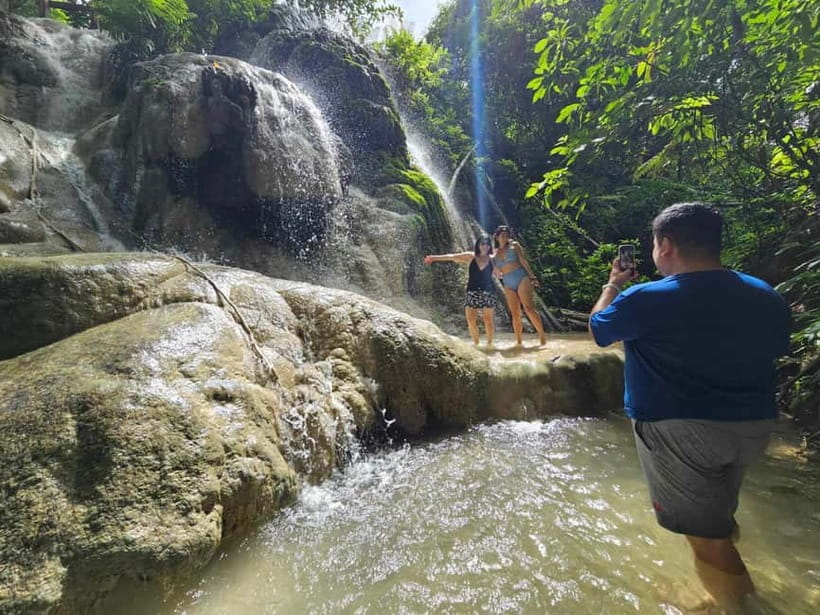
- The waterfall is climbable limestone: Water runs over the rocks, but their texture gives your feet and hands a firm grip in many places.
- The Seven-Colored Fountain needs a short walk: A small forest trail leads toward the source, with birdsong along the way.
- The Karen village visit lasts about an hour: Expect cultural sightseeing, an arts and crafts market, and an introduction to brass-ring traditions.
- Lunch is included: Local dishes may include northern Thai favorites such as khao soi.
- The temple is quiet and local: Naga steps lead to Buddha images inside an upper cave used for meditation and Buddhist observances.
- This is a private five-hour outing: Hotel pickup, an English-speaking guide, a car with driver, entrance fees, and lunch are covered at $64 per person.
A five-hour outing with three very different stops
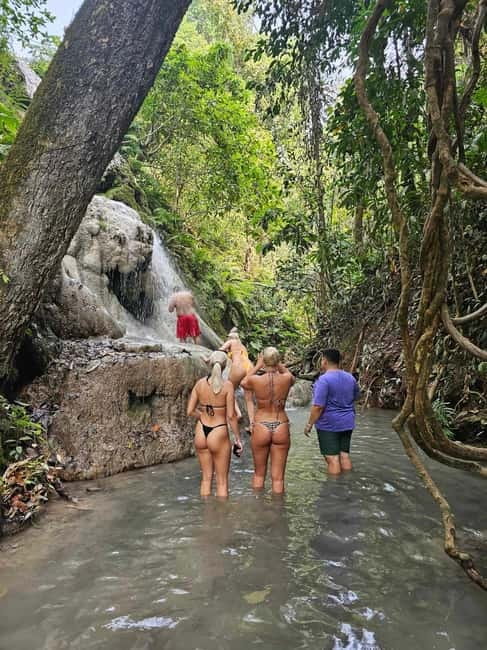
This tour works because the day changes character several times. You begin with a cultural visit, move into a playful outdoor stop, eat local food, and finish with a peaceful religious site in the forest.
The order and exact timing may vary slightly, but the scheduled plan allows about an hour at the Karen village, an hour climbing and walking at Bua Thong, 40 minutes for a break, and another 30 minutes for the fountain and temple area before returning to Chiang Mai.
That is a useful amount of time for a sampler. You will not spend half a day at the waterfall or have a long meditation session in the cave, but you will see three sides of northern Thailand without joining a large group.
More Sticky Waterfall Trips from Chiang Mai:
- Chiang Mai: Elephant Sanctuary, Long Neck & Sticky Waterfall
★ 4.9 · 2,262 reviews - Chiang Mai: Sticky Waterfall & Angel Waterfall Park Day Tour
★ 4.8 · 1,371 reviews - Chiang Mai: Bua Thong Sticky Waterfall & Huge Cave & Buffet
★ 4.8 · 1,049 reviews
Meeting a Karen community and seeing brass-ring traditions
The first major stop is a Karen Long Neck village, where you spend about an hour. The visit includes cultural sightseeing and time in an arts and crafts market.
The brass rings worn by some Karen women are the most visually striking part of the stop. They are not simply decorative objects for tourists. The tradition carries cultural meaning, and the women decide for themselves if they want to wear the rings. That point matters because the visit should be approached as a meeting with a living community, not as a staged costume display.
Entrance fees help support the community and provide income for Karen refugees living in Thailand. That does not remove every ethical question surrounding village visits, but it gives the stop a practical purpose. Go with respect, listen to your guide, and remember that the people you meet are not scenery.
The market adds a commercial side to the visit. You may see handmade items and have the chance to buy something, but you should not feel pressured to shop. The value of this part is the cultural context and the chance to learn about Karen life, not simply the chance to take photographs.
An hour is enough to get an introduction. If you want long conversations or detailed cultural study, this tour will feel brief. If you are new to the subject and want to combine it with nature and food, the short visit fits the day well.
Climbing Bua Thong Sticky Waterfalls
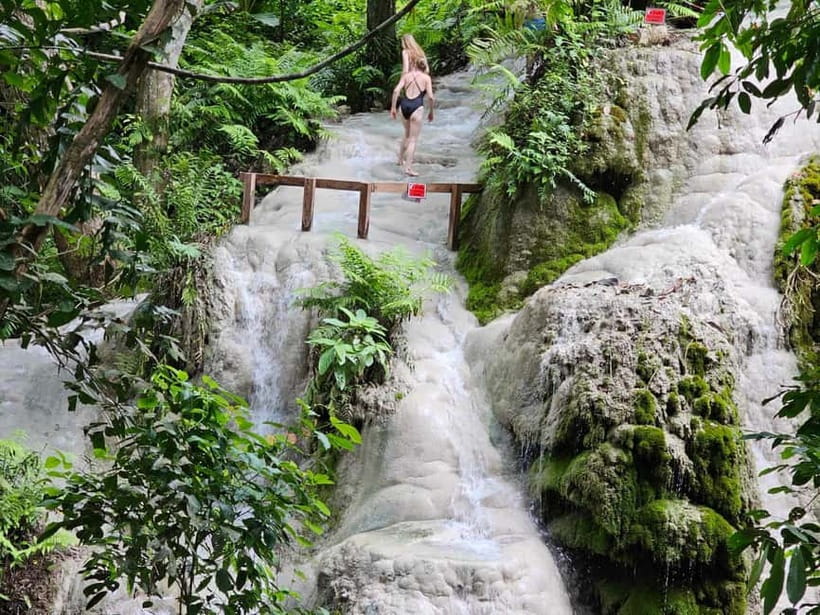
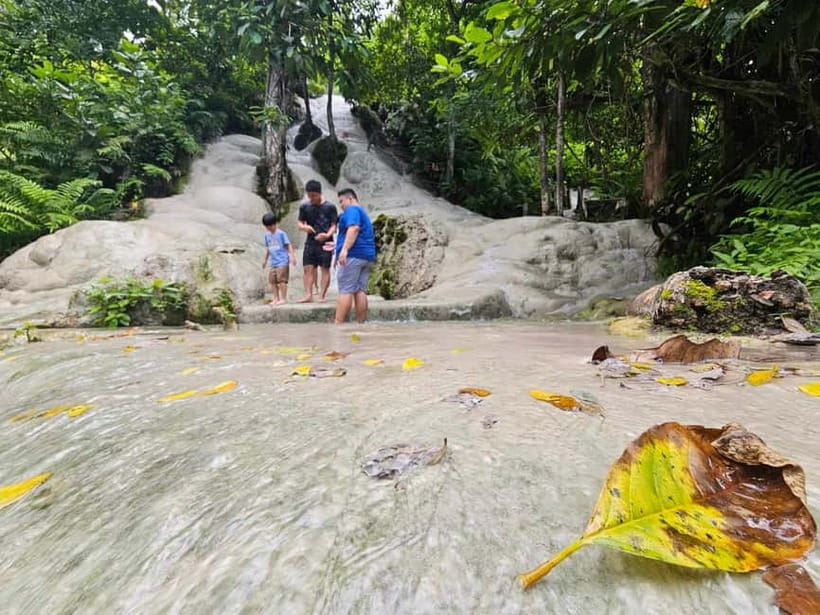
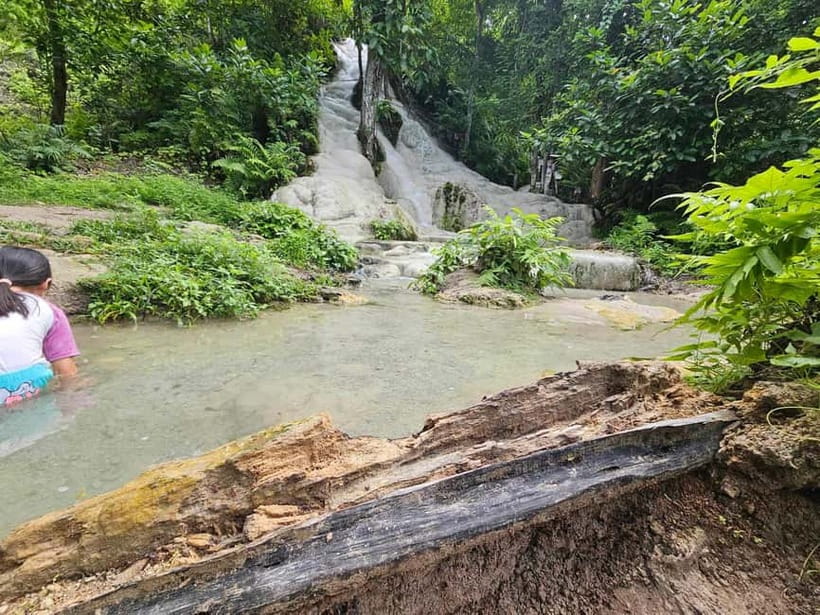
Bua Thong is not a conventional waterfall viewpoint. The fun comes from getting onto the limestone and climbing beside the flowing water.
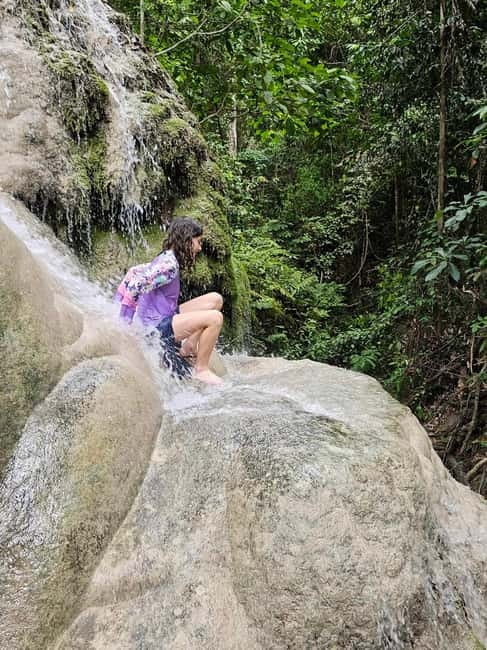
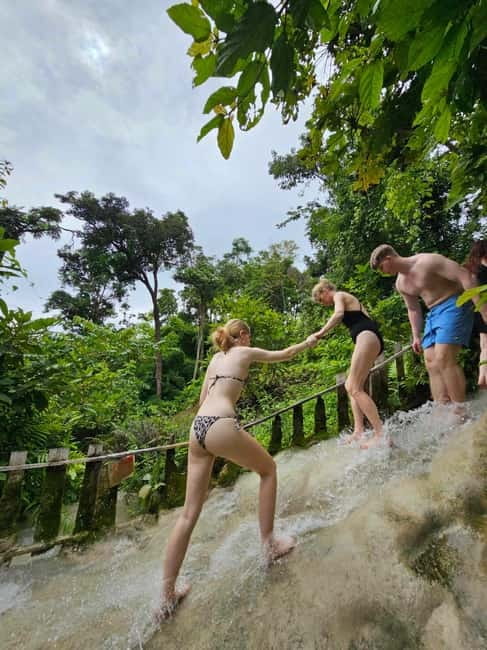
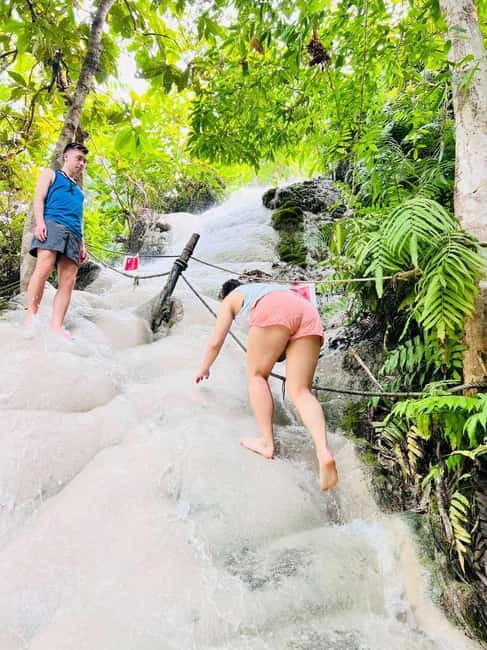
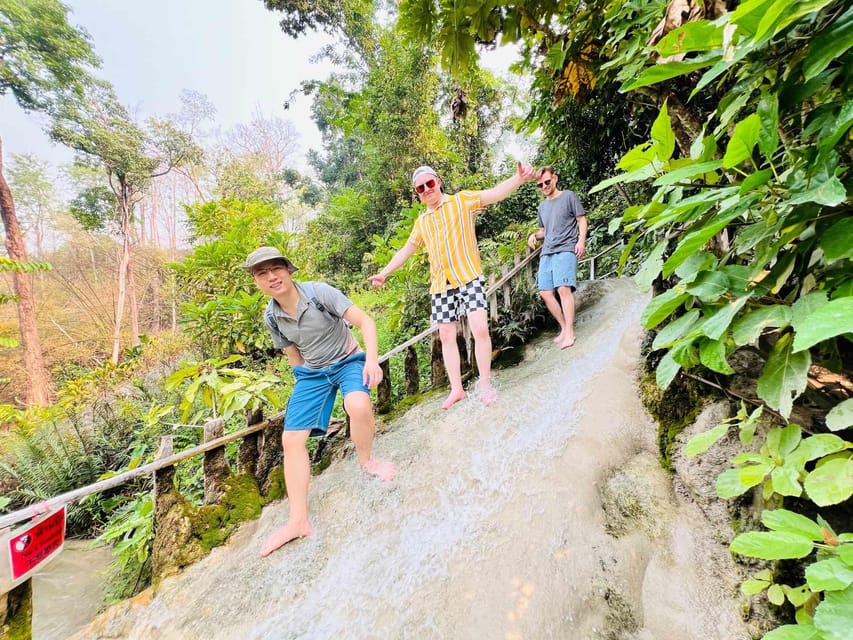
The rock surface has a rough, porous texture created by mineral deposits. That gives it the famous sticky feeling. You can use your hands and bare feet to move upward, almost as if the rock were helping you grip. The water flows over the pale stone, but you do not need to stand under a powerful cascade to enjoy the experience.
The climb is usually the most active part of the outing. Your guide can show you where to place your feet and help you manage the rock. Still, do not treat the name as a safety guarantee. The surface can be slippery in places, and you should move slowly, especially near wet edges.
You can climb without getting soaked, but there is also a small swimming pool at the bottom. Bring swimwear and a towel if you want to swim. If you plan only to climb, regular clothing is fine. Water shoes can help, though walking barefoot is also possible at the waterfall.
This stop suits you best if you like light adventure rather than a demanding hike. It is more physical than a standard sightseeing stop, but the tour does not describe it as a long trek. Children under two are not suitable for the activity, and anyone with balance concerns should tell the guide before starting.
The timing gives you about an hour for the waterfall itself, followed by a 40-minute break. That break is useful. You can cool down, change clothes if needed, and eat without rushing through the next part.
Following the water to the Seven-Colored Fountain
After the main waterfall visit, a short trail leads through the trees toward the water’s source, known as the Seven-Colored Fountain.
This is a gentler part of the outing. Instead of climbing, you walk under the forest canopy and listen for birds. The source area helps explain how the waterfall works, turning a fun stop into something more informative. You see not only where the water falls, but also where it begins.
The trail is described as small, so you should not expect a major forest trek. Wear shoes that can handle uneven ground, and carry insect repellent. Sunscreen, sunglasses, or an umbrella are also useful because parts of the day involve walking outdoors in the sun.
I like this addition because it gives the waterfall more substance. You are not simply taking pictures at a popular attraction and leaving. You get a brief look at the spring system behind it, with a quieter mood than the climbing area.
More Hill Tribe Village Tours from Chiang Mai:
- Chiang Mai: Chiang Rai Temples, Karen Tribe and Hot Springs
★ 4.7 · 5,401 reviews - Thai and Akha Cooking Class in Chiang Mai
★ 5.0 · 4,358 reviews - 4-Hour Doi Suthep & Hmong Hill Tribe Village from Chiang Mai
★ 4.7 · 696 reviews - Chiang Mai: Long Neck Village & Chiang Rai’s Iconic Temples
★ 4.3 · 338 reviews
Entering the forest cave temple
The temple brings a completely different tone. It sits in mountain forest and is mainly used by local people for meditation. On important Buddhist holidays, the upper cave becomes especially significant.
To reach the cave, you climb Naga steps. In Thai Buddhist architecture, the Naga is a serpent-like figure often used to guard sacred paths. Here, the steps lead toward a cavern filled with Buddha images.
The cave is described as serene, and that quiet is part of the appeal. You are not visiting a huge temple complex with a long list of rooms and monuments. Instead, the experience is focused: walk through the forest, climb the steps, and enter a sacred space that feels connected to local religious practice.
Dress matters here. Women should wear clothing that covers the shoulders and knees before entering the temple area. Modest clothing is a sensible choice for everyone, since this is an active place of worship rather than a simple sightseeing stop.
The temple section is short, but it adds depth to the day. After the movement and water at Bua Thong, the cave gives you time to slow down. If you want a major historical temple tour, this is not that. If you enjoy quiet religious sites and unusual settings, it is a strong part of the route.
Local lunch and the value of the private format
Lunch is included, which makes the $64 price easier to assess. You are not paying only for transport and entrance tickets. The package also includes food, the Karen village ticket, an English-speaking guide, and a private car with driver.
Local food is one of the pleasant details of the day. Guides Kiki and May have taken people for khao soi, the northern Thai noodle dish made with curry, noodles, and toppings. The exact meal can vary, but the point is that lunch is intended to be local rather than a generic tourist buffet.
A private tour changes the feel of the outing. You do not have to wait for a large coach group to finish at the waterfall, and you can ask questions as you go. Guides Kiki and Chris have also helped with waterfall photographs, which is useful when you are climbing and want more than a quick arm’s-length selfie.
The private format is most valuable for couples, families with older children, and small groups who want direct help on the rocks. It also suits you if you prefer to ask about Karen culture, Buddhist customs, or food without speaking over a bus full of people.
The price is less attractive if you only want the waterfall. You could likely spend less by arranging a simpler visit, but this package combines three stops, lunch, hotel transfers within Chiang Mai city, admission, and a private guide. For a half-day with several included elements, $64 per person is reasonable, particularly for a small private group.
What the day feels like in practice
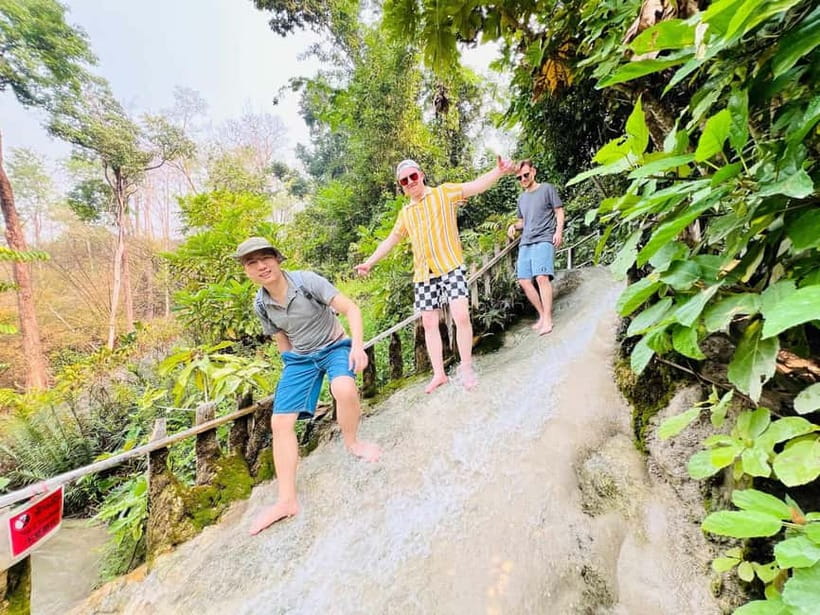
The strongest part of the experience is its variety. You begin with a community visit, then get wet and active, then eat, walk through the forest, and enter a temple cave. The stops do not feel repetitive.
The guides are another important factor. Kiki is described as friendly and well informed about the area, while Chris is particularly useful if you want photographs at the waterfall. May is another guide associated with the experience and is known for a warm, insightful approach. Since guide assignments can vary, you should not assume one specific person will lead every departure.
The trip is also practical for a short stay in Chiang Mai. Hotel pickup is included from hotels in Chiang Mai city, and you wait in the lobby five minutes before the scheduled time. The activity lasts five hours, but exact starting times depend on availability.
The main limitation is the amount of time at each location. One hour at the Karen village is enough for an introduction, not an extended cultural exchange. The waterfall schedule allows a good climb and break, but you may wish for more time if you want to swim, change, and explore the fountain at a slow pace.
Weather and clothing can affect your comfort. Carry insect repellent, sunscreen, sunglasses, or an umbrella. Bring a towel and swimwear if swimming appeals to you. If not, wear normal clothes that allow easy movement, and consider water shoes or prepare to go barefoot on the rocks.
Is the Karen village visit right for you?
This stop deserves a little thought before booking. The brass-ring tradition is visually distinctive, and the visit supports the livelihood of a refugee community. At the same time, some people may feel uncomfortable with the way cultural villages can turn daily life into a visitor experience.
Your approach makes a difference. Listen to the explanation, treat the people you meet with dignity, and view the visit as a chance to understand a tradition rather than collect photographs. If you want only untouched rural life, this stop may not match your expectations. If you are open to a structured cultural visit that contributes to local income, it can be worthwhile.
Who should book this experience?
I would choose this tour if you want an active half-day that combines nature, food, culture, and a small spiritual site. It is especially suitable for people who like unusual attractions and do not want to spend a full day at one waterfall.
It is a good match for:
- Couples and private groups who value a flexible guide
- First-time visitors who want several northern Thai experiences in one outing
- People interested in trying khao soi and other local food
- Anyone comfortable walking on wet rock and climbing short natural routes
- Visitors who prefer a quiet cave temple to a large, crowded monument
I would think twice if you dislike uneven surfaces, want a long swim, or expect extensive time at each stop. The waterfall is climbable, but it is not risk-free. The temple involves steps, and the village visit has a clear tourist component.
Free cancellation is available up to 24 hours in advance, and you can reserve now and pay later. That gives you some flexibility if your Chiang Mai plans are still moving.
Should you book it?
Book this tour if you want a well-packed private half-day rather than a single attraction. The sticky waterfall is the memorable centerpiece, but the Karen village, local lunch, Seven-Colored Fountain, and cave temple give the outing a broader sense of northern Thailand.
Skip it if you want a slow, unstructured day or a long waterfall swim. For most people who can manage short walks, steps, and wet limestone, the combination of personal guiding, included transport, food, and entrance fees makes the $64 price fair.
FAQ
Where does the tour pick me up?
Pickup is included from any hotel in Chiang Mai city. You should wait in the hotel lobby from five minutes before the scheduled pickup time.
How long does the experience last?
The full activity lasts five hours. The schedule includes the Karen village, Bua Thong Sticky Waterfalls, a break, the Seven-Colored Fountain area, and the return to Chiang Mai.
Is lunch included?
Yes. Lunch is included in the price. Local food may include northern Thai dishes such as khao soi.
Can I swim at Bua Thong Sticky Waterfalls?
Yes. There is a small swimming pool at the bottom of the waterfall. Bring swimwear and a towel if you want to swim, or wear regular clothes if you plan only to climb.
What should I wear to the temple?
Women should wear clothing that covers the shoulders and knees before entering the temple area. Comfortable clothing and suitable footwear are also useful for the waterfall and short forest walk.
Is the tour private and guided in English?
Yes. This is a private group experience with an English-speaking live guide, a car with driver, hotel transfers in Chiang Mai city, entrance tickets to the Karen village, and lunch.
Newly reviewed around Chiang Mai
- Workshop Making Herbal ball & herbal inhaler★ 4.3 · 3 reviews
- Chiang Mai Zipline White Water Rafting and Elephant Sanctuary★ 4.0 · 11 reviews
- Walk With Monks Collecting Alms(meeting point maybe change)★ 4.9 · 8 reviews
- Trek to a Jungle Waterfall★ 5.0 · 14 reviews
- Zipline+Sticky waterfall+Long Neck Village Private Tour★ 5.0 · 22 reviews
- Meditation Retreat and Self-Care in Nature★ 5.0 · 4 reviews
- Full Day Yoga, Meditation, and Thai Cultural Immersion in Chiang Mai★ 5.0 · 3 reviews
- Long Neck Village, White & Blue Temple, Black House Day Tour From Chiang Mai★ 4.0 · 14 reviews
Chiang Mai Sticky Waterfall Tours, compared.
Elephant Sanctuary, Long Neck & Sticky Waterfall
Read our review →
Sticky Waterfall & Angel Waterfall Park Day Tour
Read our review →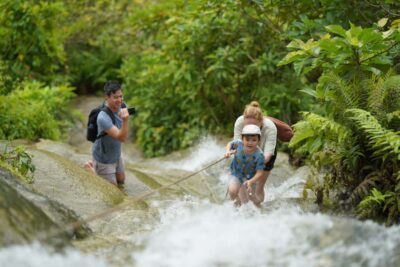
Bua Thong Sticky Waterfall & Huge Cave & Buffet
Read our review →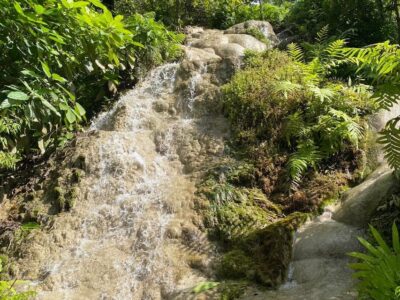
Chiang Mai Half Day Tour: Sticky Waterfall & Hotel Transfer
Read our review →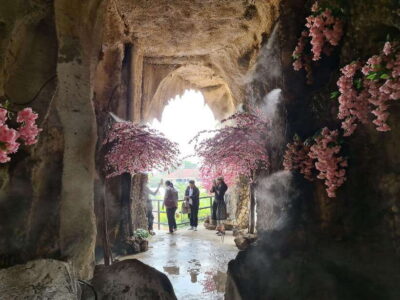
Dantewada Land of Angels & Sticky Waterfall Tour
Read our review →
Elephants, Sticky Waterfalls, Market and Temple
Read our review →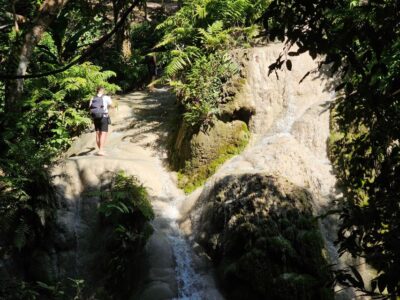
Sticky Waterfall Half-Day Tour & Hotel Transfers
Read our review →
4 in 1 Elephants Long Neck Rafting and Sticky Waterfall Tour
Read our review →Browse the lists this tour appears in