
Reviewed · CHIANG MAI THAI COOKING CLASSES
Chiang Mai: Authentic Cooking Class with Market & Farm Visit
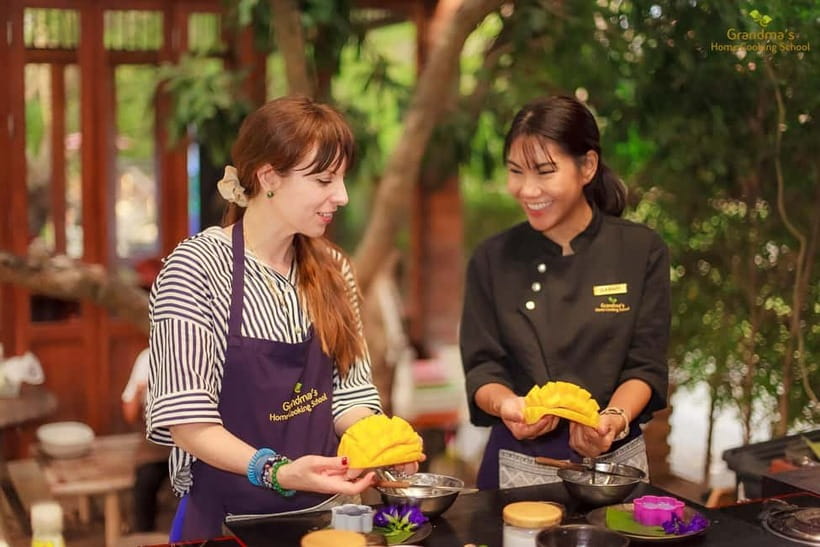
The best part of this Chiang Mai cooking class happens before the first pan gets hot. You visit a local market, walk through Grandma’s organic farm, smell herbs, pick mushrooms, collect eggs, and learn why Thai food tastes the way it does. Then you cook several dishes at your own station, including curry paste from scratch and Chiang Mai’s famous Khao Soi.
I especially like the farm-to-kitchen setting and the way each person gets hands-on work instead of simply watching a chef. I also like the practical menu choices, since you can take home a digital recipe book and use what you learn to order and cook Thai food with more confidence. The main drawback is that this is a polished, busy operation rather than a tiny family kitchen, and pickup details or van space may occasionally feel less personal.
- Market first: Morning, afternoon, and full-day classes begin with a local market visit and an introduction to Thai ingredients.
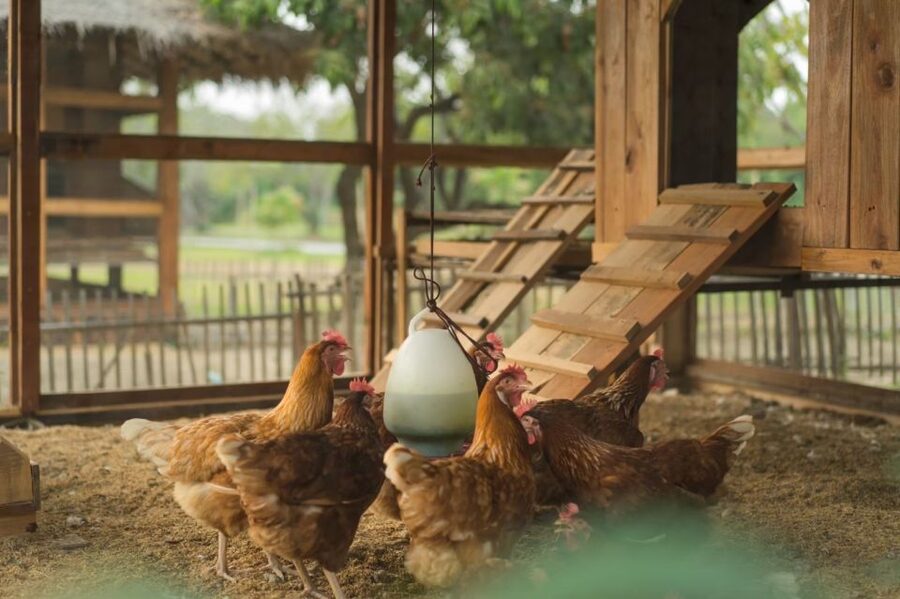
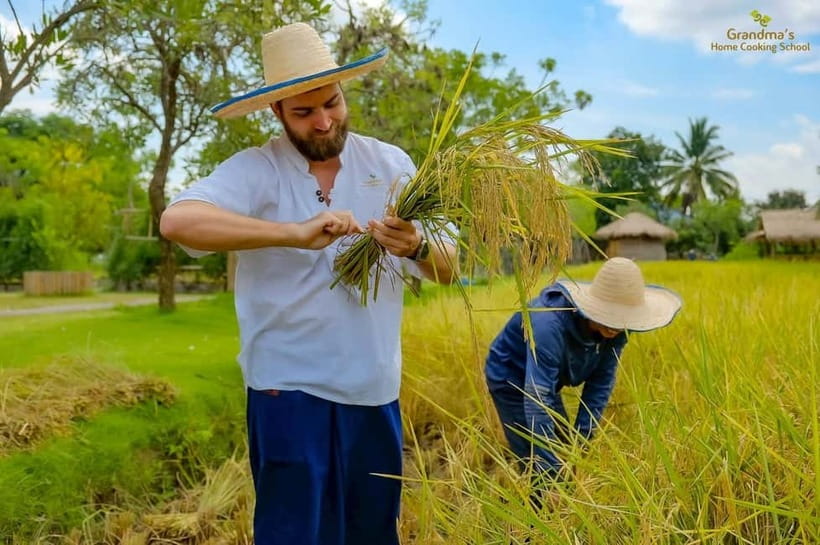
- A real farm stop: Walk among rice fields, herbs, vegetables, fruit, chickens, and a distinctive mushroom hut.
- Your own cooking station: Follow clear instructions while making dishes such as Pad Thai, curry, soup, and Som Tam.
- Khao Soi matters: Chiang Mai’s signature curry noodle soup is one of the most memorable menu options.
- Full-day extras: Make coconut milk with a traditional wooden grater and spend more time on the farm.
- Good dietary flexibility: Vegetarian, halal, gluten-free, allergy-sensitive, and other special arrangements are available if requested in advance.
Why This Cooking Class Feels Like More Than a Recipe Lesson
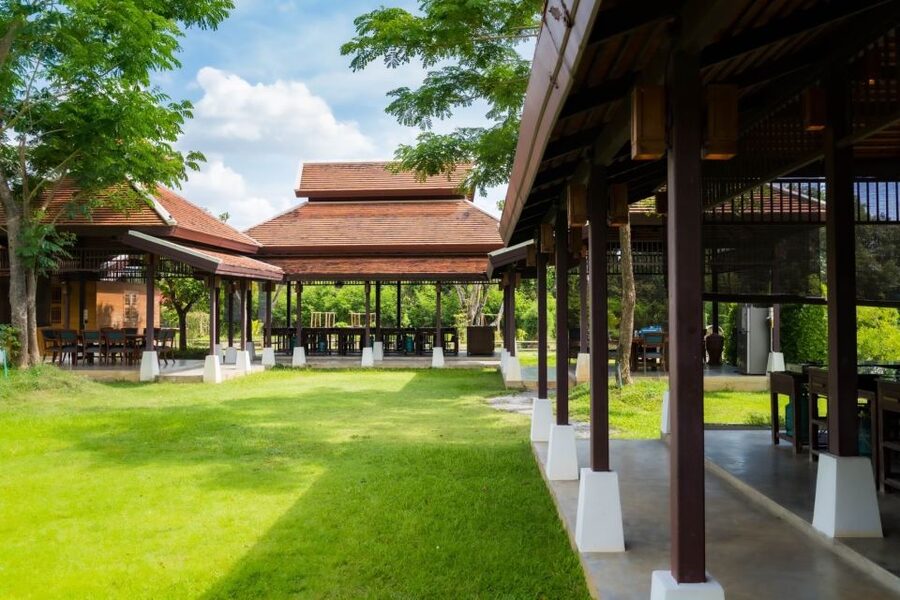
Grandma’s Home Cooking School connects food with the places and people behind it. You do not simply arrive at a kitchen, measure ingredients, and leave with a list of recipes. The day begins with the raw materials of Thai cooking, then moves through growing, preparing, cooking, and eating.
That order matters. Once you have smelled fresh herbs in the garden and seen unfamiliar vegetables at the market, ingredients such as galangal, lemongrass, basil, and chilies make more sense. You begin to understand why Thai food is built around contrasts: hot and mild, sour and creamy, salty and sweet.
The school has earned a 4.9 rating from more than 4,500 ratings, and the most praised parts are consistent: friendly guides, tasty food, smooth transport, a pretty farm, and generous portions. Guides including Kiki, Jimmy, Patty, Roger, Joyzaa, Bryan, and Le Vin are frequently singled out for clear instruction and good humor.
The tone can vary by instructor. Most guides are lively and playful, though one class member found the jokes a bit too frequent. If you prefer a quiet, formal demonstration, this may feel energetic. If you like an easygoing class with plenty of conversation, the style should suit you well.
Choosing Between Morning, Afternoon, Evening, and Full Day
The class comes in four formats, lasting from about three and a half hours to seven hours. The exact schedule and menu can vary, so check the available start time before booking.
The morning class includes the market, farm activities, hands-on cooking, and mango sticky rice served as dessert. It is a good choice if you want your afternoon free for temples, museums, or a massage. You will also be eating a substantial meal before the day is over, so a very large breakfast is not wise.
The afternoon class follows a similar pattern and is useful if you want a relaxed morning. You visit the market, explore the farm, cook several dishes, and finish with mango sticky rice. This option works well for people who prefer not to start an activity early.
The evening class is especially attractive for couples and anyone looking for both an activity and dinner. The open-air setting takes on a different feel as the light softens, and several people enjoyed cooking while the sun was going down. You still get a full meal, so it is best to arrive hungry but not starving.
The full-day class gives you the most time with the farm and the cooking. It adds traditional coconut milk preparation using a wooden coconut grater, and mango sticky rice is taught as part of the cooking rather than simply served. This is the right pick if Thai food is a major reason for your Chiang Mai visit.
A small caution: full day means a lot of food and a long stretch of activity. People who chose it often felt very well fed, but you may find the half-day format more comfortable if you want a lighter schedule.
More Thai Cooking Classes in Chiang Mai:
- Half-Day Thai Cooking Class at Organic Farm in Chiang Mai
★ 5.0 · 19,087 reviews - Chiang Mai: Cooking Class, Market & Thai Herbs Garden Tour
★ 4.9 · 4,824 reviews - Thai and Akha Cooking Class in Chiang Mai
★ 5.0 · 4,358 reviews
From Chiang Mai Hotel to the Local Market
Pickup is included for hotels within five kilometers of central Chiang Mai. You wait in your hotel lobby, usually for a pickup around 3:30 PM to 4:00 PM for the relevant afternoon schedule, and travel in an air-conditioned van.
Transport is one of the strongest parts of the arrangement. Pickups are generally on time, and the return to your hotel is included. Still, give the operator clear hotel details. One person had limited communication about the pickup time, and another found the van a little snug, possibly because it was overbooked by one person.
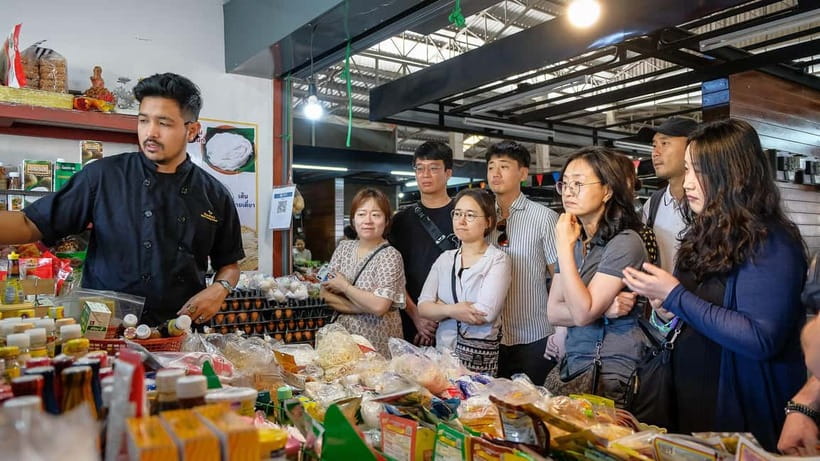
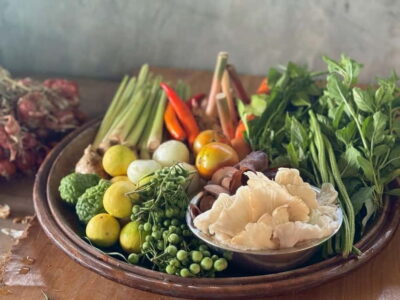
Morning, afternoon, and full-day sessions include a market visit. Your instructor points out Thai vegetables, herbs, sauces, spices, and other ingredients that later appear in your cooking station. This is more useful than a generic sightseeing stop because you see the food in the form you would encounter it when shopping or ordering locally.
You should not expect a long market shopping trip. The point is orientation: learning what the ingredients look and smell like, and understanding how they fit into Thai cooking. I find this particularly helpful if you plan to visit local restaurants afterward and want to recognize more than just Pad Thai on a menu.
Walking Grandma’s Organic Farm
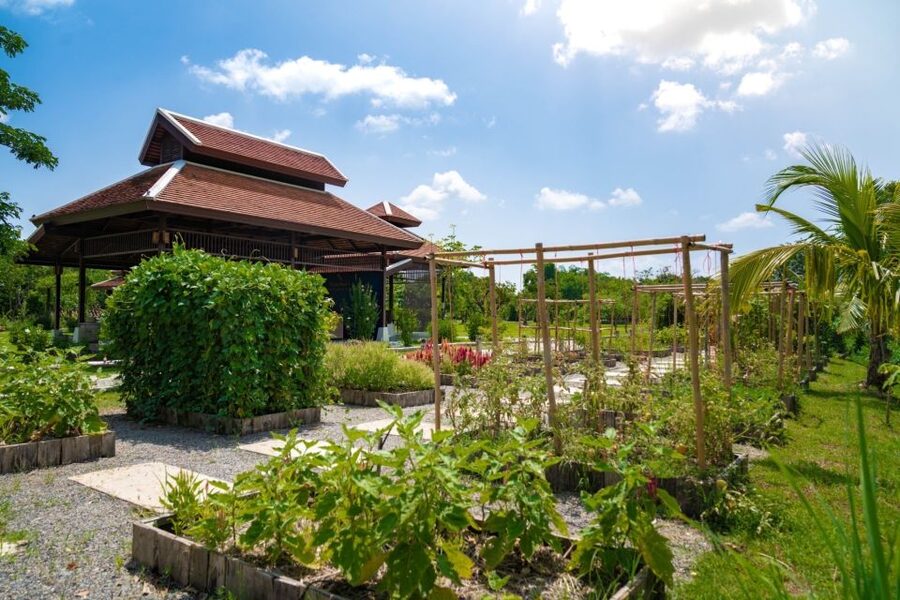
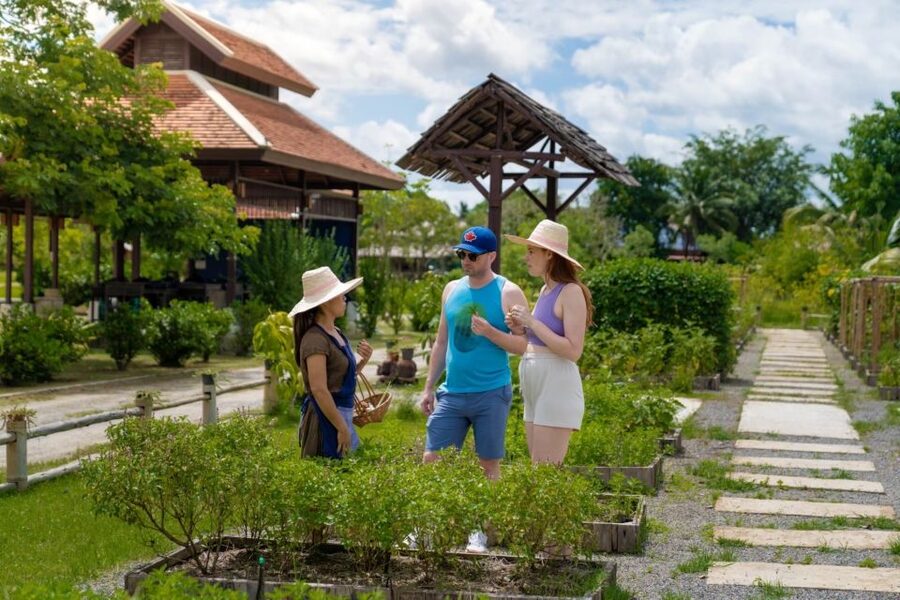
After the market, the class moves to the farm and open-air cooking area. The property sits among rice fields and includes herbs, vegetables, fruit, chickens, and a mushroom hut. The grounds receive nearly as much praise as the food, and that makes sense. You get a peaceful break from central Chiang Mai without turning the day into a formal countryside tour.
The farm walk is hands-on in small, charming ways. You can feed the chickens, collect fresh eggs, and even give them a gentle hug. Mushroom picking takes place in a dedicated hut, while the guide explains the plants used in Thai dishes. Vegetable picking depends on what is ready, so do not expect to harvest every ingredient on the menu.
The guides also encourage you to smell herbs and fruits. This is a useful detail, since scent is central to Thai cooking. You begin to notice the difference between ingredients that can look similar in a market stall but perform very different jobs in a curry or soup.
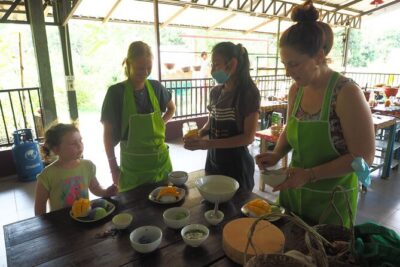
Children often enjoy the chickens and farm activities. Children under 10 are treated as visitors rather than given their own station, though they can cook alongside a parent. If you want a child to have a separate workstation, book that child at the adult price.
Full-day participants get the most unusual farm-to-kitchen lesson: making coconut milk with a traditional wooden grater. It is an old-fashioned task, but it helps explain why fresh coconut milk has a different place in Thai cooking than canned coconut milk.
Cooking Thai Food at Your Own Station
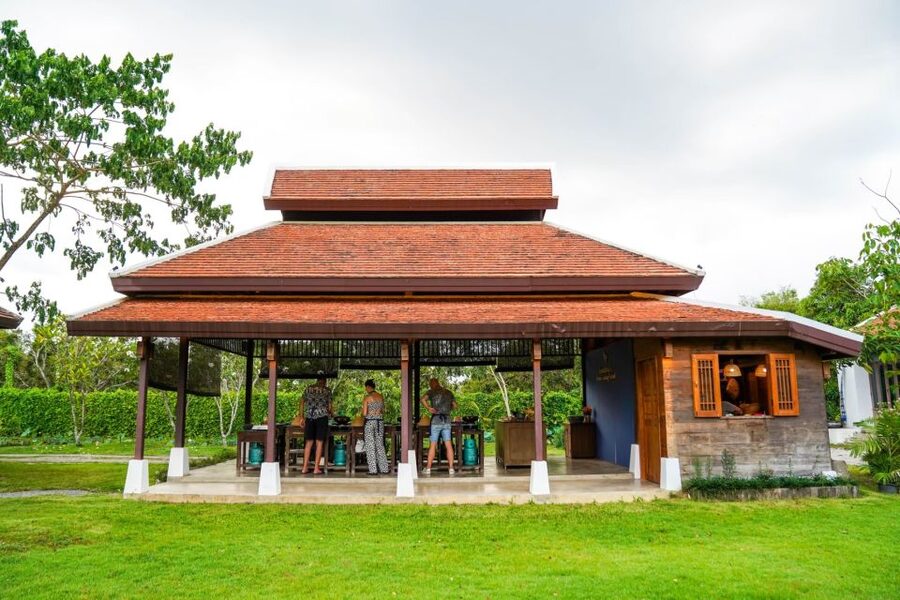
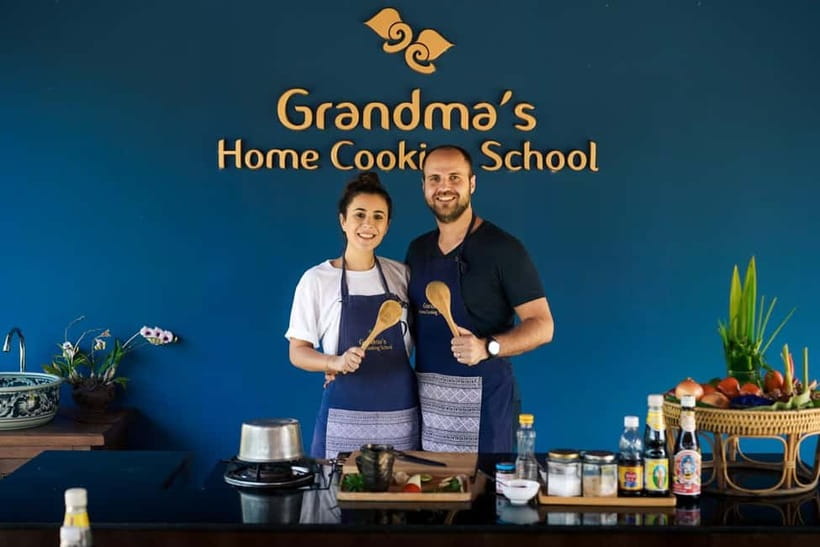
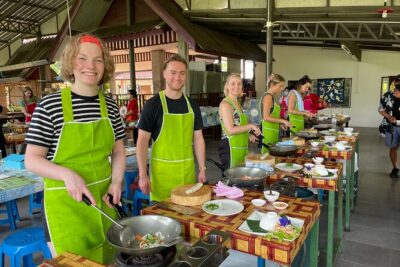
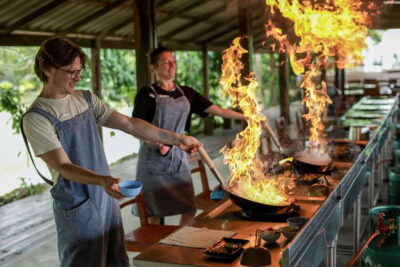
The cooking takes place in an open-air kitchen. Each person has a cooking station, and an instructor leads the class step by step. Assistants bring ingredients and clear used dishes, which keeps the work area moving without making you stop to wash everything after each course.
The school is well organized and has several kitchen units or bungalows, each able to accommodate around 10 people. That means you get personal work space, but you should not picture a single quiet kitchen with only three or four people around a family stove. It is a professional operation with a warm, informal feel.
At the start, you choose your menu. Options can include:
- Pad Thai
- Pad Kra Prao
- Green curry
- Red curry
- Panang curry
- Tom Yum
- Tom Kha
- Som Tam
- Spring rolls
- Mango sticky rice
- Khao Soi
You normally cook several dishes rather than one isolated recipe. The exact number depends on the session and menu, but the food is generous enough that you should avoid eating a large meal beforehand.
The curry paste lesson is one of the most useful parts. You work with a mortar and pestle rather than relying entirely on a prepared paste. That gives you a better sense of the balance between chilies, aromatics, herbs, and spices. You also learn how the paste changes the final curry, which is more valuable than simply being handed a pre-measured packet.
Khao Soi deserves special attention. This northern Thai curry noodle soup is closely tied to Chiang Mai, and it gives the class a strong local identity. If you are choosing between menus, I would select Khao Soi if it is available. It is one of the dishes that can make the class feel specific to northern Thailand rather than interchangeable with a cooking lesson anywhere in the country.
A different kind of day out of Chiang Mai altogether:
- Chiang Mai: Elephant Sanctuary, Waterfall & Bamboo Rafting
★ 4.9 · 9,160 reviews - Chiang Mai: Doi Inthanon National Park Eco-Friendly Tour
★ 4.6 · 6,667 reviews - Chiang Mai: Elephant Sanctuary & Waterfall Group Tour
★ 4.9 · 5,780 reviews - Chiang Mai: Chiang Rai Temples, Karen Tribe and Hot Springs
★ 4.7 · 5,401 reviews
Eating What You Made
The meal is served after you finish each dish, so the cooking becomes a series of small tastings rather than a long wait followed by one large plate. This also lets you see how a soup, stir-fry, curry, salad, or noodle dish changes once it is cooked.
Portions are generous. Several people left feeling very full, especially after the full-day class, and the meal can easily function as breakfast, lunch, or dinner depending on your schedule. Arrive with an appetite, but do not skip water in Chiang Mai’s heat.
Mango sticky rice is included in the morning and afternoon formats. It is served as dessert in those sessions, while full-day and evening participants learn to make it as part of the class. The dessert is a pleasant finish because it shows a different side of Thai food, with sweet coconut and ripe mango rather than chilies and herbs.
You can choose a welcome drink such as Thai milk tea, Thai lemon tea, or butterfly pea flower tea. Herbal drinks and unlimited drinking water are also included. Alcohol is not included, though it can be purchased.
The dining part is social and informal. You eat the food you prepared with the people from your class, surrounded by the garden and open air. That shared meal is a real benefit if you are traveling alone or want a relaxed evening activity that does not feel like another restaurant visit.
Dietary Needs and Cooking Comfort
You do not need cooking experience. The instructors demonstrate each stage, and the stations are arranged so you can follow along without trying to memorize everything in real time.
Vegetarian and halal menus are available. Gluten-free arrangements, allergies, and other dietary needs can also be handled, but you need to tell the school before the class starts. Specific care has included gluten-free soy sauce, gluten-free oyster sauce, and a gluten-free spring roll option.
You should still explain your needs clearly when booking and again at the beginning. Thai cooking often uses fish sauce, oyster sauce, soy sauce, shrimp paste, and shared ingredients, so advance notice gives the kitchen time to adjust the recipes safely.
The recipes are adaptable to your taste. You can usually make choices about spice and seasoning, which is useful if you enjoy Thai flavors but are not ready for maximum chili heat. The digital recipe e-book is included, giving you a practical way to recreate the dishes at home.
One small technical issue has occurred with the recipe QR code, so save the recipe link while you have access to it. The recipe book is a strong part of the value, but it is worth checking that you can open it before leaving the school.
What the $34 Price Really Buys You
At about $34 per person, the price is fair for what is included. You are not paying only for a cooking lesson. The fee covers hotel transport within the central pickup zone, the market visit on eligible sessions, the farm tour, the cooking station, ingredients, drinks, the meal, mango sticky rice, and the digital recipes.
The food alone would make up a large part of the cost if you ordered comparable dishes in Chiang Mai. Add the transport, the farm activities, the ingredient lesson, and the several hours of instruction, and the package offers good value.
The full-day option costs more than the basic advertised price may suggest, so compare the exact session before booking. Its extra time and coconut milk lesson suit serious food lovers, but a half-day class may offer the better balance for most people.
This is also a good way to combine several small Chiang Mai experiences in one outing. You get a market, a rural setting, a garden walk, a meal, and cultural context without arranging separate transport for each.
Who Will Enjoy This Most
I would recommend this class to first-time visitors who want a friendly introduction to Thai food and to experienced home cooks who want practical recipes. It is also a strong choice for families, as children can join their parents at the station and the chickens provide an easy break from cooking.
The class suits people who learn by doing. You will chop, pound, stir, season, and taste. If you prefer to watch a chef prepare everything while you take notes, choose another type of food experience.
Couples may prefer the evening format, especially for the softer light and dinner setting. Food-focused visitors should consider the full day, particularly if Khao Soi and traditional coconut milk are high on their list.
The organized format may be less appealing if you want a private lesson or a very small group. The cooking units can hold around 10 people, and the school handles many classes. Still, your own station and an active instructor keep the experience personal enough for most people.
Wear comfortable shoes and bring a sun hat. The farm walk is easy to fit into the day, but you will be outside and on your feet. Pets are not allowed.
Should You Book Grandma’s Home Cooking School?
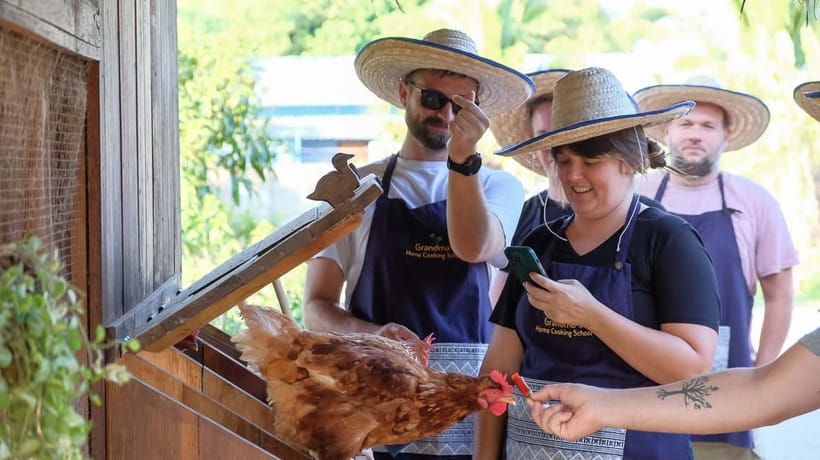
I would book this class if you want more than a meal and less than a full culinary course. The combination of market, farm, chickens, fresh herbs, mortar-and-pestle curry paste, and your own cooking station gives the experience a clear sense of place.
Choose morning or afternoon for a shorter food lesson, evening for cooking and dinner, and full day for the most complete program. Request dietary adjustments in advance, confirm your hotel falls within the five-kilometer pickup area, and arrive hungry.
The only reasons to hesitate are a preference for a tiny private kitchen, discomfort with a lively teaching style, or limited patience for a busy group operation. For most people visiting Chiang Mai, the $34 starting price buys a generous meal, useful skills, and a much better understanding of northern Thai food than a restaurant dinner alone.
FAQ
How long does the Chiang Mai cooking class last?
Available sessions range from about 210 minutes to seven hours. Check the chosen class option for its exact starting time and duration.
Is hotel pickup included?
Pickup and drop-off are included for hotels within five kilometers of Chiang Mai city center. If your hotel is outside that area, the school may arrange a nearby meeting point or charge a small extra fee.
Does every class visit a local market?
Morning, afternoon, and full-day classes include the market tour. The evening option focuses on the farm and cooking activities instead.
Can I choose my own Thai dishes?
You choose your menu at the start of the class before cooking begins. Available dishes can include Pad Thai, curries, Tom Yum, Tom Kha, Som Tam, spring rolls, mango sticky rice, and Khao Soi.
Are vegetarian, halal, and gluten-free options available?
Yes. Vegetarian and halal choices are available, and the kitchen can adjust ingredients for gluten-free diets, allergies, and other dietary needs. Tell the school before the class starts.
Can children join the class?
Children under 10 can join their parents and help with cooking, but they do not receive their own station. Book them at the adult price if you want them to have a separate station.
Is coconut milk preparation included in every session?
No. Making coconut milk with a traditional wooden grater is included only with the full-day option.
More Farm Visits around Chiang Mai
- Chiang Mai: Cooking Class with Organic Farm at Mama Noi
★ 4.9 · 1,151 reviews - Full Day Thai Cooking at Farm (Chiang Mai)
★ 5.0 · 1,127 reviews - Chiang Mai: HALF-DAY COOKING COURSE at a Thai Cooking Farm
★ 4.9 · 705 reviews - Cooking Class with Organic Farm in Chiang Mai at Mama Noi
★ 5.0 · 502 reviews
More Market Visits in Chiang Mai
- Chiang Mai: Cooking Class with Market and Pickup
★ 4.9 · 1,365 reviews - Chiang Mai: Evening Cooking Class and Local Market Visit
★ 4.9 · 648 reviews - Chiang Mai: Evening Local Street Food Market Tour
★ 4.8 · 604 reviews - Chiang Mai: Kalare Night Bazaar Boxing Stadium Muay Thai
★ 4.7 · 507 reviews
Newly reviewed around Chiang Mai
- Workshop Making Herbal ball & herbal inhaler★ 4.3 · 3 reviews
- Chiang Mai Zipline White Water Rafting and Elephant Sanctuary★ 4.0 · 11 reviews
- Walk With Monks Collecting Alms(meeting point maybe change)★ 4.9 · 8 reviews
- Trek to a Jungle Waterfall★ 5.0 · 14 reviews
- Zipline+Sticky waterfall+Long Neck Village Private Tour★ 5.0 · 22 reviews
- Meditation Retreat and Self-Care in Nature★ 5.0 · 4 reviews
- Full Day Yoga, Meditation, and Thai Cultural Immersion in Chiang Mai★ 5.0 · 3 reviews
- Long Neck Village, White & Blue Temple, Black House Day Tour From Chiang Mai★ 4.0 · 14 reviews
Chiang Mai Thai Cooking Classes, compared.
Half-Day Thai Cooking Class at Organic Farm in Chiang Mai
Read our review →
Cooking Class, Market & Thai Herbs Garden Tour
Read our review →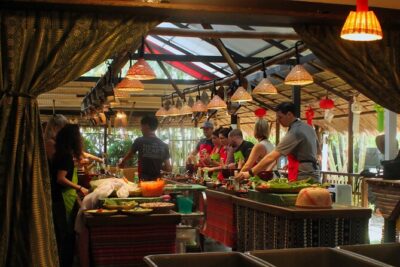
Browse the lists this tour appears in