
Reviewed · CHIANG MAI CRAFT WORKSHOPS
Half Day Traditional Handicraft Craftsmanship Tour from Chiang Mai
Chiang Mai’s craft tradition comes alive in working workshops, not just museum displays. This four-hour outing takes you along San Kamphaeng Road to watch silk woven by hand, wood shaped into furniture and elephant carvings, and mulberry bark turned into colorful parasols. The demonstrations are the main event, and you can shop only if something truly catches your eye.
I like the small group of no more than 10, which gives you a better chance to ask questions than a large coach tour. I also like the easy hotel pickup, especially when you are still finding your way around Chiang Mai. The main consideration is that some stops are tied to shops or factories, so anyone seeking a strictly noncommercial art tour may find the shopping element a little strong.
Key points to know before booking
- Handmade silk is shown step by step: See how silk is woven by hand and learn about the careful work behind the finished cloth.
- Baan Jang Nak adds a memorable focus: The museum displays elephant wood carvings and gives the tour a stronger artistic purpose than a basic shopping trip.
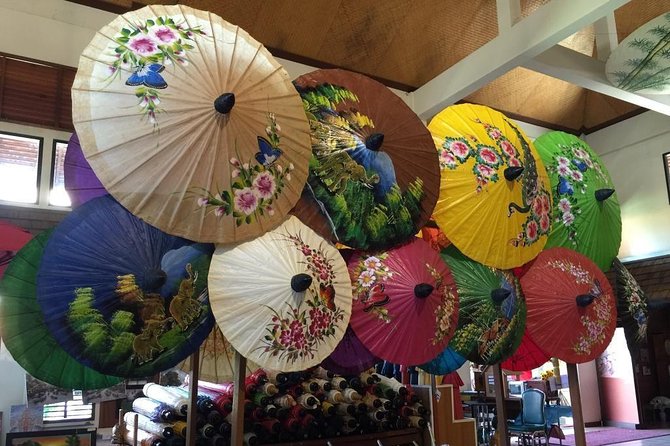
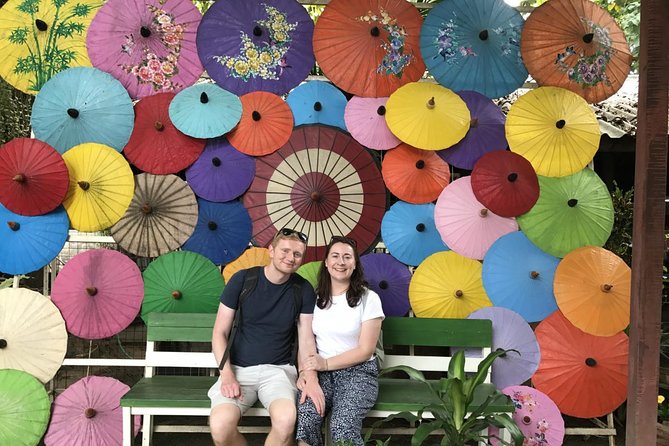
- Bo Sang explains the umbrella craft: You see how Saa paper, made from mulberry bark, becomes the famous local parasols.
- The group stays small: A maximum of 10 people makes conversation with the guide easier.
- Pickup is convenient but location matters: Central Chiang Mai hotels within the stated area receive free pickup, while more distant hotels pay a 300 THB surcharge.
- One strong detail from the guide experience: A guide identified as Ms. Ooh Lala was praised for showing several businesses that keep old craft skills alive, including celadon pottery.
Why San Kamphaeng is the right place to see Chiang Mai crafts
San Kamphaeng is Chiang Mai’s main handicraft corridor. It stretches east from the city and is lined with workshops, factories, showrooms, and small craft businesses. This tour gives you a quick introduction to several trades without asking you to arrange separate taxis or work out the route yourself.
That matters because the craft scene is spread out. You could visit one silk workshop on your own, then spend time trying to locate a woodcarving center and the umbrella village. With a guide and air-conditioned transport, you spend the four-hour outing looking and listening rather than managing transport.
The experience is best understood as a working craft district visit. You are not simply walking through a historic house or looking at finished objects behind glass. At the right moment, you may see materials being prepared, shaped, painted, woven, or assembled. The process helps explain why handmade Thai goods can cost more than factory-made souvenirs.
There is also a practical shopping angle. You are taken to places where products may be available to buy, but the tour is not presented as a forced buying trip. The emphasis is on watching the work first. That gives you a better basis for deciding if a silk scarf, wooden carving, celadon piece, or umbrella is worth the price.
More Craft Workshops in Chiang Mai:
- Chiang Mai: Elephant Sanctuary & Thai Cooking Workshop
★ 4.9 · 276 reviews - Chiang Mai : Traditional Lanna Bamboo Fan Weaving
★ 5.0 · 17 reviews - Private Day Tour Doi Suthep Temple and Handicraft Center
★ 5.0 · 15 reviews
The morning begins with hotel pickup at 8 a.m.
The tour begins at 8 a.m. and lasts about four hours. Free door-to-door pickup is offered in the central Chiang Mai area, including the old city, Night Bazaar, Tapae Gate, Chiang Mai Gate, Suan Dok Gate, Nimmana Haeminda Road, Santitham, and part of Huay Kaew Road up to the Ibis Hotel.
The stated free pickup zone is within a three-kilometer radius in the central area. Elsewhere, the instructions also describe a five-kilometer limit from the Three Kings Monument, with a 300 THB surcharge for pickup and drop-off beyond that area. Since the wording gives both distances, check your hotel location when booking rather than assuming the ride is free.
If your hotel is outside the pickup area, you can meet the group at the McDonald’s at Chiang Mai Night Bazaar. The vehicle is air-conditioned, a useful comfort in Chiang Mai’s warm weather. You will also want comfortable walking shoes, since the stops involve moving around workshops and craft centers.
The first part of the journey takes about 30 minutes. That transfer is not a sightseeing stop, but it gets you from the city center to the San Kamphaeng district without the hassle of arranging a private ride.
Handwoven silk in the San Kamphaeng craft district
The silk stop is a good introduction because it shows how much work sits behind a finished Thai textile. You can watch local craftspeople weave silk by hand using a method passed down through generations. The guide explains the production process, from the early stages of preparing the material to the detailed work needed to create the cloth.
Silk weaving is easy to underestimate when you see only the finished product in a shop. A close look at the loom and the repeated hand movements makes the price and variation easier to understand. Small changes in color, pattern, and texture come from time and skill, not just from a machine setting.
This is also where the guide’s role matters most. A good explanation can turn a short demonstration into a lesson in Thai material culture. You can ask how the fabric is made, how long the work takes, and what separates a handmade piece from a cheaper printed item, provided the guide has the details available.
The stop lasts about an hour. That is enough time for a demonstration and some browsing, but not enough for an extended textile workshop. You should think of it as an introduction rather than a hands-on class.
The stop is described alongside San Kamphaeng’s Saturday walking street market, so check the exact schedule if visiting on a different day. The information provided does not make clear whether the market itself operates during every tour departure or whether the name refers to the broader district. The workshops and craft businesses are the clear focus.
Baan Jang Nak and the elephant wood carvings
Next comes Baan Jang Nak, a museum devoted to elephant wood carvings. This is the most distinctive stop on the route because it gives the craft tour a clear visual centerpiece. Elephants are closely associated with Thailand, and seeing them shaped from wood shows how local artists turn a familiar national symbol into sculpture.
The stop also includes a look at wood and furniture production. You learn how pieces move from raw material to finished work, which helps you understand the difference between a rough carving, a prepared form, and a polished object ready for display or sale.
The museum visit lasts about an hour. Along with the elephant carvings, you can see locally made native costumes, jewelry, and household novelties at a nearby handicraft center. This broadens the stop beyond wood alone and gives you a sense of how craft skills appear in daily life, clothing, decoration, and furnishings.
I would pay attention to scale and finish here. Some carved objects may be small enough to carry home, while furniture and larger sculptures are clearly aimed at display rather than casual souvenir shopping. If you have limited luggage space, the visit still works because the interest comes from seeing the work and learning the production stages.
The commercial setting is worth keeping in mind. This is connected to a wood and furniture business, so you may see items for sale. That is not necessarily a flaw, but it means the stop combines demonstration, exhibition, and retail. You are free to look without treating every display as a purchase opportunity.
A different kind of day out of Chiang Mai altogether:
- Half-Day Thai Cooking Class at Organic Farm in Chiang Mai
★ 5.0 · 19,087 reviews - Chiang Mai: Elephant Sanctuary, Waterfall & Bamboo Rafting
★ 4.9 · 9,160 reviews - Chiang Mai: Doi Inthanon National Park Eco-Friendly Tour
★ 4.6 · 6,667 reviews - Chiang Mai: Elephant Sanctuary & Waterfall Group Tour
★ 4.9 · 5,780 reviews
Bo Sang and the making of Saa-paper umbrellas
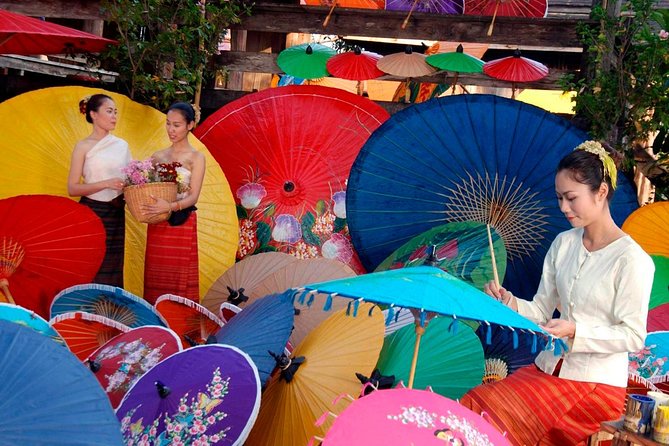
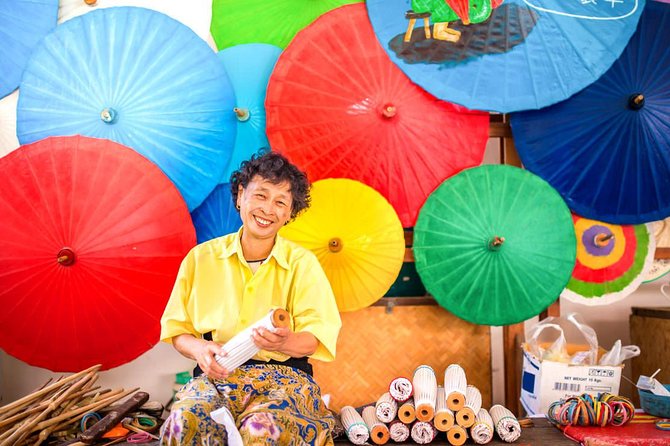
The final main stop is Bo Sang, commonly called Umbrella Village. Here you see how famous Saa-paper umbrellas are made from scratch. Saa paper is produced from mulberry bark, and the process gives the umbrellas their light, fibrous look.
This stop has an advantage over a simple display of finished parasols: you get to see the material before it becomes a decorative object. The transformation from bark-based paper to a shaped umbrella makes the craft easier to understand. It also shows why the finished product is both useful and decorative.
After the demonstration, you have time to walk around the district, interact with local people, and look at possible mementos. The tour description specifically encourages shopping at this point, but buying is optional. If you do want a souvenir, the umbrella stop gives you a chance to choose something tied directly to the place and its craft tradition rather than a generic item from a city shop.
The Bo Sang visit is scheduled for about an hour. That should suit you if you want a clear introduction and a little browsing. It may feel short if you hope to compare many products, ask detailed questions about every production stage, or make a large purchase.
Like the other stops, Bo Sang combines cultural explanation with retail. Some people will appreciate being able to buy directly from a craft district. Others may prefer a tour with no sales component at all. Your expectations will shape your view of this part of the morning.
What the small group changes
The maximum group size is 10. That is a meaningful feature on a tour built around demonstrations. In a large group, you may struggle to hear the guide or get close enough to see a loom, carving tool, or paper-making step. A smaller group usually makes it easier to ask a quick question and stay near the demonstration.
The tour is guided rather than self-guided, so you are not left to guess what each workshop is showing. The available information does not name every guide, but one guide was identified as Ms. Ooh Lala and was praised for visiting several businesses that work to preserve older craft skills. The same account highlighted celadon pottery that was thrown, glazed, and painted by hand.
Celadon is not listed as a formal itinerary stop, so do not book this tour expecting a guaranteed pottery demonstration. Still, that detail suggests the craft route may include more than the three main themes of silk, wood, and umbrellas, depending on the guide and the businesses visited that day.
Is $65 a fair price?
At $65 per person, this is not the cheapest way to see San Kamphaeng. You are paying for a half-day guided route, hotel transfers, an air-conditioned vehicle, and access to several craft centers without having to negotiate separate transport.
The value improves if you are staying in central Chiang Mai and want a simple morning with several stops. A private taxi or ride-hailing trip could get you to the district, but you would still need to identify the best workshops, arrange the route, and explain what you want to see. Here, the guide provides structure and context.
The value is weaker if you are comfortable exploring independently or if your main goal is shopping. You may prefer to spend more time at one workshop rather than moving between silk, wood, and umbrellas on a fixed schedule. The tour offers breadth, not a long workshop in one craft.
The additional 300 THB pickup charge also affects the calculation if your hotel is outside the central area. Ask about the pickup zone before paying, especially if you are staying more than five kilometers from central Chiang Mai.
Who will enjoy this morning most?

I would recommend this tour to you if you want a clear first look at Chiang Mai’s traditional crafts and prefer having transport arranged. It suits couples, families with older children, and visitors who enjoy seeing how ordinary materials become finished goods.
It is also useful early in a Chiang Mai visit. After the tour, you will have a better idea of what interests you, whether that is textile work, wood sculpture, paper crafts, or celadon. You can then return to a particular district or shop later with a more informed eye.
Children must be accompanied by an adult, but most people can take part. Comfortable shoes are important, and you should be ready for some walking at each stop. The four-hour length keeps the outing manageable, though it does not leave much room for lingering.
You may want to skip it if you dislike retail stops, want a hands-on class, or expect a long cultural lecture at each location. The schedule is brisk, and the tour visits several businesses in one morning. It is a sampler of Chiang Mai craft production rather than a specialist study tour.
Booking, cancellation, and practical details
Confirmation is provided at booking. The tour starts at 8 a.m. and ends back at the meeting point, normally after return transport to your hotel or the designated central meeting location.
Free cancellation is available if you cancel at least 24 hours before the start time. Cancellations or changes made less than 24 hours before departure are not accepted for a refund.
The tour operates with a maximum of 10 people. If you want a smaller, more personal outing than a standard bus tour, that limit is one of the strongest reasons to consider it. If you need exact pickup details, confirm whether your hotel falls inside the free zone or use the Night Bazaar McDonald’s meeting point.
Should you book the San Kamphaeng craft tour?
Book it if you want an easy, well-organized introduction to Chiang Mai’s handmade goods, with silk, wood carving, and Bo Sang umbrellas all covered in one morning. The small group, air-conditioned transport, and guide-led explanations make the $65 price reasonable for visitors who value convenience and context.
Think twice if your priority is complete independence or a serious hands-on craft lesson. The stops include retail businesses, and the schedule allows about an hour at each main location. For most first-time visitors who want to see how local crafts are made without spending a full day outside the city, this is a practical choice. Just confirm your pickup zone and expect a sampler, not an in-depth workshop.
FAQ
How long does the handicraft tour last?
The tour lasts about four hours, including the visits to San Kamphaeng, Baan Jang Nak, and Bo Sang.
What time does the tour start?
The start time is 8 a.m.
Is hotel pickup included?
Hotel pickup and drop-off are included for selected hotels in central Chiang Mai. The stated free pickup area includes the old city, Night Bazaar, Tapae Gate, Chiang Mai Gate, Suan Dok Gate, Nimmana Haeminda Road, Santitham, and part of Huay Kaew Road.
Is there a pickup surcharge?
Yes. A 300 THB surcharge applies to hotels outside the stated central pickup area, generally beyond a five-kilometer radius from the Three Kings Monument. The charge is payable on the day of the tour.
Where can I meet the tour if my hotel is not covered?
You can join the tour at the McDonald’s at Chiang Mai Night Bazaar.
How many people can join the tour?
The tour has a maximum of 10 participants.
Can I cancel for a full refund?
Yes. You can receive a full refund if you cancel at least 24 hours before the experience start time. Cancellations or changes made less than 24 hours before departure are not accepted for a refund.
Newly reviewed around Chiang Mai
- Workshop Making Herbal ball & herbal inhaler★ 4.3 · 3 reviews
- Chiang Mai Zipline White Water Rafting and Elephant Sanctuary★ 4.0 · 11 reviews
- Walk With Monks Collecting Alms(meeting point maybe change)★ 4.9 · 8 reviews
- Trek to a Jungle Waterfall★ 5.0 · 14 reviews
- Zipline+Sticky waterfall+Long Neck Village Private Tour★ 5.0 · 22 reviews
- Meditation Retreat and Self-Care in Nature★ 5.0 · 4 reviews
- Full Day Yoga, Meditation, and Thai Cultural Immersion in Chiang Mai★ 5.0 · 3 reviews
- Long Neck Village, White & Blue Temple, Black House Day Tour From Chiang Mai★ 4.0 · 14 reviews
Chiang Mai Craft Workshops, compared.
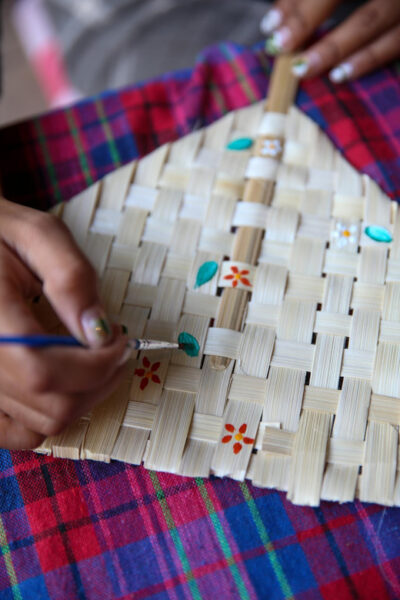
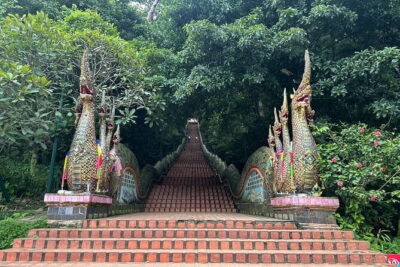
Private Day Tour Doi Suthep Temple and Handicraft Center
Read our review →
Jewellery Making Class with Silversmithing in Chiang Mai
Read our review →

Grand Canyon Chiang Mai Private Tour with Pottery Village
Read our review →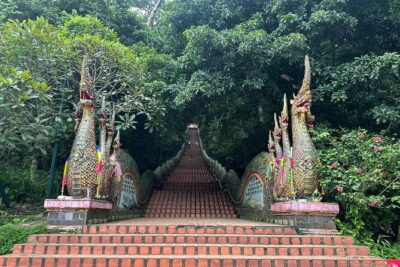
Private Doi Suthep Temple Handicraft Center and Sticky Waterfall
Read our review →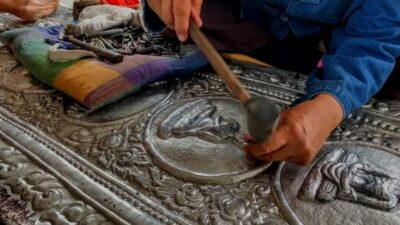
Browse the lists this tour appears in