
Reviewed · FARMS
Local Farming Experience in Chiang Mai, Thailand
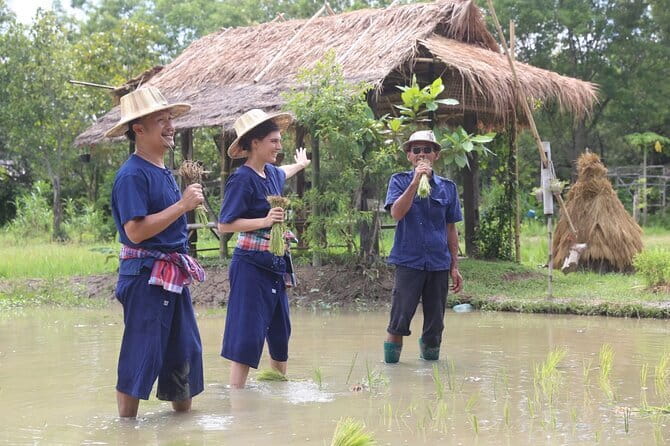
Rice planting is the heart of this three-hour visit to Hang Tueng Farm near Chiang Mai. With local farmer Uncle Serd, you learn how rice seedlings are pulled from a nursery, bundled with bamboo rope, and set into wet soil. You also harvest grass for Riam, a Thai buffalo who enjoys both eating and a good wash.
I like the hands-on farm work, especially the chance to understand how rice is grown instead of simply looking at a field from the roadside. I also like the small group size, capped at 10 people, which should give you more time with Uncle Serd and the animals. The main drawback is simple: you will get muddy, and private transportation to the farm is not included.
Key points to know before you book
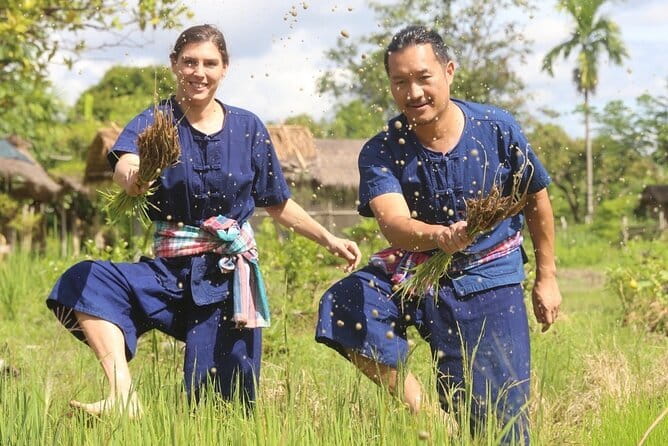
- Rice planting is the main activity: You uproot seedlings, tie them with bamboo rope, and plant them in the rice field.
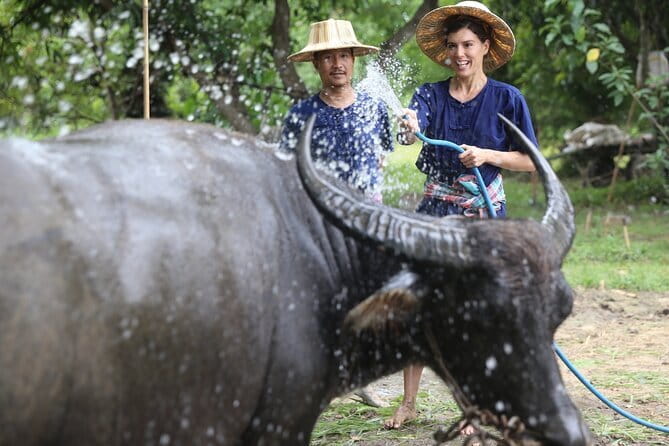
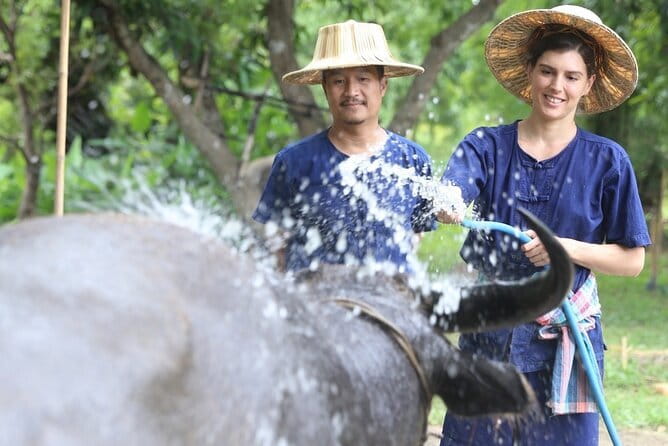
- Riam the Thai buffalo is part of the visit: You cut grass for her, feed her, and wash her.
- Uncle Serd leads the farm work: He is described as a professional local farmer who teaches the practical steps.
- The group is limited to 10 people: This keeps the visit smaller than a large coach outing.
- Lunch and an herbal drink are included: The meal is described as a signature Thai farm lunch, though the listed menu details vary.
- Plan for mud and weather: The activity takes place outdoors and may be canceled in poor weather.
Rice farming with Uncle Serd at Hang Tueng Farm
Hang Tueng Farm is at 89/23 Sri Bua Ngoen Road, Soi 19, in Tha Sala, Saraphi, Chiang Mai. The activity starts and ends at the farm, so you need to arrange your own way there and back.
The farm visit is built around work rather than a staged show. Uncle Serd teaches you how rice moves from a nursery to a working field. That matters because rice can seem like a simple crop when you see it from a distance, but the process involves several careful steps before the plants are established.
You begin by learning how to uproot rice seedlings from the nursery. This is a useful detail that many short cultural stops skip. You are not just told that rice is planted; you handle the young plants and see how they are prepared for the field.
Next comes the wet work. You kick mud away from the rice seedlings, tie them with bamboo rope, and carry on to the planting area. The work is physical, but it is also easy to understand. You can see the connection between the small bundle in your hand and the neat rows of rice growing in the paddy.
I would not book this visit expecting a polished farm museum or a long lecture. Its appeal is the chance to work alongside a local farmer and ask questions as each task happens. The group limit of 10 should help keep the instruction personal, though the exact amount of individual attention will depend on the group and the pace of the morning.
More Farm Visits around Chiang Mai:
- Half-Day Thai Cooking Class at Organic Farm in Chiang Mai
★ 5.0 · 19,087 reviews - Chiang Mai: Authentic Cooking Class with Market & Farm Visit
★ 4.9 · 4,546 reviews - Chiang Mai: Cooking Class with Organic Farm at Mama Noi
★ 4.9 · 1,151 reviews
Meeting Riam, the Thai buffalo
The buffalo portion gives the visit a welcome change of pace. You harvest grass for Riam, feed her, and wash her. She is described as especially fond of water and food, so the washing is not a token photo stop. It is part of her daily care and lets you see a working farm animal at close range.
For many people, this will be the most memorable part of the morning. Feeding an animal makes the farm feel personal, while washing her adds a playful side to the visit. Children can enjoy the novelty, and adults get a better sense of how animals fit into everyday farm life.
You should expect to get dirty here, as well as in the rice field. One practical tip is to wear clothing and footwear that you can safely cover in mud. The supplied information does not specify changing rooms, showers for visitors, or protective clothing, so do not count on those extras unless the farm confirms them before you go.
The activity allows service animals, and most people can participate. Still, the work involves standing, bending, handling plants, walking through wet soil, and working around a large animal. If you have concerns about mobility or balance, ask the provider before booking.
Why the rice nursery matters
The rice nursery is more than a stop before the main event. It explains one of the least visible parts of rice farming. You get to see the young seedlings before they are planted and learn why they are handled in bundles.
Pulling up the seedlings also makes the work feel real. You may arrive knowing that rice grows in paddies, but the process becomes clearer when you have to remove the plants, gather them, tie them, and place them in the field.
The bamboo rope is another useful local detail. Rather than treating the farm as a backdrop for photos, the activity shows a simple method for keeping seedlings together before planting. It is a small task, but it gives the visit a strong connection to ordinary farm practice.
I like this sequence because it builds from one step to the next. You are not asked to plant rice without context. You first learn what the seedling looks like, then how it is prepared, and finally where it goes.
Planting rice in the field
Rice planting is where the lesson turns into work. You place the prepared seedlings in the rice field with Uncle Serd, working in wet soil and learning by doing.
This is likely to be the messiest part of the visit, and that is also its value. The mud is not an obstacle to the activity. It is the setting. You get a small taste of the effort behind a crop that is central to Thai food and daily life.
The activity description uses the phrase kick mud out from rice seedlings, which suggests a practical, hands-on method rather than delicate gardening. You should expect a physical task, not a gentle walk around a dry demonstration plot.
The time spent in the field is also the strongest reason to choose this outing over a standard sightseeing stop. You are not only looking at rural Chiang Mai. You are taking part in one of the jobs that shapes it.
That said, rice planting is seasonal and weather-dependent by nature. The precise condition of the field may vary, and the experience requires good weather. If rain or other poor conditions force a cancellation, you are offered another date or a full refund.
A different kind of day out of Chiang Mai altogether:
- Chiang Mai: Elephant Sanctuary, Waterfall & Bamboo Rafting
★ 4.9 · 9,160 reviews - Chiang Mai: Doi Inthanon National Park Eco-Friendly Tour
★ 4.6 · 6,667 reviews - Chiang Mai: Elephant Sanctuary & Waterfall Group Tour
★ 4.9 · 5,780 reviews - Chiang Mai: Chiang Rai Temples, Karen Tribe and Hot Springs
★ 4.7 · 5,401 reviews
A farm lunch after the muddy work
Lunch follows the farm activities, with an herbal drink included. One description gives a meal of rice with chicken green curry, an herbal drink, and mango sticky rice. Another menu description names Pad Thai with mushrooms, Roselle mixed with dates and grass jelly, and rice germ whole grains.
Because those details do not match exactly, I would confirm the day’s menu with Hang Tueng Farmstay and Workshop Chiang Mai before you go, particularly if you have dietary needs. The reliable point is that lunch and a herbal drink are included, but the exact dishes may depend on the package or the day.
Either way, the meal gives the visit a sensible finish. After working in the field and feeding the buffalo, sitting down to Thai food makes the morning feel connected to the farm rather than split into unrelated activities.
The meal is not presented as a restaurant tour or cooking class. I would treat it as a simple local lunch included with the farm visit. The value comes from the full sequence: learning the work, doing the work, then eating together.
What the $58.60 price buys you
At $58.60 per person, this is not the cheapest way to spend three hours in Chiang Mai. You are paying for a small, guided activity with farm instruction, buffalo care, rice work, lunch, and an herbal drink.
I think the price makes the most sense if you want participation rather than sightseeing. A standard countryside drive may show you rice fields, but it will not necessarily teach you how to uproot seedlings, tie them with bamboo rope, or plant them yourself.
The maximum group size of 10 also helps explain the cost. This is not a large group being moved through a farm in a hurry. A smaller group gives Uncle Serd a better chance to demonstrate the work and respond to questions.
The price does not include private transportation. That is the main extra cost to consider. You need to reach Hang Tueng Farm in Tha Sala, Saraphi, and return to your own accommodation after the activity. Since the meeting point is outside the most central sightseeing areas, check your route and allow enough time to arrive.
The activity is commonly booked about 23 days ahead. That is useful planning information, especially if you have fixed dates in Chiang Mai. I would not leave it until the last minute if this is important to your schedule.
Who will enjoy this farm visit most
I would recommend this outing to families who want a cultural activity with real work in it. The mix of animals, mud, rice plants, and lunch can hold a child’s attention better than a long indoor explanation. Adults also get something substantial from the visit because the farming process is explained through action.
It suits couples and solo visitors who want a closer look at rural life near Chiang Mai. The small group cap is helpful if you prefer a quieter activity and want a chance to speak with the local farmer.
It is also a good fit for photographers, but I would put the camera second. You will have muddy hands and active tasks to manage, and the best moments may happen while you are feeding Riam or trying to place seedlings in the field.
I would think twice if you dislike getting wet or dirty, need a fully relaxed outing, or want transportation handled from your hotel. The experience is short, but it is not passive.
Practical details for a smoother morning
The booking includes a mobile ticket, and confirmation is sent at the time of booking. The meeting point is Hang Tueng Farm, and the activity returns there at the end.
Wear clothes you can soil. The farm work includes rice planting, mud, grass cutting, buffalo feeding, and washing the animal. The supplied details do not promise visitor showers, towels, or spare clothing, so bring what you need for your own comfort.
The experience is suitable for most people, and service animals are allowed. It is also near public transportation, but private transportation is not included. Since no exact travel method or pickup service is provided, confirm your route to 89/23 Sri Bua Ngoen Road before the day.
Free cancellation is available if you cancel at least 24 hours before the local start time. Cancellations made later, or changes made within that period, are not refunded. The farm may also cancel for poor weather or if the minimum number of participants is not reached. In either case, you are offered another date, another experience, or a full refund.
My take: should you book it?
Book this farm visit if you want to work with your hands, learn the rice-growing process from Uncle Serd, and spend time with Riam the Thai buffalo. The strongest parts are the rice nursery, the muddy planting session, and the chance to feed and wash an actual farm animal.
I would skip it if you want a clean, effortless morning or a tour that includes hotel transport. At $58.60, the value depends on how much you care about personal participation and a small group.
For the right visitor, this is a memorable way to connect a Thai meal with the farming work behind it. Just plan for mud, confirm the lunch menu, and arrange your own transport to Hang Tueng Farm.
FAQ
How long does the Hang Tueng Farm activity last?
The experience lasts approximately three hours.
Where does the activity start and finish?
It starts at Hang Tueng Farm, located at 89/23 Sri Bua Ngoen Road, Soi 19, Tha Sala, Saraphi, Chiang Mai 50000, Thailand. It ends back at the same meeting point.
Is transportation included?
No. Private transportation is not included, so you need to arrange your own transportation to and from the farm.
What activities are included?
You harvest grass, feed and wash the Thai buffalo Riam, uproot rice seedlings, move mud from the seedlings, tie them with bamboo rope, and plant rice in the field with Uncle Serd.
Is lunch included?
Yes. Lunch and an herbal drink are included. The listed meal details vary, with descriptions including rice with chicken green curry and mango sticky rice, as well as Pad Thai with mushrooms and Roselle with dates and grass jelly.
How many people can join the activity?
The experience has a maximum of 10 participants.
Can I cancel for a full refund?
Yes, if you cancel at least 24 hours before the experience start time. Late cancellations and late changes are not refunded. If poor weather or an insufficient number of participants causes the farm to cancel, you are offered another date or a full refund.
Newly reviewed around Chiang Mai
- Workshop Making Herbal ball & herbal inhaler★ 4.3 · 3 reviews
- Chiang Mai Zipline White Water Rafting and Elephant Sanctuary★ 4.0 · 11 reviews
- Walk With Monks Collecting Alms(meeting point maybe change)★ 4.9 · 8 reviews
- Trek to a Jungle Waterfall★ 5.0 · 14 reviews
- Zipline+Sticky waterfall+Long Neck Village Private Tour★ 5.0 · 22 reviews
- Meditation Retreat and Self-Care in Nature★ 5.0 · 4 reviews
- Full Day Yoga, Meditation, and Thai Cultural Immersion in Chiang Mai★ 5.0 · 3 reviews
- Long Neck Village, White & Blue Temple, Black House Day Tour From Chiang Mai★ 4.0 · 14 reviews
Farms, compared.
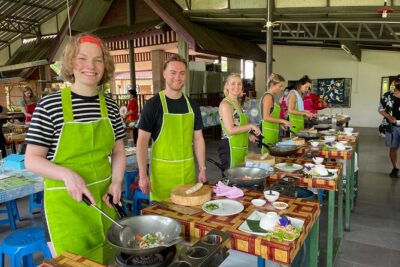
Half-Day Thai Cooking Class at Organic Farm in Chiang Mai
Read our review →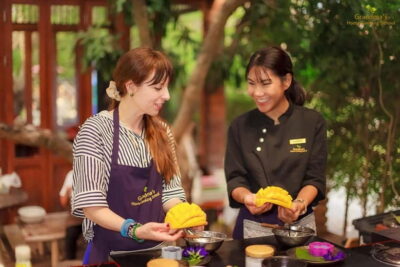
Authentic Cooking Class with Market & Farm Visit
Read our review →
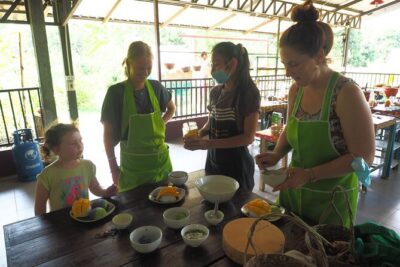
Cooking Class with Organic Farm in Chiang Mai at Mama Noi
Read our review →
Evening Cooking Class in Organic Farm with Local Market Tour
Read our review →
Morning Cooking Class in Organic Farm with Local Market Tour
Read our review →Browse the lists this tour appears in