
Reviewed · CHIANG MAI STREET FOOD TOURS
Go where the locals go, Eat what the locals eat! Food Tour with Local Foodies
Chiang Mai’s best food often arrives without a polished menu. This tour takes you to old market stalls, family-run eateries, and Northern Thai restaurants for dishes such as Kao Man Gai, Khao Soi, Sai Oua sausage, and mango sticky rice. You get a taste of the city that is hard to find by simply following restaurant signs.
I like the local focus and the smart use of a driver. You spend more time eating and less time stuck in Chiang Mai traffic. I also like the range: this is not just a restaurant crawl, but a mix of market food, temple stops, neighborhood walks, and background on Lanna cooking.
The main drawback is the price for a food tour that lasts about four hours, especially if your group is large and you eat at only a few major stops. Portions add up quickly, so arrive hungry, and check your meeting point carefully because the morning and afternoon tours begin in different places.
Key things to know before you book
- The morning route begins at Three Kings Monument: Expect Kao Man Gai, Khao Soi, Wat Chiang Man, Wat Gate Community, and traditional snacks.
- The afternoon route begins at Warorot Market: You will sample market treats, visit the Flower Market, eat Northern Thai dishes, and finish with more local sights.
- Food is the main event: Tastings can include tapioca dumplings, mango sticky rice, Thai sausage, herbal salad, and several dishes rarely found outside Thailand.
- A driver saves time: Transfers between markets, restaurants, and temples make the route easier than arranging separate rides.
- The guides shape the experience: PT, Pondtip, and Sky are named in tour feedback as friendly, clear English speakers with strong local food knowledge.
- Temple clothing matters: Wear clothing suitable for temple visits, and remember that alcohol is not included.
Two routes, one very food-focused Chiang Mai experience
The tour is offered in two roughly four-hour versions. The 9 a.m. route meets at Three Kings Monument in Chiang Mai’s Old City. The 4 p.m. route meets at Warorot Market, also called Kad Luang.
That difference matters. You are not choosing between two identical departures. You are choosing between a morning route centered on Old City sights and a later route built around Warorot Market, evening food, and Northern Thai dinner.
The advertised duration is four to eight hours, which likely reflects the available route options rather than one continuous eight-hour outing. Confirm which departure you are booking, since the meeting locations are not the same. One family nearly lost time after confusing the 4 p.m. starting point with the morning meeting place.
The group can reach up to 20 people. That is small enough for a personal guide in theory, though the feel will depend on the actual number booked. Some outings have been very small, even private-feeling, while a full group could make market movement and restaurant seating less nimble.
More Street Food Tours in Chiang Mai:
- Small-Group Chiang Mai Evening Street Food Tour
★ 4.5 · 826 reviews - Chiang Mai: Evening Local Street Food Market Tour
★ 4.8 · 604 reviews - Northern Flavours Chiang Mai Food Tour with 15+ Tastings
★ 5.0 · 513 reviews
Starting at Three Kings Monument
The morning tour begins at Three Kings Monument, a central Old City landmark. It is a practical meeting point because the route quickly moves into Chiang Mai’s historic core rather than wasting the first part of the morning on a long pickup.
Your first food stop is Kao Man Gai, the Thai version of chicken and rice. It sounds simple, but that is the point. Good Kao Man Gai depends on careful cooking, a flavorful rice base, tender chicken, and the right sauce. The featured restaurant has been family-owned since 1957 and is popular with local Thai diners as well as visitors from other parts of the country.
This is a useful first taste because it shows how much skill can go into an everyday dish. You are not starting with a flashy specialty. You are starting with something people actually eat.
From there, you walk to Wat Chiang Man, the first temple built in Chiang Mai’s Old City. The stop gives your stomach a short break and places the food in its local setting. The temple visit is not a separate sightseeing tour, but it adds a cultural layer to the meal stops.
Wear clothing that covers shoulders and knees, or at least dress in a way that is respectful and practical for temple entry. You will be walking, eating, and moving between indoor and outdoor spaces, so light clothing and comfortable shoes make sense.
Khao Soi and the taste of Northern Thailand
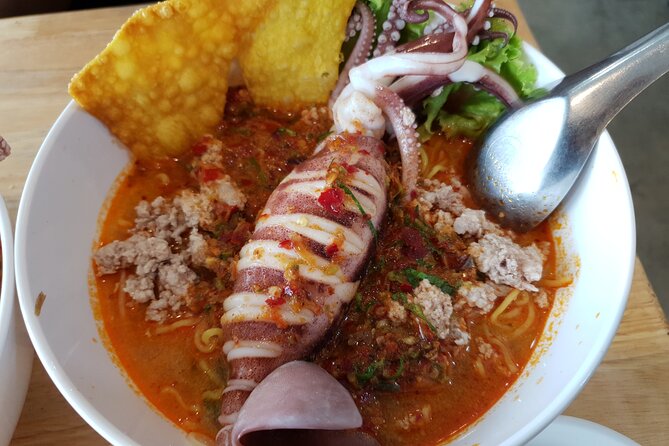
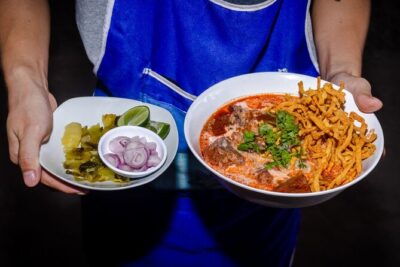
The morning route next turns to Khao Soi, Chiang Mai’s famous curry noodle dish. This is one of the essential foods of the north, with soft noodles, a curry-based broth, and crisp noodles on top. The guide explains the dish’s origins and place in Chiang Mai food culture, which helps you understand why it is more than a standard Thai noodle bowl.
Khao Soi varies from shop to shop. The tour’s value here is not only the meal, but the chance to ask how the dish is made, what the toppings do, and how Northern Thai cooking differs from the central Thai food served in many restaurants abroad.
One tour outing included Khao Soi at a Michelin-starred restaurant, so the exact restaurant can add a pleasant surprise. Do not book this solely for a famous dining label, though. The stronger reason is the chance to compare the dish in its home city and learn how it fits into Northern Thai cooking.
After lunch, the route continues to the Wat Gate Community. This stop gives the morning a neighborhood feel and keeps the focus away from a string of tourist-only restaurants. The wording of the route suggests a mix of walking and short transfers, with the driver used to keep the schedule moving.
Tapioca dumplings and old-style sweets
A dessert stop takes you to one of Chiang Mai’s best-known places for Sakoo Sai Moo and Kao Griap Pak Moh. These names may be unfamiliar, which is exactly why a guide helps.
Sakoo Sai Moo are tapioca dumplings filled with pork. Kao Griap Pak Moh are delicate steamed rice dumplings, usually prepared with a savory filling. They are quite different from the mango sticky rice most people already know, and they show the range of Thai snack food.
You may also encounter mango sticky rice during the market-based route. It is familiar, but a good version still makes a strong finish to a food-heavy afternoon. The tour combines familiar treats with foods that are hard to identify or order without help, giving you a wider sample of Chiang Mai’s everyday cooking.
The morning route then crosses the Ping River area, according to the supplied itinerary, though the final portion is cut off in the description. That means you should treat the listed stops as a guide to the route rather than a guarantee of every final detail.
More Food Tours in Chiang Mai:
- The 10 Tastings of Chiang Mai With Locals: Private Street Food Tour
★ 5.0 · 216 reviews - Chiang Mai: Local Food and Markets Guided Walking Tour
★ 4.3 · 175 reviews - Taste of Chiang Mai: Michelin Guide & Street Food Tour
★ 4.9 · 159 reviews - Chiang Mai: Food Tour by Songtheaw Truck with 15+ Tastings
★ 4.9 · 157 reviews
Warorot Market at 4 p.m.
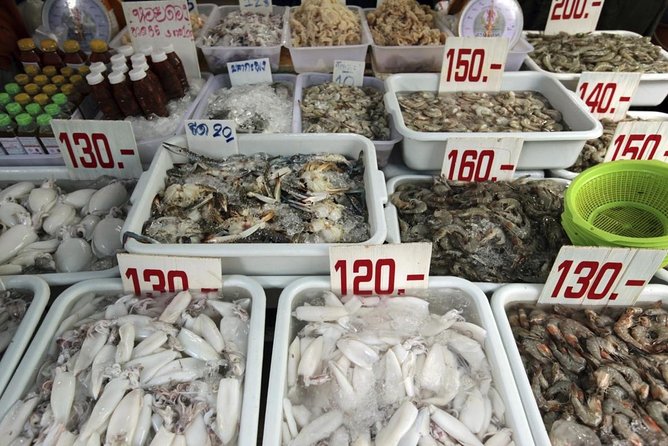
The afternoon version begins at Warorot Market, or Kad Luang. This is one of Chiang Mai’s oldest, largest, and most varied open markets. It is a three-story indoor market with clothing, produce, souvenirs, and plenty of food, so arriving with a guide is useful if you want to focus on what to taste rather than wander without a plan.
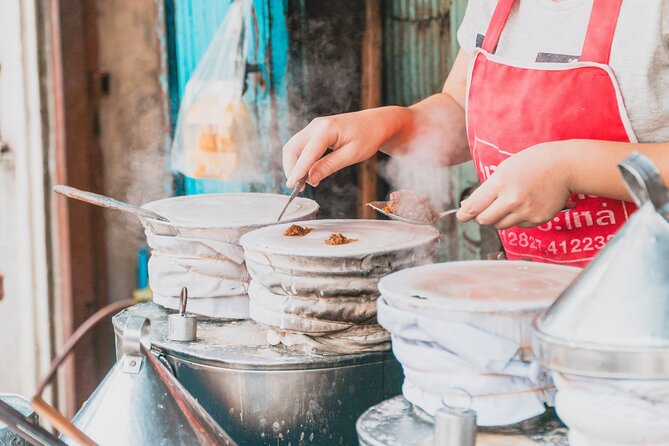
The food stops include Sai Oua, the northern Thai sausage seasoned with herbs and spices. You may also try freshly made Golden Curl, mango sticky rice, fruit, fermented foods, and Thai iced tea. Some market items are easy to recognize. Others are not. A guide can explain what you are eating and point out ingredients you might otherwise pass by.
This is one of the strongest parts of the tour for anyone who wants food that rarely appears on foreign Thai menus. The market also lets you see food as part of daily shopping, not just as a plated restaurant experience.
The tour continues through the nearby Flower Market. It is a short change of pace after the tastings, with an opportunity to see another side of local commerce. You will not spend the entire afternoon at food counters, which helps keep the route from becoming one long succession of bites.
A Northern Thai restaurant dinner
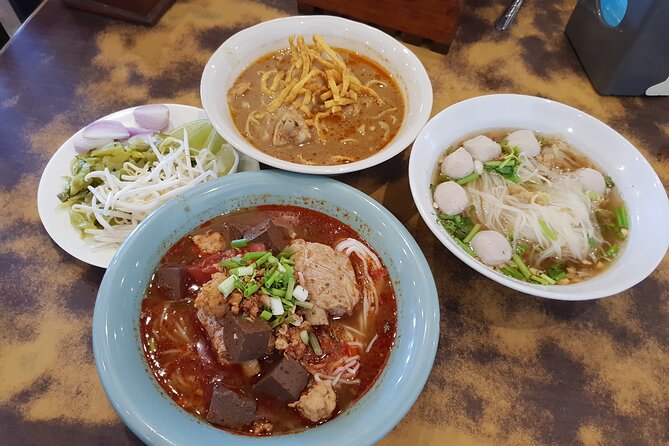
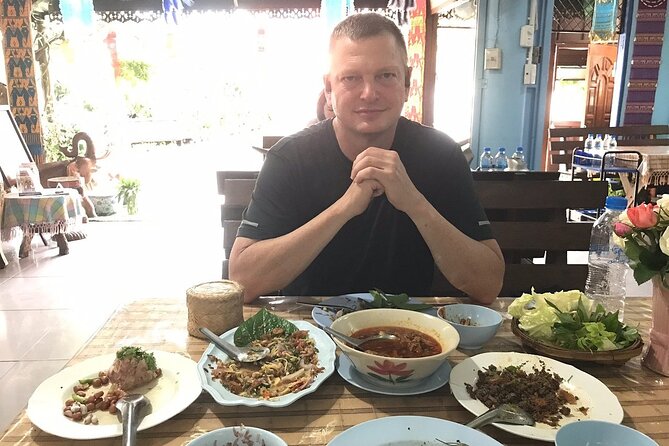
After the market, a ride takes you to an authentic Northern Thai restaurant. The meal includes several substantial dishes rather than one signature plate:
- Gaeng Hunglay, a Northern Thai pork curry
- Larb Moo, a seasoned minced pork dish
- Khua Jin Som, a regional preparation using fermented pork
- Yum Samunprai, an herbal salad
This is where the tour becomes more than grazing. You get a proper meal and a chance to compare flavors across several dishes. Northern Thai food can be herbal, savory, sour, and heavily seasoned without relying on the sweet balance common in some central Thai dishes.
The restaurant setting also makes it easier to ask questions and eat at a slower pace. At a market stall, the focus is often on a quick bite. At a sit-down meal, the guide can explain how the dishes relate to Northern Thai home cooking and local ingredients.
Food allergies and dietary restrictions are worth raising before you book, since the supplied information does not promise specific substitutions. The route can offer customization in some situations, but that should not be assumed. If you avoid pork, note that several named specialties contain pork.
Temples, tuk-tuks, and an evening finish
The afternoon route includes a visit to Wat Sadue Muang, with more of the itinerary continuing beyond the supplied description. Past outings have also included a temple walk, tuk-tuk sightseeing, and an evening market dessert stop.
These elements help break up the eating. They also give you a sense of Chiang Mai beyond its restaurant tables. A tuk-tuk ride is short, local transportation, not a grand city tour, but it can make the movement between stops more enjoyable.
The order of the evening stops may change. Food markets operate on their own schedules, and the guide may adjust the route to keep dishes fresh and the group comfortable. Headsets are available on request, which is useful if you are in a larger group or standing near traffic and market noise.
Do not expect a quiet, polished dining experience throughout. Warorot Market is active and crowded at times, and the appeal comes partly from the ordinary noise and movement. If you want a formal tasting menu, this is not the right choice. If you want to understand how food fits into Chiang Mai life, it makes more sense.
How much food do you actually get?
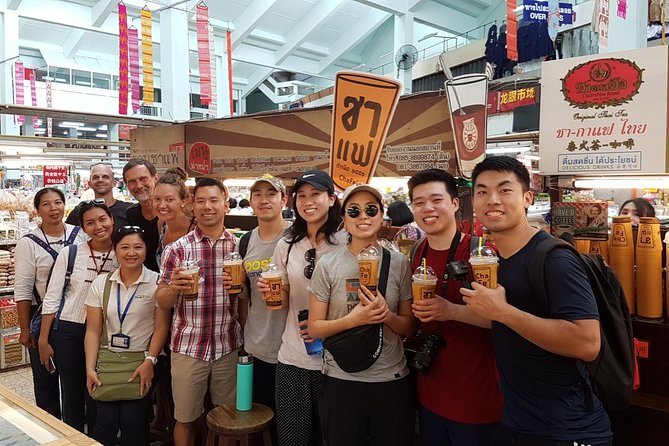
Arrive very hungry. One outing included more than 15 items from Warorot Market and later stops. The exact number will vary, but the tour clearly leans toward generous tasting rather than a few token samples.
That volume is a major strength if you enjoy trying new foods. It is also the main practical concern. You may eat sausage, rice dishes, curry, noodles, sweets, fruit, dumplings, drinks, and a full restaurant meal in one half-day.
The guide can help pace the meal, but you should still be honest about your appetite. If you are part of a family with young children, the route can work, and one guide handled a group with very young children well. Still, market walking, heat, and several food stops can test small children.
The experience suits curious eaters, first-time Chiang Mai visitors, and anyone who wants a food orientation at the start of a stay. It also works well late in a trip if you want to seek out dishes you missed. It is less suited to picky eaters, strict diets without advance planning, or anyone who prefers to choose every meal independently.
Is $50.52 a fair price?
At $50.52 per person, this is not the cheapest way to eat in Chiang Mai. You could buy individual market dishes for a fraction of the cost. The price pays for the guide, food tastings, bottled water, snacks, a driver or guide, and the time saved finding the right stalls and restaurants.
The value improves if you are new to Northern Thai food. You are paying for access and explanation, not just calories. A good guide can help you tell the difference between regional dishes, explain ingredients, manage the route, and steer you toward foods you would probably miss on your own.
The value is less convincing if you are already confident ordering at Thai markets or if your group wants a private, highly customized food tour. The maximum group size is 20, and the itinerary covers several locations rather than lingering at one market. Group discounts may help larger parties.
The 98 percent recommendation rate and 4.9 rating from 138 reviews point to a consistently strong experience, but the occasional criticism is fair: some people may feel the price is high for a route with only a few main destinations. I would book it for the guide and the access to regional food, not because it is the cheapest dinner in town.
Practical details that affect your day
Confirmation arrives at booking, and mobile tickets are available. Free cancellation applies when you cancel at least 24 hours before the start time. Changes or cancellations inside that window are not accepted for a refund.
Children must be with an adult. Service animals are allowed, and the route is near public transportation. Most people can take part, but you should be ready for walking, market conditions, temple visits, and a large amount of food.
Alcohol is not included, though it can be purchased. Bottled water and snacks are included. Since you may visit temples, dress with those stops in mind rather than wearing beach clothing.
Guides named in the feedback include PT, Pondtip, and Sky. PT is repeatedly described as warm, flexible, and clear in English, while Sky is noted for explaining spices and ingredients during a market visit connected with cooking. The guide you receive may differ, but local personality is a meaningful part of this tour.
Should you book the Chiang Mai Foodie Tour?
Book it if you want a guided introduction to Northern Thai food, especially if dishes such as Khua Jin Som, Sakoo Sai Moo, and Gaeng Hunglay are new to you. The combination of market tastings, restaurants, temples, and short rides gives you a useful first look at Chiang Mai’s food culture.
Choose the 9 a.m. route if you want Old City sights, Wat Chiang Man, Kao Man Gai, and Khao Soi. Choose the 4 p.m. route if Warorot Market, the Flower Market, a Northern Thai dinner, and evening sweets sound better.
Skip it if you are looking for a cheap meal, dislike shared group tours, or have dietary needs that require guaranteed substitutions. For most curious eaters, though, the tour earns its price through local access, a wide food range, and guides who can turn unfamiliar dishes into a meal you understand.
FAQ
How long does the food tour last?
The experience lasts approximately four hours, with the available tour information giving an overall duration range of four to eight hours. The morning and afternoon versions are each described as four-hour routes.
Where does the morning tour meet?
The 9 a.m. tour meets at Three Kings Monument in Chiang Mai’s Old City.
Where does the afternoon tour meet?
The 4 p.m. tour meets at Warorot Market, also known as Kad Luang. This is a different meeting point from the morning tour.
What foods are included?
Food can include Kao Man Gai, Khao Soi, Sai Oua, Golden Curl, mango sticky rice, Thai iced tea, Sakoo Sai Moo, Kao Griap Pak Moh, Gaeng Hunglay, Larb Moo, Khua Jin Som, and Yum Samunprai. The exact selection can vary by route.
Is transportation included?
A private driver or driver-guide is included to help move between food stops and sights. The route also includes walking and may include tuk-tuk sightseeing.
Is alcohol included in the price?
No. Alcoholic drinks are not included, but they are available to purchase.
What is the cancellation policy?
You can cancel for a full refund if you do so at least 24 hours before the experience start time. Cancellations or changes made less than 24 hours before the start time are not accepted for a refund.
Newly reviewed around Chiang Mai
- Workshop Making Herbal ball & herbal inhaler★ 4.3 · 3 reviews
- Chiang Mai Zipline White Water Rafting and Elephant Sanctuary★ 4.0 · 11 reviews
- Walk With Monks Collecting Alms(meeting point maybe change)★ 4.9 · 8 reviews
- Trek to a Jungle Waterfall★ 5.0 · 14 reviews
- Zipline+Sticky waterfall+Long Neck Village Private Tour★ 5.0 · 22 reviews
- Meditation Retreat and Self-Care in Nature★ 5.0 · 4 reviews
- Full Day Yoga, Meditation, and Thai Cultural Immersion in Chiang Mai★ 5.0 · 3 reviews
- Long Neck Village, White & Blue Temple, Black House Day Tour From Chiang Mai★ 4.0 · 14 reviews
Chiang Mai Street Food Tours, compared.
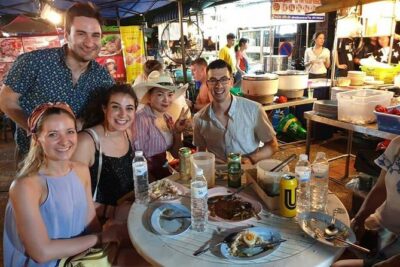
Small-Group Chiang Mai Evening Street Food Tour
Read our review →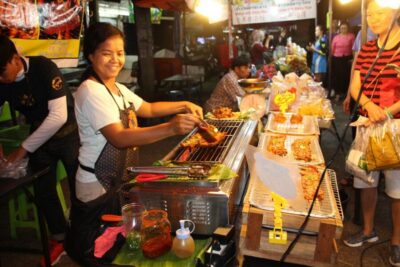
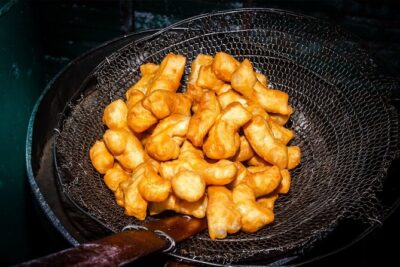
Northern Flavours Chiang Mai Food Tour with 15+ Tastings
Read our review →
The 10 Tastings of Chiang Mai With Locals: Private Street Food Tour
Read our review →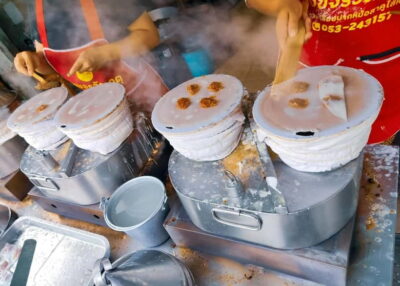
Taste of Chiang Mai: Michelin Guide & Street Food Tour
Read our review →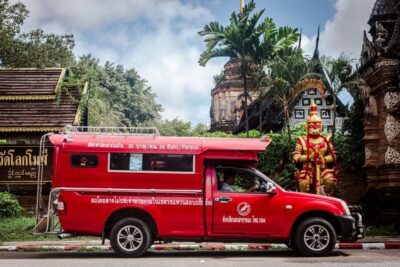
Lanna Kingdom Chiang Mai Food Tour with 15+ Tastings
Read our review →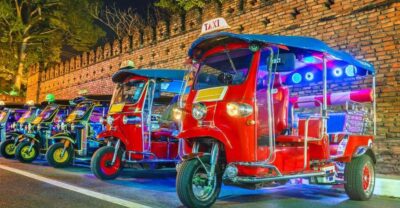
Browse the lists this tour appears in