
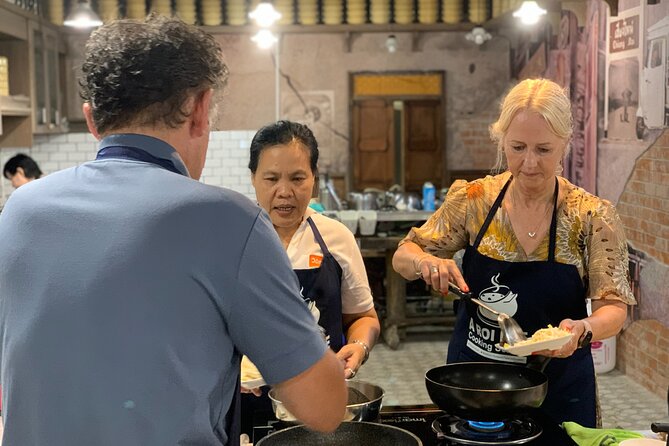
Reviewed · CHIANG MAI THAI COOKING CLASSES
Northern Thai Cooking Experience in Chiangmai
The best part of this Chiang Mai cooking class is its focus on Northern Thai food, especially khao soi. You learn both the traditional version and an easier method for making it at home, then sit down to eat the dishes you prepared. I like the hands-on start, where you fry local snacks to serve with chili dip, and the small maximum of 10 people keeps the class personal. The daily changing menu gives you a reason to book more than once.
I also like that the class includes take-home curry pastes for khao soi and Hung Lei curry, along with vegan, vegetarian, and allergy-adjusted options. The main drawback is that the menu changes each day, so you cannot count on cooking every dish listed. You should also allow roughly five hours, which may be a long stretch if you want a quick market visit instead.
Key points
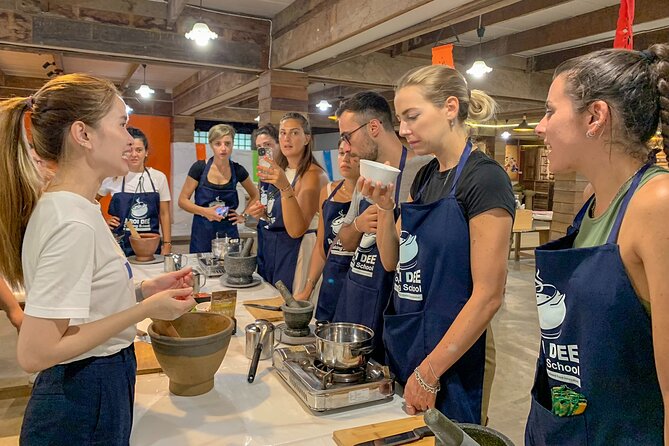
- Two ways to make khao soi: Learn both the original preparation and a simplified version designed for home cooking.
- A small class size: The group is limited to 10 people, allowing more room for instruction and questions.
- A hands-on welcome: Fry local snacks yourself and eat them with Northern Thai chili dipping sauce.
- A rotating menu: Depending on the day, you may cook pad Thai, papaya salad, stir-fried noodles, or holy basil chicken.
- Dessert is part of the lesson: Finish with banana in coconut milk or sweet sticky rice with longan.
- Useful take-home supplies: Buy FDA-approved local khao soi and Hung Lei curry pastes after class.
Why this class is about Northern Thai food, not just pad Thai
Many Thai cooking classes center on familiar dishes. This one puts Northern Thailand first, with khao soi as the main lesson. That matters because khao soi gives you a better sense of Chiang Mai’s own food culture than a menu made only of dishes found across the country.
Khao soi is a coconut-based noodle curry served with noodles and traditional accompaniments. Here, the class teaches both the original preparation and an easier version. I see that as one of the most useful parts of the experience. You get a taste of the more traditional method, but you also learn a practical route for making the dish in an ordinary home kitchen.
The class takes place at a historic cooking location with a long connection to Northern Thai food. The available details do not provide the name of the building or explain its architectural features, so I would not book this expecting a full heritage tour. The value is in the food lesson and the link to local culinary traditions.
The school’s stated aim is to keep Northern Thai flavors intact while making the methods easier for people of different skill levels. That makes this a good choice if you cook rarely, but it also gives more experienced home cooks a chance to compare the original and simplified versions.
More Thai Cooking Classes in Chiang Mai:
- Half-Day Thai Cooking Class at Organic Farm in Chiang Mai
★ 5.0 · 19,087 reviews - Chiang Mai: Cooking Class, Market & Thai Herbs Garden Tour
★ 4.9 · 4,824 reviews - Chiang Mai: Authentic Cooking Class with Market & Farm Visit
★ 4.9 · 4,546 reviews
Arriving near Kotchasarn Road
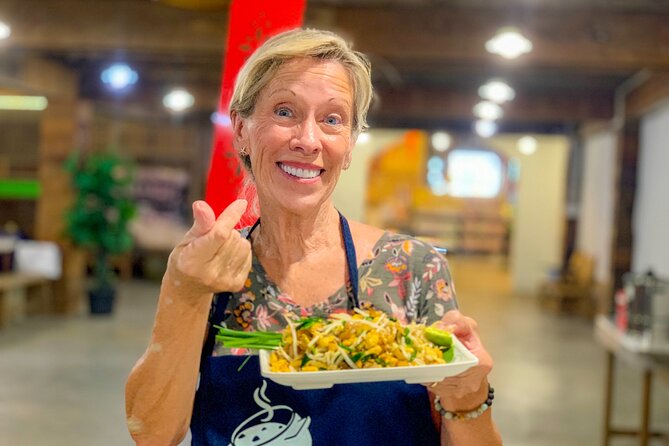
The listed meeting point is the McDonald’s at 17/1 Kotchasarn Road in Chang Khlan, Chiang Mai. The class ends back at the meeting point, which makes the start and finish easy to plan around other activities.
Pickup is offered, but the meeting point is also clearly provided. I would confirm the pickup arrangement when booking rather than assume door-to-door service. The meeting point is near public transportation, another practical benefit if you are staying in or around central Chiang Mai.
Your booking confirmation arrives at the time of booking. Since the class averages being booked 32 days in advance, I would reserve early if your dates are fixed. That is especially sensible for a small class with a maximum of 10 people.
The duration is about five hours. That includes the welcome food, cooking instruction, desserts, and the final meal. It is not a quick demonstration followed by a tasting. You should plan your day around it and avoid scheduling something that starts immediately afterward.
Starting with chili dip and fried snacks
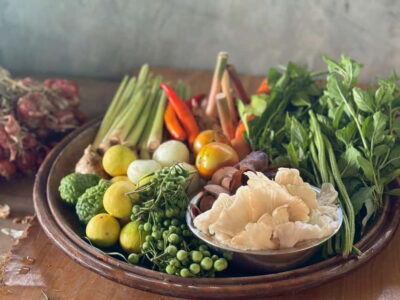
The first food you encounter is Northern Thai chili dipping sauce with a selection of local fried snacks. The useful twist is that you fry the snacks yourself. This gives the class an active start before the main recipes begin.
That opening also introduces you to a basic Northern Thai eating pattern: bold dips served with small bites and contrasting textures. The available details do not name each snack or explain the chili sauce recipe, so you should treat this as an introduction rather than a full separate lesson.
A herbal drink follows the snack course. It offers a cooler, lighter pause before the cooking begins and gives you another taste of the region’s everyday flavors. Because the drink is served as part of the class, you do not need to arrange anything separately.
I like this opening because it avoids the common problem of standing around hungry while a teacher prepares everything. You have something to do right away, and the food you make at the start becomes part of the shared tasting.
The main lesson: original and easy khao soi
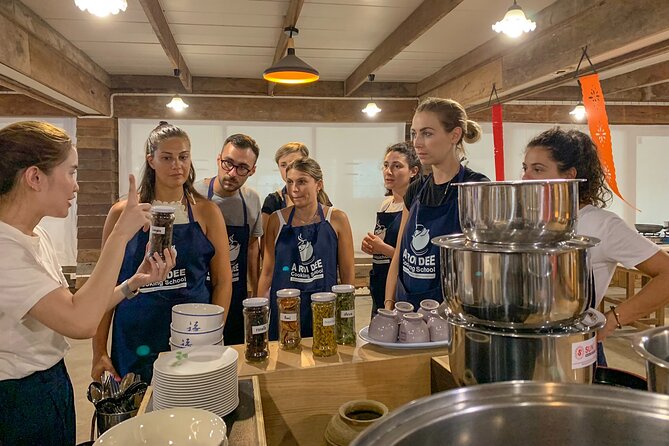
Khao soi is the central reason to choose this experience. The class teaches both the original version and a simplified version, so you can understand the dish from two angles.
The original preparation helps preserve the character of Northern Thai cooking. The easier version is more useful for your own kitchen, particularly if you do not have access to every traditional ingredient or want a shorter method. The class is built around keeping the flavor while reducing the difficulty.
That balance is important. A class can be entertaining but not very useful if the recipes require equipment, ingredients, or steps that you cannot repeat at home. Here, the school specifically aims to make the dishes approachable for home cooks.
You should pay close attention during this section and ask questions while the group is small. The available information does not list the exact techniques, cooking times, or ingredients, so I cannot promise a particular shortcut beyond the fact that both versions are taught. Still, the two-method format gives you more practical value than a single fixed recipe.
The instructor and guide are described as speaking very good English and being eager to share the food. Their names are not provided, but clear English instruction is especially helpful when you are learning a dish with several stages.
A different kind of day out of Chiang Mai altogether:
- Chiang Mai: Elephant Sanctuary, Waterfall & Bamboo Rafting
★ 4.9 · 9,160 reviews - Chiang Mai: Doi Inthanon National Park Eco-Friendly Tour
★ 4.6 · 6,667 reviews - Chiang Mai: Elephant Sanctuary & Waterfall Group Tour
★ 4.9 · 5,780 reviews - Chiang Mai: Chiang Rai Temples, Karen Tribe and Hot Springs
★ 4.7 · 5,401 reviews
A menu that changes with the day
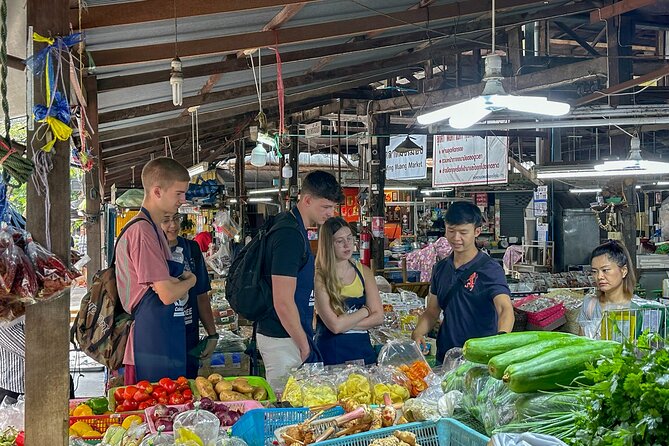
The daily menu changes, which is both a strength and a planning issue. It keeps the experience from feeling locked into one standard set of recipes, but it also means you cannot assume you will cook every dish listed.
Possible savory dishes include:
- Pad Thai
- Papaya salad
- Stir-fried rice noodles with soy sauce
- Stir-fried chicken with holy basil
These cover several useful Thai cooking styles. Pad Thai gives you a familiar noodle dish. Papaya salad adds a fresh, sharp contrast. Stir-fried noodles with soy sauce offer a simpler everyday option, while holy basil chicken brings another popular Thai flavor profile to the table.
The menu list should be read as a sample of possible dishes, not a promise of the exact class menu on your date. If one recipe matters most to you, ask about the day’s menu before booking or as soon as your reservation is confirmed.
The changing menu may appeal to people staying in Chiang Mai for several days. You could potentially choose a date based on the dishes offered, though the information provided does not say how far in advance each daily menu is announced.
Finishing with Thai desserts
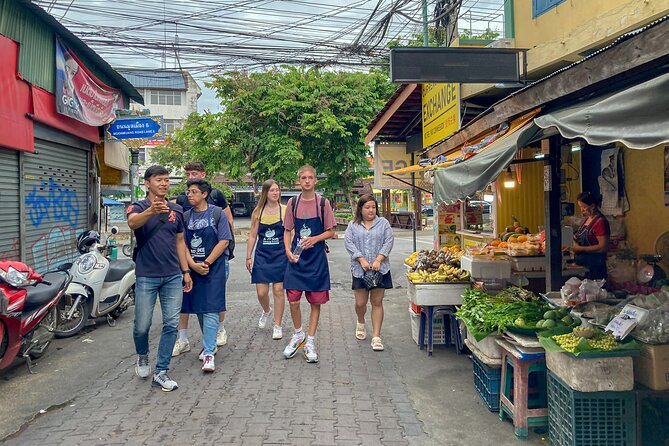
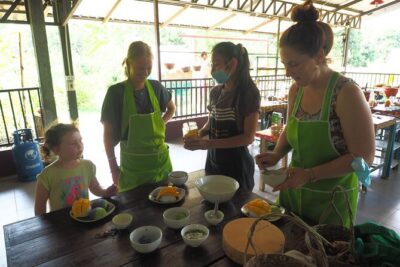
Dessert is not an afterthought here. The class includes traditional sweets such as banana in coconut milk and sweet sticky rice with longan.
Both desserts show how Thai cooking uses simple ingredients to create a satisfying finish. Coconut milk brings richness, while fruit and sticky rice provide sweetness and texture. The recipes also seem more manageable for home cooks than elaborate pastry work, though the exact methods are not provided.
I like having dessert included because it rounds out the meal and gives you more than a lesson in curries and noodles. If you are cooking with children or with friends who prefer sweets to spicy food, this part may be especially welcome.
The class ends with a tasting session built around everything you have prepared. You eat the dishes after doing the work, which helps you see how the individual recipes fit together as a complete meal.
What the five-hour format means for you
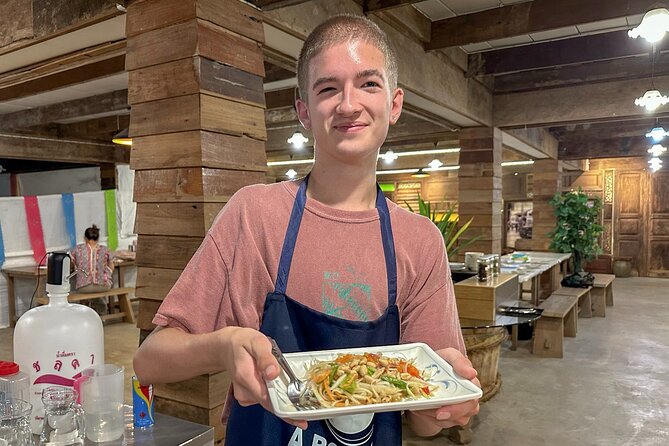
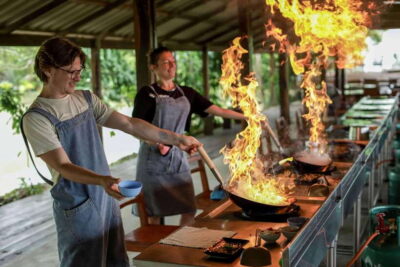
Five hours is long enough for a proper lesson, but it also demands energy. You are not simply watching a teacher cook. The schedule includes hands-on frying, several dishes, a herbal drink, dessert, and a final tasting.
That length makes the $42.15 price reasonable for someone who wants both a meal and practical instruction. You are paying for a small-group cooking session, multiple recipes, food to eat during and after the class, and the chance to take home cooking ideas. The value is strongest if you plan to use what you learn after returning home.
It may be less appealing if you only want to sample Northern Thai food. A shorter food tour or restaurant meal would take less time, though it would not give you the same instruction or the chance to prepare the dishes yourself.
The five-hour schedule also works best when you arrive ready to participate. Wear something you can cook in and expect to spend much of the class engaged with the food. The supplied details do not state whether aprons, kitchen equipment, or printed recipes are provided, so I would not count on those unless the school confirms them.
Small groups, dietary needs, and comfort
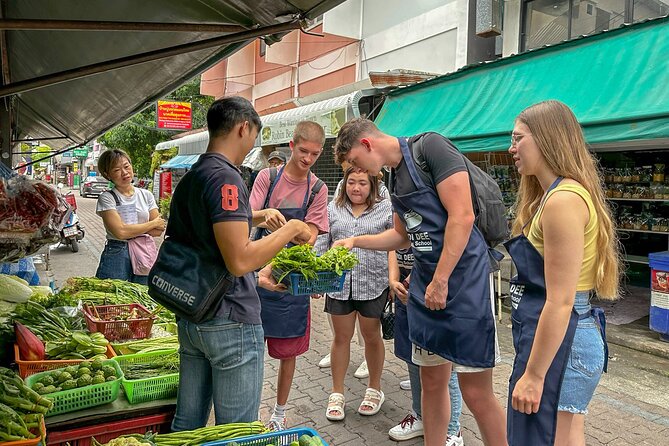
The class accepts a maximum of 10 people. That is a useful limit for a hands-on lesson. You are more likely to hear the instruction, follow the cooking stages, and ask for help than you would in a large demonstration class.
The school offers vegan and vegetarian menus. Ingredients can also be adjusted for allergies. You should state your needs at booking and confirm them before the class starts. An allergy adjustment is helpful, but the information does not explain the school’s procedures for severe allergies or cross-contact, so anyone with a serious allergy should ask specific questions in advance.
The small size may also suit solo visitors who want a social activity without joining a large crowd. Couples and families can work through the recipes together, while experienced cooks can focus on the traditional and simplified khao soi methods.
The class is near public transportation, and a mobile ticket is accepted. Pickup is offered, but the listed start point remains the McDonald’s on Kotchasarn Road. These details make the experience fairly easy to fit into a Chiang Mai schedule.
Taking Northern Thai flavors home
After the class, you can buy FDA-approved local ingredients, including khao soi curry paste and Hung Lei curry paste. This is a practical extra, not just a souvenir.
Curry paste is often the part of a Thai recipe that is hardest to reproduce from scratch. Taking home a local paste gives you a head start when you want to make the dishes again. It also makes the class more useful after your holiday, particularly if you do not expect to find every ingredient in your local shop.
The ingredients are offered after the class, so you can first decide which flavors you enjoyed most. If khao soi becomes your favorite dish, the matching paste is a clear purchase. Hung Lei curry paste adds another Northern Thai option, even though the class details do not confirm that Hung Lei curry itself is prepared during your session.
I would ask about shelf life, storage, and luggage rules before buying. Those details are not provided, and they may matter if you are flying soon or traveling onward.
Is the $42.15 price good value?
At $42.15 per person, this class sits in a reasonable range for a five-hour cooking experience with food, instruction, and a small group. The strongest value comes from the amount of participation. You are not paying only for a meal or a short cooking show.
The price also covers a varied food experience: fried snacks, chili dip, a herbal drink, khao soi, possible additional savory dishes, dessert, and the final tasting. The exact menu varies, so the value is partly dependent on what is offered on your date.
I would book it if you want to learn recipes you can repeat at home. I would hesitate if your main goal is a fixed menu or a quick introduction to Thai food. The class is more useful for someone who enjoys the process as much as the eating.
The take-home ingredients can add value, but they are described as an extra purchase rather than part of the $42.15 price. Budget separately if you want to bring curry paste home.
Who should book this Chiang Mai cooking class?
I would recommend this experience to you if Northern Thai cuisine is a major reason for your Chiang Mai visit. The attention to khao soi, including both the original and easier methods, gives the class a clear local focus.
It also suits beginners. The school works to simplify the techniques, and the English-speaking guide and instructor can explain the steps clearly. You do not need to arrive as a confident cook.
Experienced home cooks may appreciate the comparison between traditional and simplified khao soi. The rotating menu also gives you a chance to learn more than one Thai dish, though you should check which recipes are planned for your date.
Vegetarians, vegans, and people with food allergies have a reason to consider this class because menu adjustments are offered. Contact the school in advance with exact requirements.
I would be less likely to choose it for someone with only a short stop in Chiang Mai, someone who dislikes group cooking, or someone who wants a guaranteed list of dishes. The five-hour commitment and changing menu are the main points to weigh.
Should you book it?
Book this class if you want a hands-on introduction to Northern Thai food, especially khao soi, and you value recipes you can make again at home. The small group, clear English instruction, rotating dishes, desserts, and take-home curry pastes make the experience useful beyond one meal.
Before booking, confirm the day’s menu, pickup details, and any serious allergy concerns. Cancel at least 24 hours before the local start time for a full refund. If the minimum number is not reached and the class is canceled, you will be offered another date or experience, or a full refund.
FAQ
Where does the cooking class start?
The listed meeting point is McDonald’s at 17/1 Kotchasarn Road, Tambon Chang Khlan, Amphoe Mueang Chiang Mai, Chiang Mai 50100, Thailand.
Where does the experience end?
The activity ends back at the meeting point.
How long does the cooking class last?
The experience lasts approximately five hours.
How many people can join the class?
The maximum group size is 10 people.
Is pickup available?
Pickup is offered. The listed meeting point is McDonald’s on Kotchasarn Road, so confirm the pickup details when booking.
What dish receives special attention?
The class teaches khao soi in both an original version and an easier version for home cooking.
Does the menu stay the same every day?
No. The menu changes each day. Possible dishes include pad Thai, papaya salad, stir-fried rice noodles with soy sauce, and stir-fried chicken with holy basil.
Are vegetarian, vegan, and allergy-adjusted menus available?
Yes. Vegetarian and vegan menus are available, and ingredients can be adjusted for allergies.
Can I cancel for a full refund?
Yes, if you cancel at least 24 hours before the experience start time. Changes or cancellations made less than 24 hours ahead are not accepted for a refund.
Newly reviewed around Chiang Mai
- Workshop Making Herbal ball & herbal inhaler★ 4.3 · 3 reviews
- Chiang Mai Zipline White Water Rafting and Elephant Sanctuary★ 4.0 · 11 reviews
- Walk With Monks Collecting Alms(meeting point maybe change)★ 4.9 · 8 reviews
- Zipline+Sticky waterfall+Long Neck Village Private Tour★ 5.0 · 22 reviews
- Trek to a Jungle Waterfall★ 5.0 · 14 reviews
- Meditation Retreat and Self-Care in Nature★ 5.0 · 4 reviews
- Full Day Yoga, Meditation, and Thai Cultural Immersion in Chiang Mai★ 5.0 · 3 reviews
- Long Neck Village, White & Blue Temple, Black House Day Tour From Chiang Mai★ 4.0 · 14 reviews
Chiang Mai Thai Cooking Classes, compared.
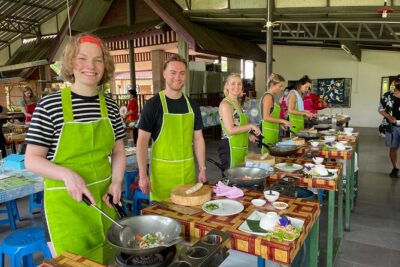
Half-Day Thai Cooking Class at Organic Farm in Chiang Mai
Read our review →
Cooking Class, Market & Thai Herbs Garden Tour
Read our review →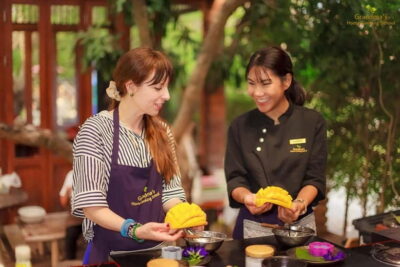
Authentic Cooking Class with Market & Farm Visit
Read our review →
Browse the lists this tour appears in