
Reviewed · CHIANG MAI THAI COOKING CLASSES
Chiang Mai: Evening Cooking Class and Local Market Visit
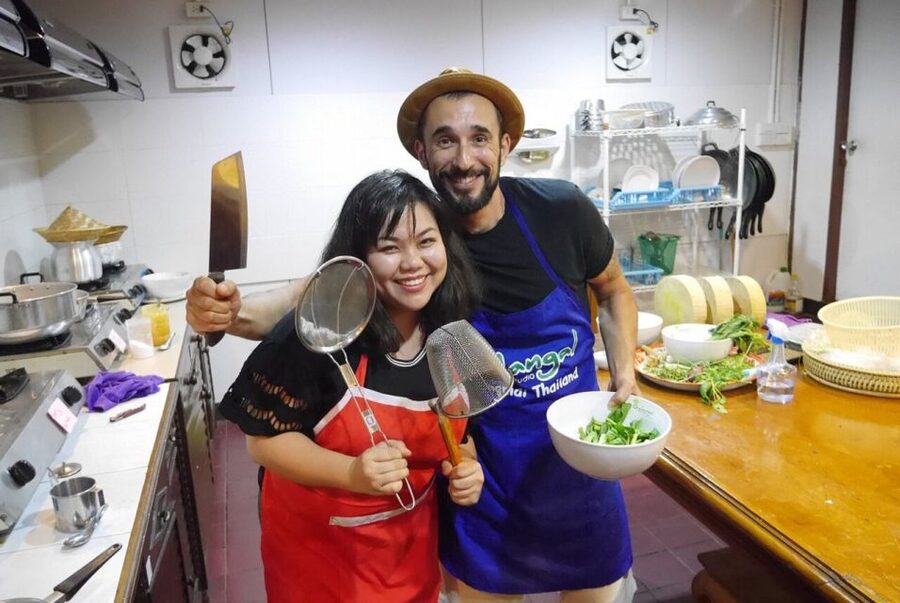
The best part of this Chiang Mai evening is choosing your own menu, then turning fresh market ingredients into dinner. You prepare a stir-fry, soup, appetizer, curry, and curry paste with guidance from instructors such as New, Aoy, and Oi.
I like the short market stop because it gives the food some context, and I like the choice of dishes, including northern Thai khao soi. The main thing to consider is timing: pickup begins around 3:15 to 3:45 PM, traffic can cause delays, and a full class may run until 8:30 PM.
Key points at a glance
- Choose your own Thai menu: Pick one stir-fry, soup, appetizer, and curry from a broad list.
- Learn curry paste from scratch: Pound and prepare the base for dishes such as green, red, Panang, or Massaman curry.
- Visit a real local market: See the ingredients before they reach your cooking station, with time to look around.
- Eat a very substantial dinner: Four prepared dishes, plus the curry paste work, make arriving hungry essential.
- Useful for many diets: Vegetarian, vegan, Halal, gluten-free, and allergy-friendly adjustments are available.
- Convenient central pickup: Hotel transfers cover much of the Old City and selected areas near Nimman, Changklan, Wat Ket, and Chang Moi.
Choosing dishes at Galangal Cooking Studio
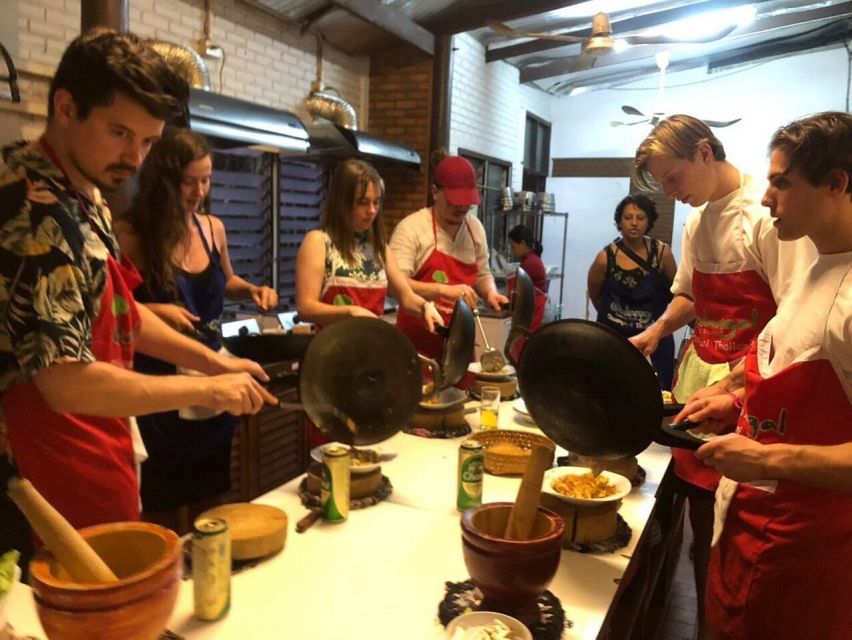
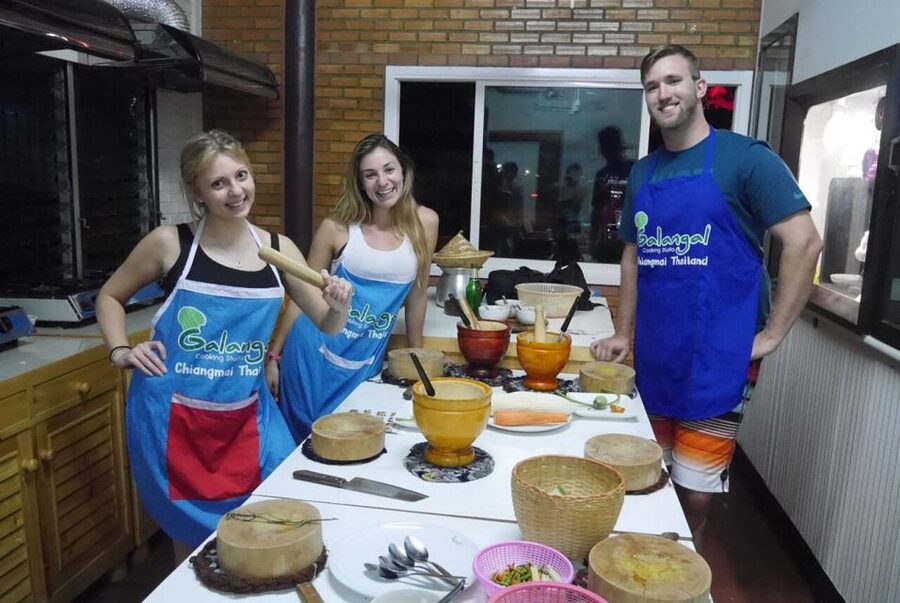
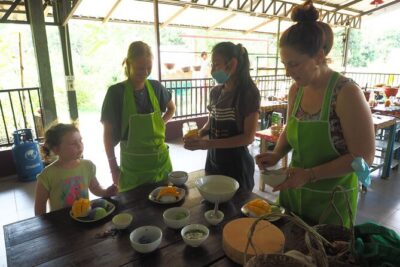
This is not a watch-and-copy demonstration where you sit at the back and take notes. You get your own cooking tasks, ingredients, equipment, and instructions, then eat the results in the air-conditioned dining room.
The menu is arranged in four food groups. You choose one dish from each:
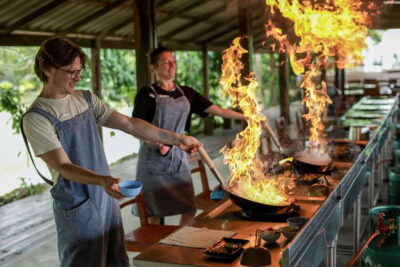
Stir-fried dishes include Pad Thai, Pad See Ew, chicken with cashew nuts, and minced chicken with holy basil. This is a good category for first-time cooks because the method is quick and easy to see. You can also compare the difference between rice noodles and fresh noodles.
Soups include Tom Yum Kung, Tom Kha Kai, vegetarian or vegan Tom Kha, and Tom Zap Kai. These dishes show how Thai cooking balances hot, sour, salty, and creamy flavors. If you do not eat seafood, you can choose a chicken or vegetarian option instead.
For an appetizer, you can select papaya salad, spring rolls, chicken larb, or glass noodle salad. This part gives you a useful look at Thai food beyond the familiar noodle and curry dishes. Som Tam, in particular, is a lively lesson in pounding, mixing, and adjusting flavors.
The curry list is the star for many people. Options include Massaman, green curry, Panang, khao soi, red curry, yellow curry, and dry red curry. The exact dish you choose affects the pace of the class, but the real lesson is the curry paste. You learn how aromatics and spices become the base of the final dish.
The schedule describes five Thai dishes, while the practical format described by the school is generally four prepared food dishes, one from each category, plus curry paste preparation. Either way, plan for a large meal rather than a small tasting.
More Thai Cooking Classes in Chiang Mai:
- Half-Day Thai Cooking Class at Organic Farm in Chiang Mai
★ 5.0 · 19,087 reviews - Chiang Mai: Cooking Class, Market & Thai Herbs Garden Tour
★ 4.9 · 4,824 reviews - Chiang Mai: Authentic Cooking Class with Market & Farm Visit
★ 4.9 · 4,546 reviews
The market visit before dinner
Pickup takes place in the late afternoon, with drivers aiming to reach hotels between about 3:15 and 3:45 PM. The school asks you to wait in the lobby 5 to 10 minutes early. That matters in Chiang Mai traffic, especially as several pickup points may be grouped together.
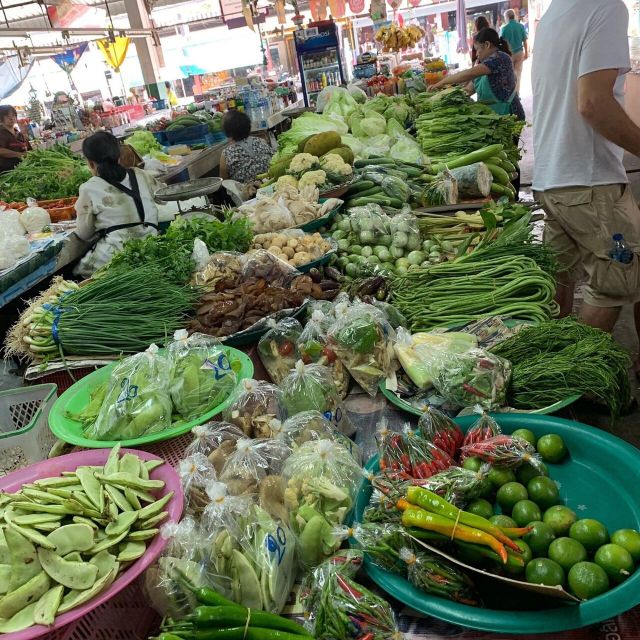
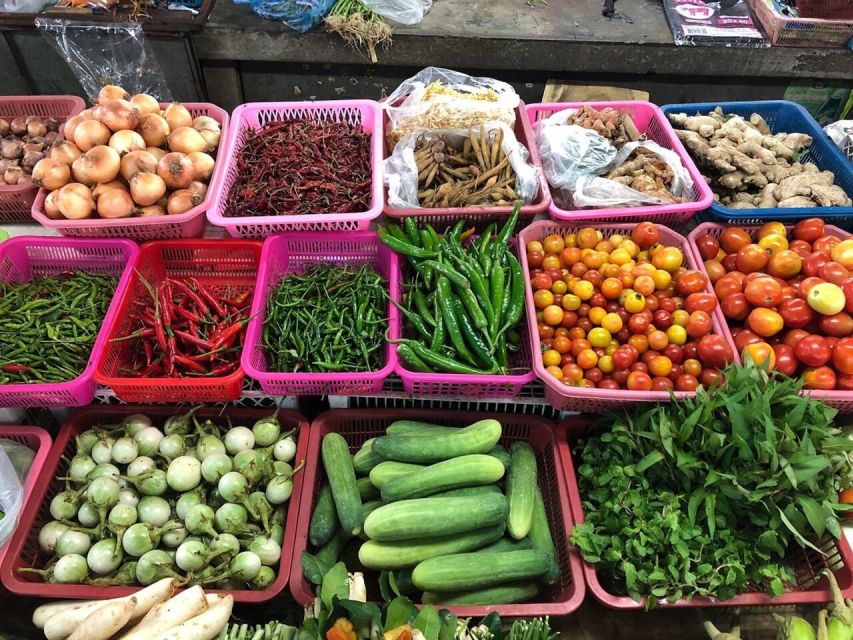
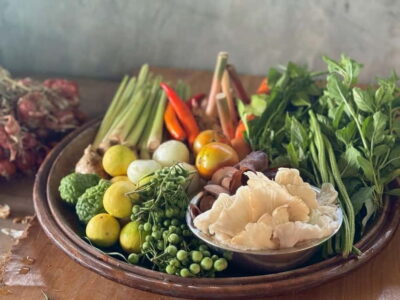
The market visit is usually brief and focused. Your instructor points out the vegetables, herbs, spices, noodles, and other ingredients used in the evening dishes. You may also have a little time to look around on your own.
I like this stop because it answers a basic question: what do these unfamiliar ingredients look like before they are chopped, fried, or pounded? You get more from the cooking lesson after seeing the raw materials first.
Do not expect a long food-market tour with many tastings. The market stop depends partly on interest and on the evening schedule. Its purpose is to prepare you for the kitchen, not replace a full market excursion.
Seeing how Thai herbs are grown
The class also includes a visit to an organic garden. You can walk through the growing area and see how herbs and vegetables are cultivated in Thailand.
This is a small but useful addition. Thai recipes often rely on ingredients that are difficult to identify in a supermarket abroad. Seeing the plants in a garden helps connect the names used in the lesson with their physical appearance.
The garden visit also gives the evening a local feel without adding a major detour. If you already know Thai herbs well, this part may be less important to you. For a first cooking class in Thailand, it adds context before the hands-on work begins.
Four dishes, one busy cooking session
Back at the school, the class moves into the kitchen. You receive the required ingredients and equipment, then work through your selected menu with the instructor. The teaching style is practical, with attention to how ingredients are cut, combined, and cooked.
The recipes are designed to be manageable even if you are not an experienced cook. That does not mean the lesson is empty of useful detail. Instructors explain the role of ingredients and give substitutions when allergies or dietary needs require them.
New is frequently described as patient, organized, friendly, and attentive to each person in the room. Aoy and Oi also lead classes, and the teaching team has been credited with keeping groups on track while still making time for questions. One useful sign is that classes have sometimes been adapted for a single participant rather than cancelled.
The class size can reach around 10 to 12 people or more. Smaller groups may finish earlier than the advertised 4 PM to 8:30 PM window. A large group can feel more social, but you may have less individual space and a slightly longer pace.
The cooking itself is not meant to be a professional chef course. You learn a set of reliable home recipes, how to handle familiar Thai flavor combinations, and how to follow the process from raw ingredient to finished dish.
A different kind of day out of Chiang Mai altogether:
- Chiang Mai: Elephant Sanctuary, Waterfall & Bamboo Rafting
★ 4.9 · 9,160 reviews - Chiang Mai: Doi Inthanon National Park Eco-Friendly Tour
★ 4.6 · 6,667 reviews - Chiang Mai: Elephant Sanctuary & Waterfall Group Tour
★ 4.9 · 5,780 reviews - Chiang Mai: Chiang Rai Temples, Karen Tribe and Hot Springs
★ 4.7 · 5,401 reviews
Making curry paste the traditional way
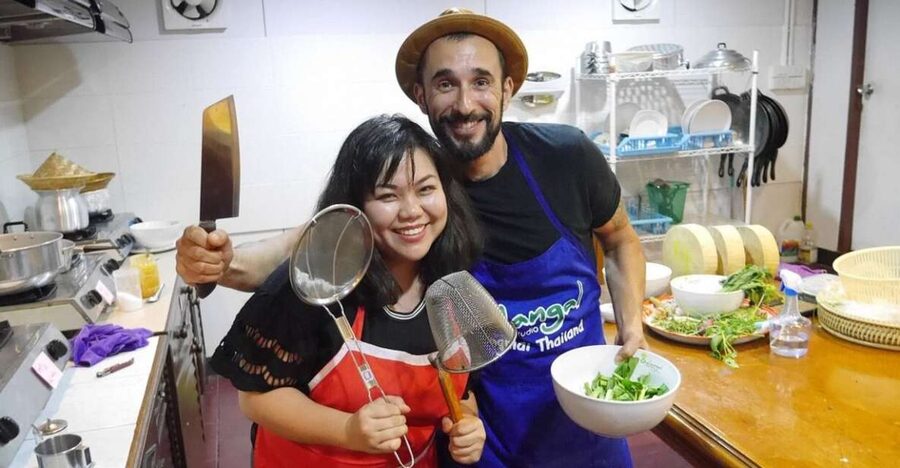
The curry paste session is one of the most useful parts for anyone who wants to recreate the food at home. You work with the paste ingredients rather than simply opening a prepared packet.
This matters because curry paste controls much of the dish’s character. You can see how the aromatics are combined and how the paste becomes the starting point for a curry. Green curry, red curry, Panang, yellow curry, Massaman curry, and khao soi each offer a different result.
Khao soi is especially relevant in Chiang Mai. It is a northern Thai noodle dish, and choosing it gives you a taste of the region rather than only a standard international Thai menu.
The school provides instructions and a digital recipe book after class. That is a real benefit at home, where the hard part is often remembering quantities and order of preparation. You still need to find the right ingredients, but the recipes give you a workable starting point.
Dietary needs and menu flexibility
The menu works well for people with different diets. Vegetarian, vegan, Halal, and gluten-free options are available, and the cooking team can adjust dishes for allergies.
Tell the provider about your needs when you book and repeat them at the start of the class. The menu has enough variety to replace seafood, meat, or ingredients that do not suit you. A vegetarian Tom Kha, for example, is listed as one of the soup choices.
The choice system is better than a fixed menu for couples and families with different preferences. One person can make green curry while another chooses khao soi, and both still take part in the same general lesson.
You should still be clear about serious allergies. Thai cooking may use shared ingredients and preparation areas, so ask specific questions before cooking rather than assuming every substitution is automatic.
Eating in the air-conditioned dining room
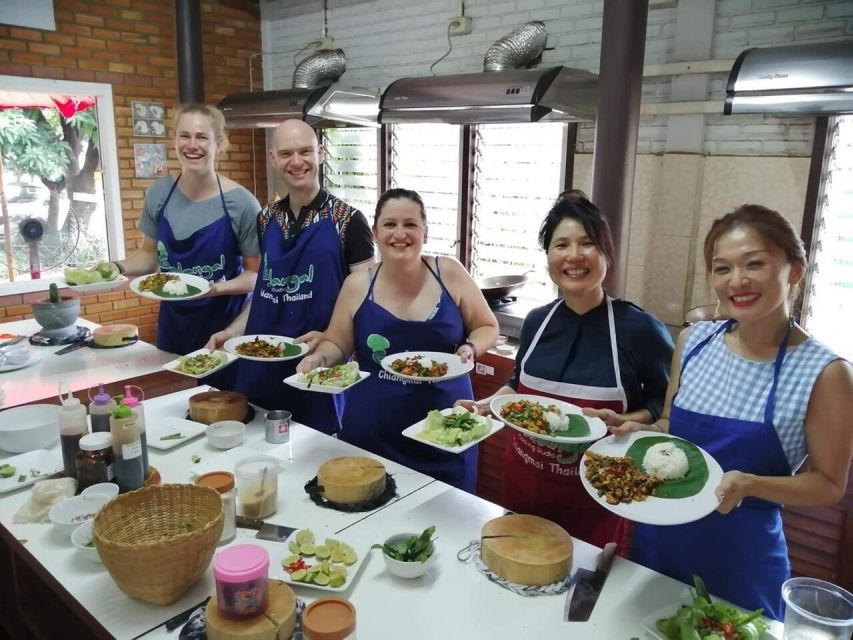
At the end, you sit down and eat the food you prepared. The dining area is indoors and air-conditioned, which is welcome after a warm market visit and a busy kitchen session.
The meal is the payoff, but it also helps you judge the methods you just learned. You can taste how the curry paste changed the curry, how sourness affects the soup, and how seasoning works across different dishes.
Come with an empty stomach. Dinner begins early by local custom, and the portions add up quickly. Several dishes can leave you full before the final plate arrives. Leftovers may be packed to take away, although you should not count on every dish being available for later.
Water, tea, and coffee are included. Alcohol is not part of the activity, and smoking is not allowed indoors.
Hotel pickup and the Chiang Mai traffic factor
Transport is included from hotels in the Old City, Santitham, and much of Huay Kaew Road between Kad Suan Kaew and Maya Shopping Mall. Pickup also covers some addresses on Nimmanahaeminda Road, Sirimongkrajan Road, Wat Ket Road, Chang Phueak, Chang Klan, and Chang Moi.
Coverage is address-specific. If your hotel falls outside the service area, you may need to reach the cooking school or market on your own. Check this before booking, especially if you are staying well outside central Chiang Mai.
The transfer is usually by vehicle such as a red songthaew, Chiang Mai’s familiar shared pickup truck. Drivers may arrive before 3:45 PM, but traffic and the number of stops can make the timing less exact. Be ready in the lobby early, and remember that the driver will wait no more than five minutes after the scheduled time.
The return transfer is a strong value point. After several hours of cooking and eating, you do not need to arrange a ride back. Still, the ride is not a private chauffeur service, so allow patience for other hotel drop-offs.
What the $28 price really buys you
At $28 per person, this is good value for a five-hour activity. The price includes hotel transfers in the service zone, the market and garden visits, instruction, ingredients, equipment, drinks, the cooked meal, and a PDF recipe book.
The most important value comes from the amount of food and hands-on time. You are not paying only for a short demonstration or a single dish. You take part in several recipes and receive enough guidance to repeat them later.
The price is less attractive if you mainly want a market tour or if you dislike group cooking. It also does not include observer tickets. An adult who watches without cooking pays 500 Thai baht, and a child observer aged 6 to 12 pays 350 baht.
For families, the activity can work well because children and adults can cook together, infant seats are available for pickup, and the school is wheelchair and stroller accessible. A child who is only observing still requires the separate fee.
Who will enjoy this evening most
I would choose this class if you want food to be the center of your Chiang Mai sightseeing. It suits first-time cooks, couples, families, solo visitors, and anyone who wants a social evening with a clear activity.
It is also a good match for people who have already eaten Thai food but want to understand it better. The market, garden, curry paste, and menu choices show how the dishes are built rather than treating them as restaurant magic.
You may prefer another plan if you want a quiet dinner, a long market visit, or advanced chef training. The evening involves transport, group timing, several recipes, and a lot of food. It is friendly and accessible, but not slow or private by default.
The class is taught in English, and English audio support is listed. Bring any personal medication you need. Altitude sickness is listed as a reason not to take the activity, though altitude is not a defining feature of central Chiang Mai.
Booking, cancellation, and timing advice
You can cancel up to 24 hours in advance for a full refund, and reserve now while paying later. Check the available starting time because the exact schedule can change with group size.
Book dietary requirements in advance. Also confirm that your hotel is inside the pickup area. A small amount of preparation makes the evening much easier: arrive early in the lobby, wear comfortable clothes, and leave room for a large dinner.
Should you book the Chiang Mai cooking class?
Book it if you want a practical food lesson with a generous meal, not simply a cooking demonstration. The chance to choose dishes, make curry paste, visit a market, and take home recipes gives the $28 price strong value.
I would be especially keen to book this early in a Chiang Mai visit. You can use the market knowledge and seasoning tips for the rest of your meals, then return home with recipes that are more useful than a souvenir.
Skip it if your hotel is far outside the transfer zone, if you need a highly private class, or if four substantial dishes sound like too much food. For most people who enjoy Thai cuisine and want an easy evening activity, Galangal Cooking Studio offers a well-organized introduction with plenty to eat and enough instruction to keep cooking after Thailand.
FAQ
How long does the Chiang Mai cooking class last?
The activity is scheduled for five hours. Larger groups of 10 to 12 people or more may run from around 4 PM to 8:30 PM, while smaller groups may finish earlier.
What time is hotel pickup?
Pickup is scheduled between about 3:15 and 3:45 PM. You should wait in your hotel lobby 5 to 10 minutes early because traffic and multiple pickup points can affect the exact arrival time.
Which hotels receive pickup service?
Pickup is offered in the Old City, Santitham, and along Huay Kaew Road from Kad Suan Kaew to Maya Shopping Mall. It also covers some addresses in Nimmanahaeminda Road, Sirimongkrajan Road, Wat Ket Road, Chang Phueak, Chang Klan, and Chang Moi.
What if my hotel is outside the pickup area?
The provider will check your accommodation address. If it is not covered, you will need to arrange transport to the cooking school or market yourself.
How many dishes will I cook?
You can choose one dish from each of four groups: stir-fry, soup, appetizer, and curry. The class also includes curry paste preparation, and the activity description refers to learning five Thai dishes.
Can I choose khao soi?
Yes. Khao soi, the Chiang Mai noodle dish with chicken, is one of the curry choices.
Are vegetarian and vegan options available?
Yes. Vegetarian, vegan, Halal, gluten-free, and allergy-related adjustments are available. Vegetarian and vegan dishes are included in the menu options.
Is the class suitable for wheelchair users and people with strollers?
Yes. The activity is listed as wheelchair and stroller accessible, and the cooking school is near public transportation.
Can someone attend only to watch?
Yes, but observers pay a separate fee. An adult observer pays 500 Thai baht, while a child observer aged 6 to 12 pays 350 Thai baht.
What is included in the price?
The price includes hotel pickup and drop-off in the service area, the market visit, cooking instruction, ingredients, equipment, water, tea, coffee, and a PDF recipe book.
More Hands-On Classes in Chiang Mai
- Thai and Akha Cooking Class in Chiang Mai
★ 5.0 · 4,358 reviews - Chiang Mai: Cooking Class with Organic Farm at Mama Noi
★ 4.9 · 1,151 reviews - Cooking Class with Organic Farm in Chiang Mai at Mama Noi
★ 5.0 · 502 reviews - Chiang Mai: Elephant Sanctuary & Thai Cooking Workshop
★ 4.9 · 276 reviews
More Market Visits in Chiang Mai
- Chiang Mai: Cooking Class with Market and Pickup
★ 4.9 · 1,365 reviews - Chiang Mai: Evening Local Street Food Market Tour
★ 4.8 · 604 reviews - Chiang Mai: Kalare Night Bazaar Boxing Stadium Muay Thai
★ 4.7 · 507 reviews - Evening Cooking Class in Organic Farm with Local Market Tour
★ 5.0 · 394 reviews
Newly reviewed around Chiang Mai
- Workshop Making Herbal ball & herbal inhaler★ 4.3 · 3 reviews
- Chiang Mai Zipline White Water Rafting and Elephant Sanctuary★ 4.0 · 11 reviews
- Walk With Monks Collecting Alms(meeting point maybe change)★ 4.9 · 8 reviews
- Trek to a Jungle Waterfall★ 5.0 · 14 reviews
- Zipline+Sticky waterfall+Long Neck Village Private Tour★ 5.0 · 22 reviews
- Meditation Retreat and Self-Care in Nature★ 5.0 · 4 reviews
- Full Day Yoga, Meditation, and Thai Cultural Immersion in Chiang Mai★ 5.0 · 3 reviews
- Long Neck Village, White & Blue Temple, Black House Day Tour From Chiang Mai★ 4.0 · 14 reviews
Chiang Mai Thai Cooking Classes, compared.
Half-Day Thai Cooking Class at Organic Farm in Chiang Mai
Read our review →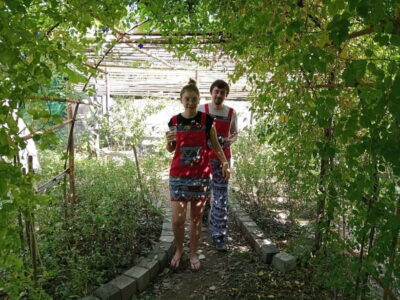
Cooking Class, Market & Thai Herbs Garden Tour
Read our review →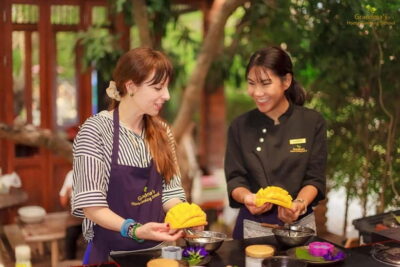
Authentic Cooking Class with Market & Farm Visit
Read our review →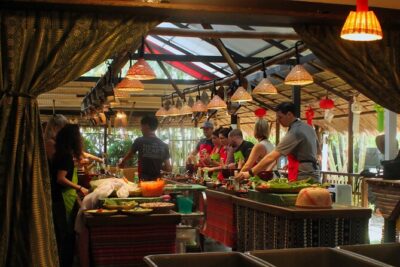
Browse the lists this tour appears in