
Reviewed · CHIANG MAI THAI COOKING CLASSES
We Cook Thai Home Garden Cooking School
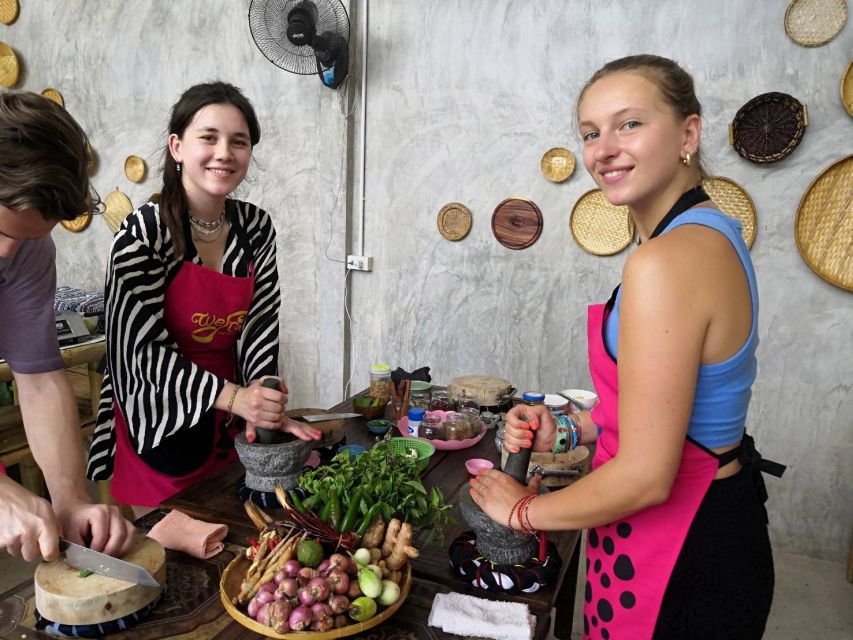
The best part of this Chiang Mai cooking class happens before you reach the kitchen. Mam takes you through a local market, where you can smell herbs, handle vegetables, and learn how Thai cooks use ingredients that may look unfamiliar at first. Back at her home garden school, you cook with your own wok, not just watch a demonstration.
I like the market visit because it gives the food some context. I also like the generous format: one dish from each of six categories, with ingredients, a cookbook, and a certificate included. The main thing to consider is the amount of food. You may cook five or six dishes depending on the session, so arrive hungry and do not plan a large meal afterward.
Key points to know before booking
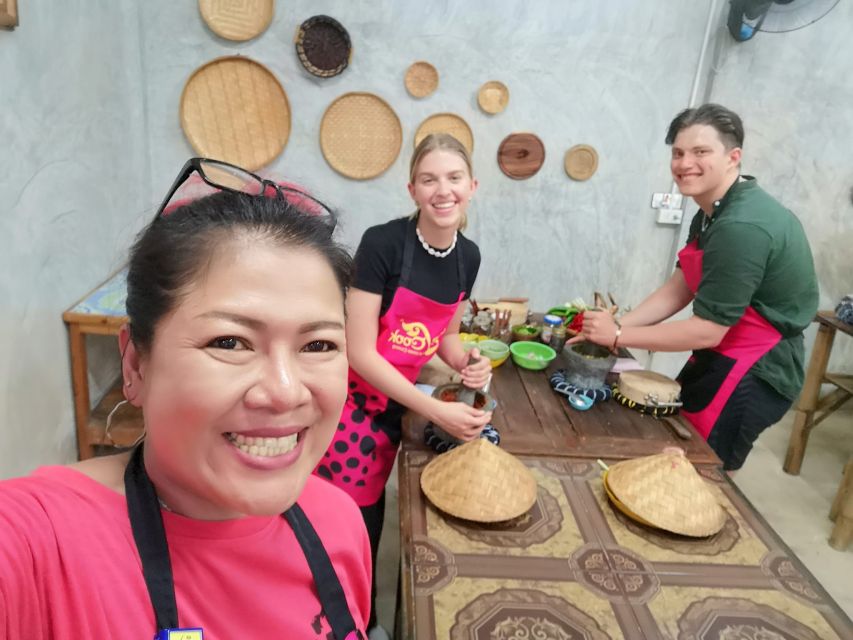
- Mam leads the class personally, with clear, patient instruction for first-time cooks and experienced home chefs.
- The market tour comes first, helping you recognize Thai herbs, vegetables, sauces, spices, and fruit.
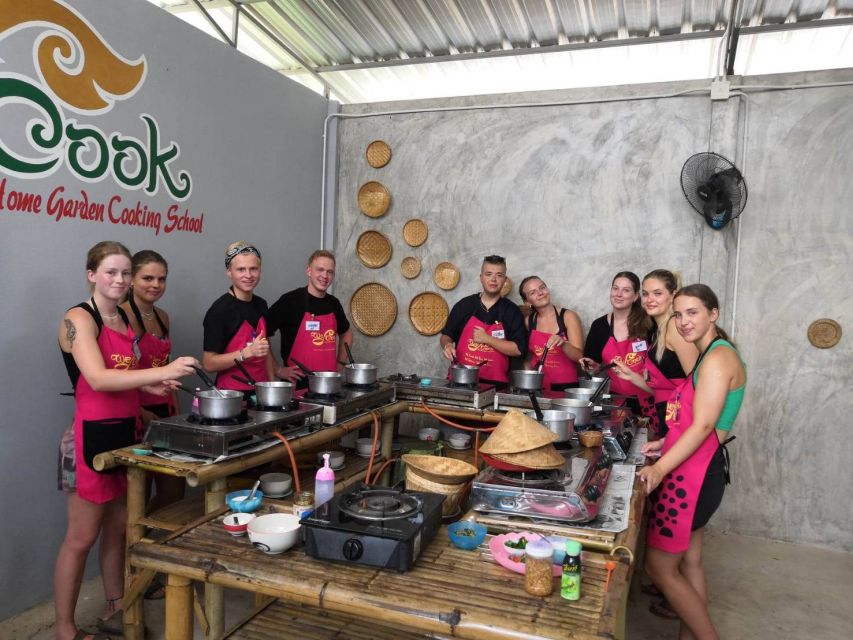
- You get one wok per person, so you take an active role instead of waiting for a turn.
- The meal is substantial, with choices across starters, soup, curry, main dishes, and dessert.
- The garden setting feels personal, with cooking, dining, and outdoor space at Mam’s home.
- Transport is included within 3 km of central Chiang Mai, with evening pickup listed around 4:00 to 4:30 p.m.
Starting at the market with Mam
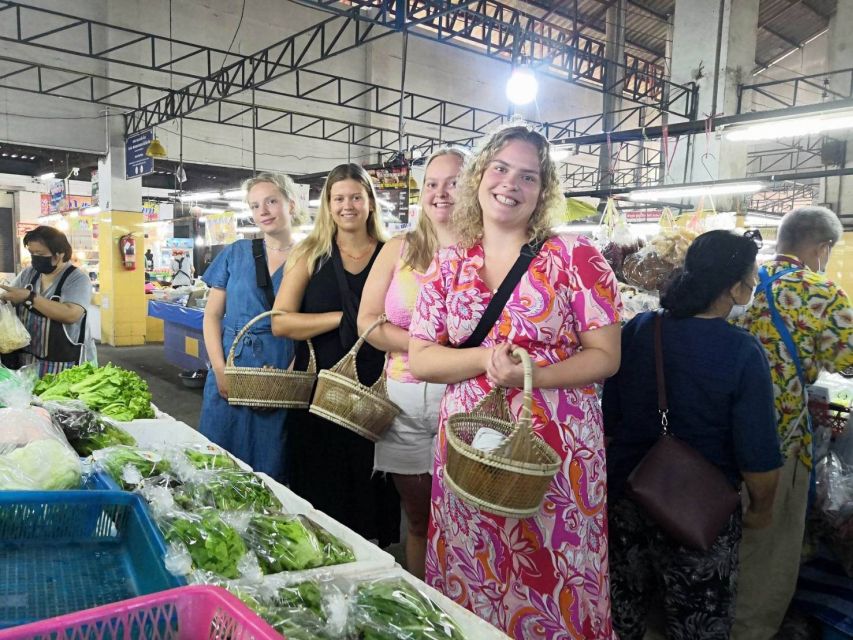
The class begins with a visit to a local market, usually before heading to the cooking school. This is more useful than a quick walk past food stalls. Mam explains what the ingredients are, how they taste, and where they fit into Thai cooking.
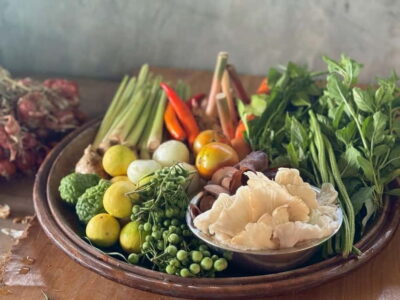
You may encounter several types of eggplant, different basils, fresh chilies, herbs, vegetables, rice, fruit, and spices. The point is not simply to buy a shopping list. You learn to connect an ingredient with a flavor and a dish.
That matters once you return to the kitchen. Thai recipes often use ingredients that are easy to confuse if you only see them chopped and mixed into a curry. Seeing the whole plant or tasting an herb first helps you understand why a dish tastes fresh, hot, sweet, sour, or savory.
I especially like that the market walk can include ingredients not needed for your own recipes. It gives you a wider look at everyday food in Chiang Mai, rather than turning the visit into a tightly scripted shopping errand.
The market may also be the most culturally interesting part for you if you have already eaten plenty of Thai food but want to understand it better. You get a closer look at the ordinary ingredients behind familiar restaurant dishes.
More Thai Cooking Classes in Chiang Mai:
- Half-Day Thai Cooking Class at Organic Farm in Chiang Mai
★ 5.0 · 19,087 reviews - Chiang Mai: Cooking Class, Market & Thai Herbs Garden Tour
★ 4.9 · 4,824 reviews - Chiang Mai: Authentic Cooking Class with Market & Farm Visit
★ 4.9 · 4,546 reviews
Cooking at Mam’s garden home
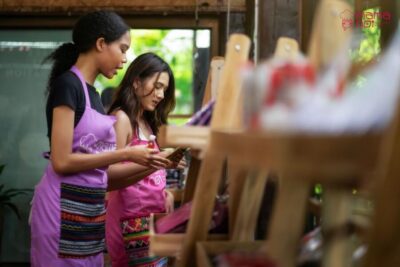
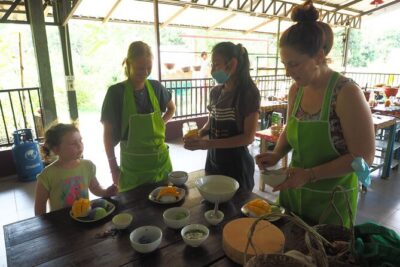
After the market, you continue to Mam’s home, where the cooking school is set in a garden. The kitchen and dining area are separate, which is a small but important detail. You can concentrate on cooking, then sit down properly for the meal instead of eating beside a row of hot burners.
The setting is informal and home-like, but the cooking area is described as clean and well organized. Some sessions include time around the garden pond, where you may even get to feed the fish. This is not a polished restaurant kitchen, and that is part of the appeal. You are learning in a real home setting with a host who cooks food meant to be eaten.
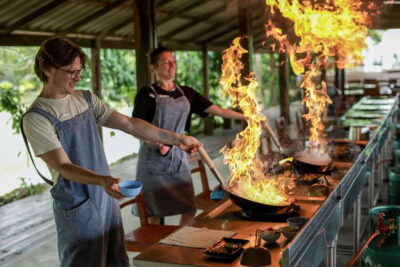
Each participant receives a wok, with one wok per person. That gives you genuine hands-on practice. You are not merely watching Mam fry ingredients while a group gathers around one pan.
Mam demonstrates each step and then guides you as you work. Her teaching style suits people who are nervous around a wok. She gives practical signs to watch for, rather than insisting that you follow every step by a stopwatch. You learn to judge the food by smell, appearance, texture, and sound.
That approach is useful when you cook Thai food at home later. A recipe can tell you how much paste to use, but it cannot always tell you exactly when the garlic is ready or when a curry has reached the right consistency. Mam’s explanations help you make those judgments for yourself.
Choosing dishes across the Thai menu
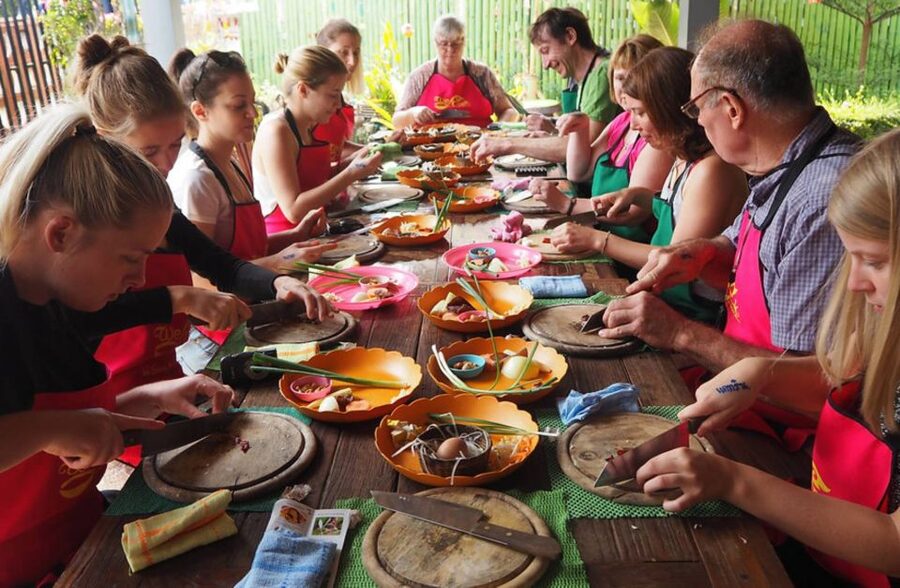
The class lets you select dishes from several categories, with one dish chosen from each category. The advertised format describes six categories, while individual sessions have also been described as five-course classes. The exact number and menu can vary, so check the available choices when you book.
The categories typically cover a good range of Thai cooking:
- A starter, such as spring rolls
- A soup, such as tom yum or noodle soup
- A curry, such as Massaman curry or another regional favorite
- A main dish, such as Pad Thai or fried rice
- A salad, such as green papaya salad
- A dessert, such as mango sticky rice
You are not restricted to one fixed meal. That choice is one of the strongest parts of the class because you can pick dishes you already enjoyed in Thailand, or try something new.
A sample combination could include Massaman curry with handmade curry paste, vegetable spring rolls, Thai noodle soup, chicken fried rice, and mango sticky rice. Another menu choice may include Pad Thai, papaya salad, Khao Soi, tom yum, and mango sticky rice.
Khao Soi is a particularly good choice if you want to connect the class with northern Thailand. It gives you a chance to work with a dish closely associated with Chiang Mai, rather than cooking only the international Thai standards.
Vegetarian cooking is available. The class can also adapt to food issues, but you should explain your needs when booking so Mam can prepare suitable alternatives.
Why the one-wok setup matters
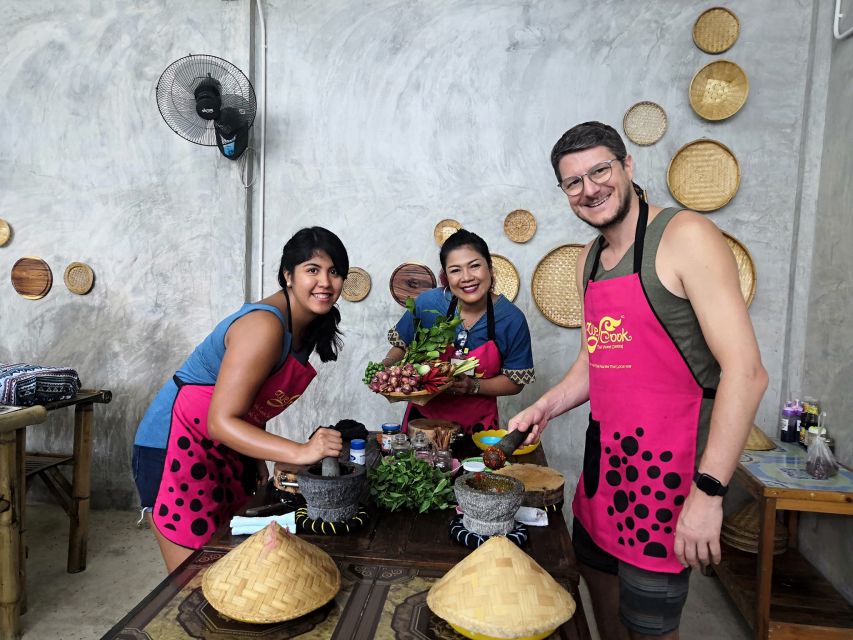
Cooking one dish at a time in your own wok makes the class feel active from start to finish. You chop, season, stir, taste, and adjust under Mam’s direction.
That arrangement also works well for mixed groups. A complete beginner can move slowly while a more experienced cook can take on extra detail. Mam’s role is to keep everyone moving without making the session feel like a race.
The class is suitable for all cooking levels, including people who rarely cook. One participant brought along a father over 70 who had never cooked before, and the format still allowed him to take part.
You should expect plenty of help, but not a completely passive lesson. If you want to learn, pay attention to how Mam builds flavor. Watch when she adds herbs, how she handles curry paste, and how she decides when a dish is ready.
The cooking area is also designed for safety. Participants must be at least 120 centimeters tall because of the wok height. A child or shorter companion can attend as a visitor for THB300 per person and receive two dishes during one cooking course, but anyone under 120 centimeters cannot take part as a regular participant.
A different kind of day out of Chiang Mai altogether:
- Chiang Mai: Elephant Sanctuary, Waterfall & Bamboo Rafting
★ 4.9 · 9,160 reviews - Chiang Mai: Doi Inthanon National Park Eco-Friendly Tour
★ 4.6 · 6,667 reviews - Chiang Mai: Elephant Sanctuary & Waterfall Group Tour
★ 4.9 · 5,780 reviews - Chiang Mai: Chiang Rai Temples, Karen Tribe and Hot Springs
★ 4.7 · 5,401 reviews
A meal large enough to replace lunch or dinner
The food is the reward at the end, and there is a lot of it. You cook your selected dishes, then sit in the dining area and eat what you made.
Do not eat a heavy meal before class. This advice applies especially to the morning session, which can leave you facing a large meal before lunchtime. The evening class has the same issue in reverse, so plan the rest of your night accordingly.
The quantity is not just a gimmick. Cooking several categories lets you compare different Thai techniques and flavor combinations in one sitting. You might move from a hot and sour soup to a creamy curry, then finish with sweet sticky rice and mango.
Some people may not finish everything. Takeaway boxes have been provided for leftovers, including dessert. That makes the large portions less wasteful and gives you a second taste later.
The meal also gives the class a satisfying rhythm. You do the market work, cook at the stations, then sit down in a calmer setting. It feels less like a quick demonstration and more like a half-day visit built around food.
How much personal attention should you expect?
Group size can change. Some sessions have been very small, with only one couple or three or four people. Other classes may reach around 10 to 12 participants.
A small class gives you more time with Mam, especially if you want help with knife work, curry paste, or adjusting spice levels. Larger groups may feel more social, but you will naturally have less one-on-one time at certain stages.
The reviews of the class consistently point to Mam’s energy and patience as central strengths. She explains ingredients clearly, keeps the mood light, and makes room for questions. That matters in a cooking class because the quality of the experience depends as much on the teacher as on the menu.
English is the teaching language. If you want a quiet, highly technical culinary course with restaurant-style precision, this may not be the right match. If you want a friendly home lesson where you can ask questions and learn by doing, it fits well.
Morning or evening: choosing the better session
You can choose a morning or evening class. The best option depends on how you want to use the rest of your day.
The morning course works well if you want to finish with a full meal and still have the afternoon free. It may also suit you if you prefer visiting markets earlier in the day. The drawback is obvious: you need to arrive with a very empty stomach.
The evening course starts with pickup listed between 4:00 and 4:30 p.m. It gives you a useful dinner activity and may be easier to fit around a relaxed morning in Chiang Mai. Pickup is included for residences within 3 km of downtown.
Free transport to and from your residence is listed within that 3 km radius. If you are staying farther out, confirm the arrangement before booking rather than assuming the same service applies.
The full experience lasts about 270 minutes to five hours. Allow the full half-day, especially if you have another timed activity afterward.
Price and what the $32 includes
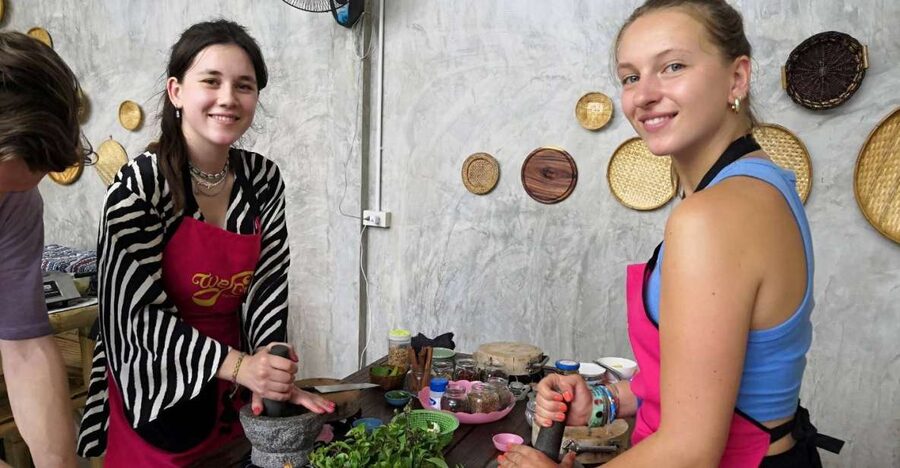
At $32 per person, this is strong value if you take part fully. The price includes the English guide, market visit, welcome snack or seasonal fruit, ingredients, your own wok, cookbook, certificate, and qualifying transportation.
You are also paying for a meal large enough to cover lunch or dinner, not just a short lesson and a taste. The cookbook adds value after your trip, since the point of a good cooking class is to make the dishes again at home.
There are still personal expenses and anything not listed as your responsibility. The main extra cost applies to a visitor under 120 centimeters or a parent accompanying a child, who can join for THB300 per person and receive two dishes.
The value is best for someone who wants both food and cultural context. If you only want to eat Thai food, a market tour and cooking class may feel like more work than necessary. If you want to understand how the food is made and take the skill home, the price is easier to justify.
Who will enjoy this class most?
I would recommend it to first-time cooks, couples, families with older children, solo visitors, and anyone who wants a personal food activity in Chiang Mai.
It also suits people who already know Thai dishes but want to learn the building blocks behind them. Choosing your own menu makes the class more appealing than a fixed recipe lesson.
Families should pay close attention to the 120-centimeter rule. Younger children can visit under the stated arrangement, but they cannot use the wok as regular participants.
You should also book with appetite. This is not a light snack stop. It is a full cooking session followed by a substantial meal, and leftovers may be part of your evening plan.
Cancellation is flexible, with a full refund available when you cancel at least 24 hours ahead. Reserve now and pay later is also offered, which helps if your Chiang Mai schedule is still changing.
Should you book We Cook Thai Home Garden Cooking School?
Book this class if you want to cook several dishes yourself, learn directly from Mam, and see Thai ingredients in their market setting before using them. The market visit, one-wok-per-person format, home garden dining area, and generous meal make it feel more personal than a standard demonstration.
Think twice if you dislike group cooking, have a tight schedule, or would rather spend your time eating than preparing food. Also confirm the exact number of dishes and your pickup details, since class size, menu, and the five or six dish format can vary.
For most food-minded visitors, $32 buys a useful skill, a market lesson, a full meal, and a pleasant half-day with Mam. Just skip breakfast, or keep dinner very small.
FAQ
How long does the cooking class last?
The activity lasts about 270 minutes to five hours. Check the available start times when booking.
Is transportation included?
Free transportation to and from your residence is included within a 3 km radius of downtown Chiang Mai. The evening course lists pickup between 4:00 and 4:30 p.m.
How many dishes will I cook?
The class is presented as a choice of one dish from each of six categories. Individual sessions have also used a five-course format, so confirm the exact menu and number of dishes for your date.
Can vegetarians join?
Yes. A vegetarian option is available. Tell the provider about your dietary needs when booking.
What is the minimum height for participants?
Regular participants must be at least 120 centimeters tall because of the wok height and safety requirements. A shorter visitor can join under a separate THB300 arrangement and receive two dishes.
What is included in the price?
The $32 price includes an English guide, local market tour, welcome snack or seasonal fruit, ingredients, one wok per person, a cookbook, a certificate, and qualifying transportation. Personal expenses and unlisted costs are not included.
Newly reviewed around Chiang Mai
- Workshop Making Herbal ball & herbal inhaler★ 4.3 · 3 reviews
- Chiang Mai Zipline White Water Rafting and Elephant Sanctuary★ 4.0 · 11 reviews
- Walk With Monks Collecting Alms(meeting point maybe change)★ 4.9 · 8 reviews
- Trek to a Jungle Waterfall★ 5.0 · 14 reviews
- Zipline+Sticky waterfall+Long Neck Village Private Tour★ 5.0 · 22 reviews
- Meditation Retreat and Self-Care in Nature★ 5.0 · 4 reviews
- Full Day Yoga, Meditation, and Thai Cultural Immersion in Chiang Mai★ 5.0 · 3 reviews
- Long Neck Village, White & Blue Temple, Black House Day Tour From Chiang Mai★ 4.0 · 14 reviews
Chiang Mai Thai Cooking Classes, compared.
Half-Day Thai Cooking Class at Organic Farm in Chiang Mai
Read our review →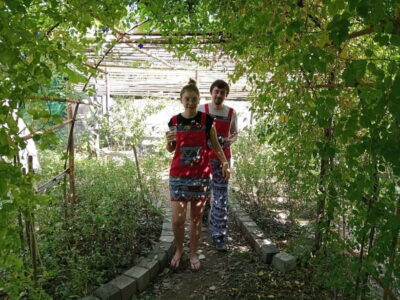
Cooking Class, Market & Thai Herbs Garden Tour
Read our review →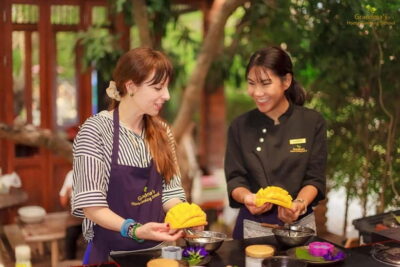
Authentic Cooking Class with Market & Farm Visit
Read our review →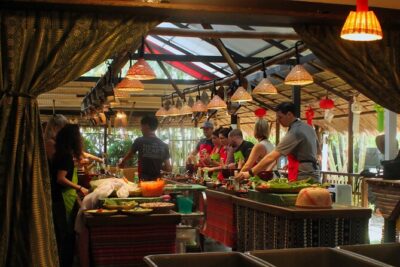
Browse the lists this tour appears in