
Reviewed · CHIANG MAI CYCLING TOURS
Chiang Mai City Culture Bicycle Ride
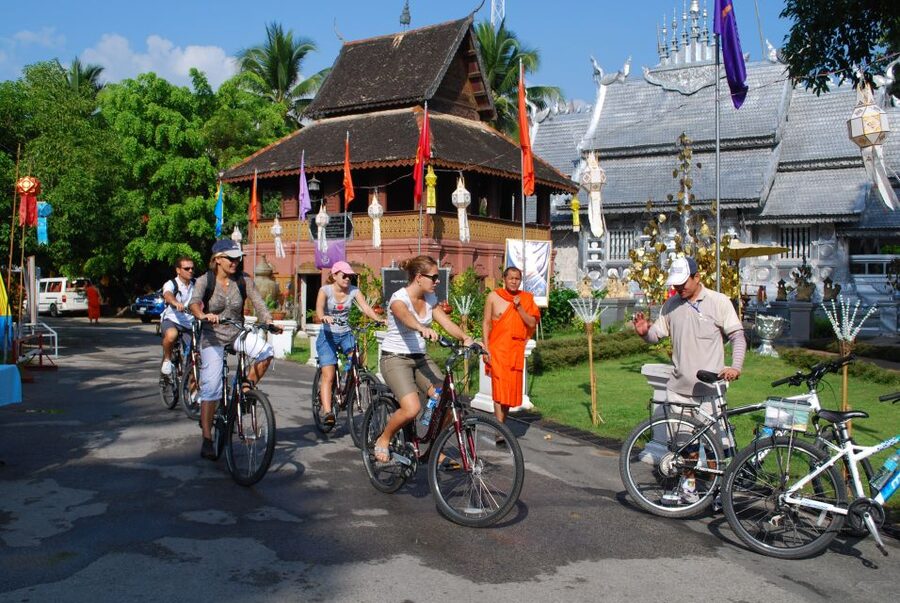
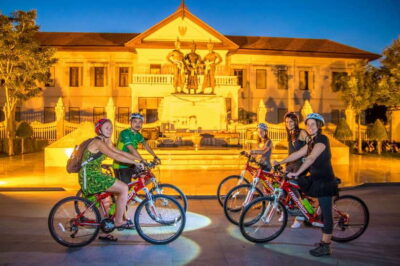
Chiang Mai’s old center makes more sense from a bicycle seat. This 25-kilometer ride slips through small lanes, temple grounds, markets, and everyday neighborhoods that are easy to miss from a car or tuk-tuk. You cover the city’s key sights while still seeing people go about their daily routines.
I like the mix of major temples and ordinary local places, especially the stop at a silversmith workshop and the chance to taste fruit or snacks at a market. I also like that guides such as Dong and Deo have been praised for clear storytelling, humor, and careful attention on the bikes. The main drawback is the distance: 25 kilometers over four and a half hours may feel long in Chiang Mai’s heat, and temple rules mean you need long pants rather than shorts.
Key points to know before you ride
- 25 kilometers on quiet roads: The route favors small lanes and back streets instead of staying on busy main roads.
- Three important temples: You visit Wat Chedi Luang, Wat Phra Singh, and Wat Srisuphan, also called the Silver Temple.
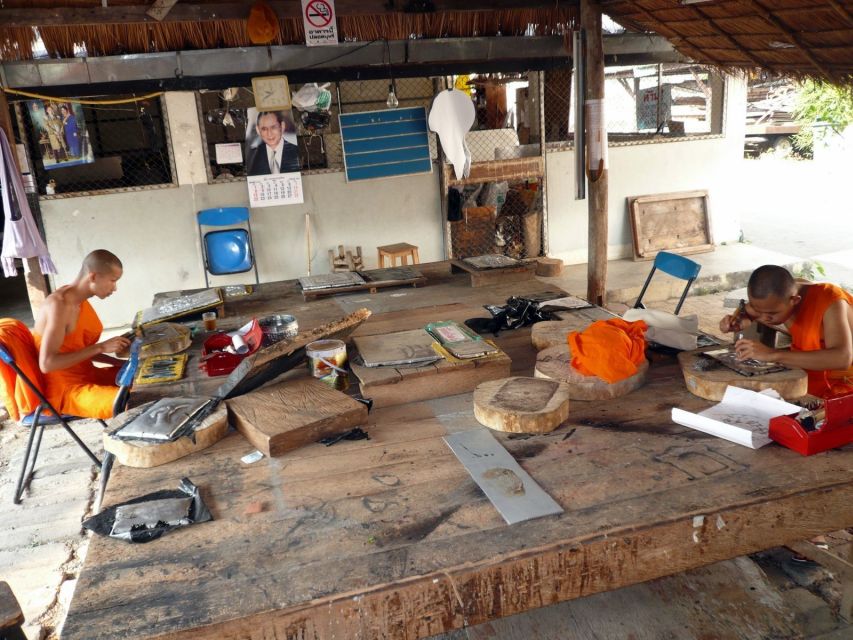
- A working silversmith stop: You see artisans making jewelry and monks preparing alloy decorations for the temple, with no shopping stop built in.
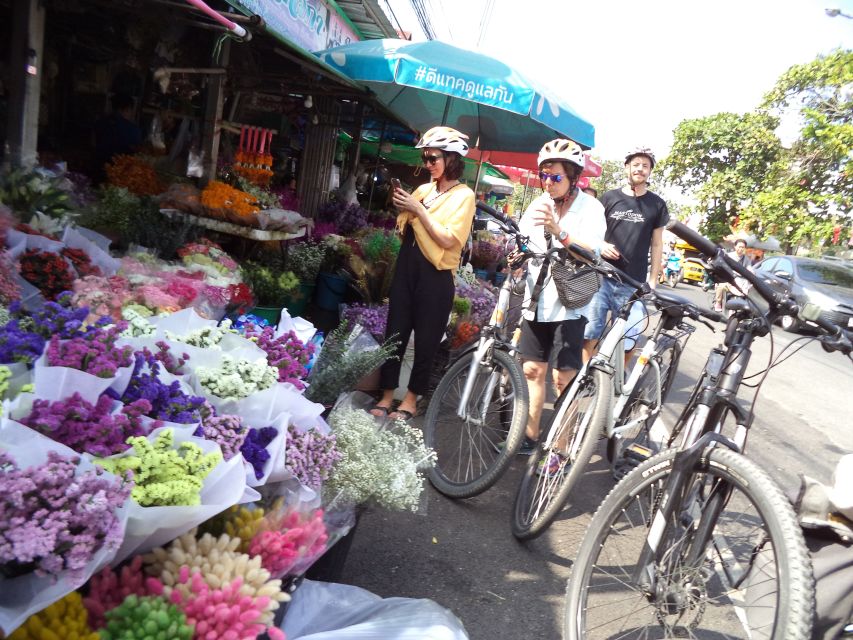
- Markets are part of the lesson: The route passes a fresh and flower market in Chiang Mai’s Chinatown, then pauses at a local market for fruit and snacks.
- Guides add personality: Dong has been praised for humor and temple stories, while Deo has been praised for careful riding and city knowledge.
- Temple clothing matters: Bring long pants. Shorts and short skirts are not allowed on this tour.
Why a bicycle is a smart way to see Chiang Mai
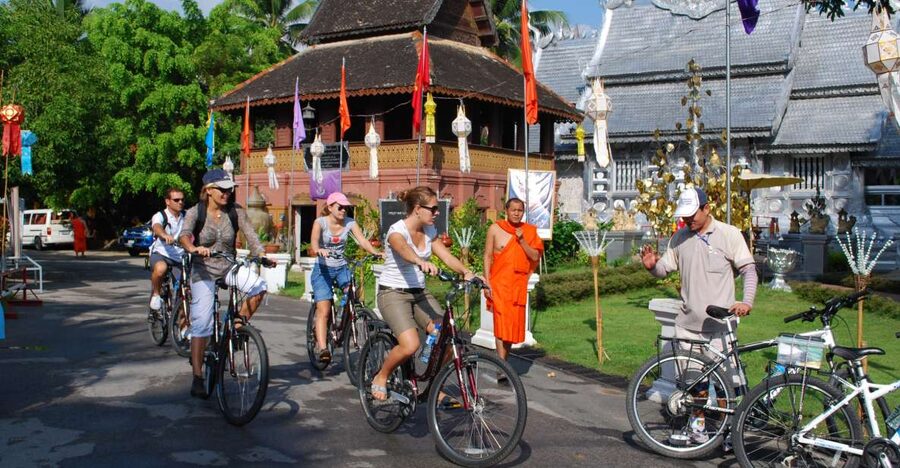
Chiang Mai’s central temples are close enough to visit on foot, but walking does not take you as easily into the smaller lanes around them. This ride gives you a wider look at the city without turning the day into a string of vehicle transfers.
The route uses quiet roads and narrow alleyways whenever possible. That matters because the best part of the ride is not simply reaching another temple. It is seeing the spaces between the sights: small streets, neighborhood activity, market stalls, and local businesses that form the daily setting of Chiang Mai.
You should expect a steady half-day outing rather than a quick sightseeing loop. The ride lasts about four and a half hours and covers 25 kilometers. That is manageable for anyone comfortable on a bicycle, but it is still a real ride. The warm weather, temple stops, and market breaks help pace the outing, yet you should not book it if you want a completely relaxed morning with very little physical effort.
The tour includes a bicycle, helmet, water or soft drinks, a Thai meal or snack, entrance fees, insurance, and an English, Thai, or Dutch-speaking guide. At $43 per person, the price is reasonable if you value a guide who explains the places you are seeing and handles the route. It is less compelling if you only want to rent a bicycle and explore independently.
More Bike Tours in Chiang Mai:
- Chiang Mai: Historic Old City Bike Tour – Morning or Night
★ 4.7 · 263 reviews - Chiang mai Hike & Downhill Bike Adventure –Suthep National Park
★ 4.5 · 204 reviews - Chiang Mai: Historic Old City Bike Tour – Morning or Night
★ 5.0 · 202 reviews
The Silver Temple and Chiang Mai’s metalwork
One of the more unusual parts of the ride is the visit to a silversmith. You see jewelry being made in different shapes and sizes, then continue to nearby Wat Srisuphan, commonly called the Silver Temple.
The workshop gives you a look at a local craft rather than another passive photo stop. The important point for shoppers is that this is not presented as a buying session. The tour specifically says there is no shopping, so you can focus on the work itself without pressure to purchase anything.
At the temple, monks are seen making alloy decorations used in renovation work. That detail gives the stop a practical quality. You are not only looking at finished religious art; you are also seeing some of the work that keeps the temple in shape.
This stop is especially useful if you want your time in Chiang Mai to include crafts and living religious practice, not only famous buildings. Keep your clothing respectful here, as you will at the other temples. Long pants are required, and shorts or short skirts are not allowed.
Wat Chedi Luang and the story of the Emerald Buddha
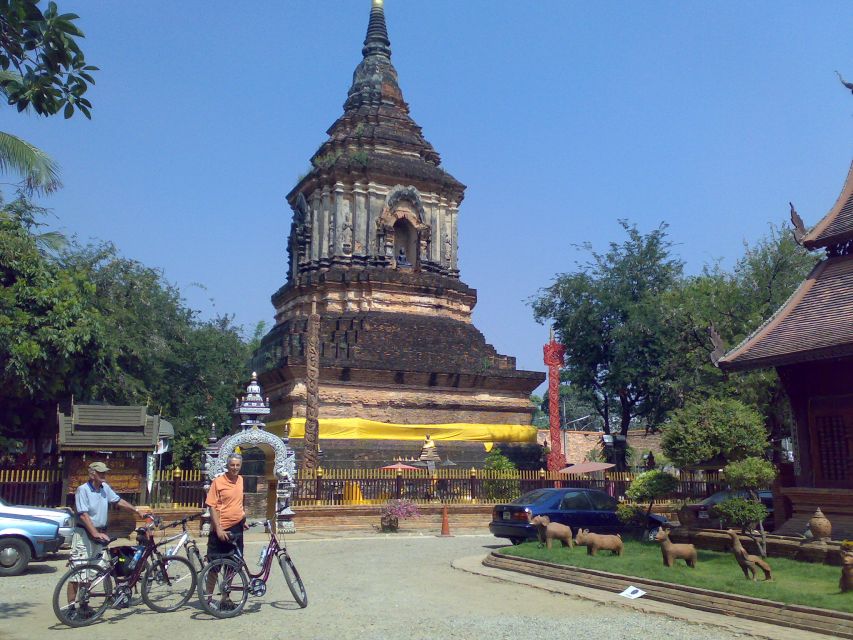
The ride then moves through narrow streets toward Wat Chedi Luang, one of the major temples in the old city. The temple was built in the 14th century, and its importance is tied not only to its age but also to the Emerald Buddha.
Thailand’s most revered Buddha image once rested here before being taken to Luang Prabang in Laos around 1545. It is now housed at Wat Phra Kaew in Bangkok. That story helps connect Chiang Mai with the wider religious and political history of the region.
A guide is useful at this stop because the temple’s importance is not always obvious from a quick look. You can see the structure and take photographs on your own, but a good explanation gives the site a larger place in northern Thailand’s story. The tour’s guides are meant to explain these details as you move through the center.
The stop also shows the advantage of cycling. Instead of approaching the old city only along its main roads, you arrive through smaller lanes and get a feel for how the temple sits within the working center of Chiang Mai.
Wat Phra Singh and a revered Buddha image
Wat Phra Singh is described as the most visited and most beautiful temple in Chiang Mai, and it is another major stop on the route. The temple houses the Phra Buddha Sihing, the image that gives the temple its name.
This is one of the points where a guide can help you look beyond decorative details. The important feature is the Buddha image and the temple’s role in Chiang Mai’s religious life. You will have time to see the complex, listen to the explanation, and continue by bicycle rather than spending the entire morning inside temple grounds.
The tour does not treat the old city as a museum district sealed off from ordinary life. You move between temples through alleys and side roads, with local activity continuing around you. I like that balance. It gives the famous sites context instead of making them feel like isolated stops on a checklist.
You should plan to follow temple etiquette throughout the morning. Dress modestly, keep your long pants on, and remember that this is a religious visit as well as a sightseeing outing.
More City Tours in Chiang Mai:
- Chiang Mai: 3 Hour Old City and Temples Guided Walking Tour
★ 4.6 · 1,568 reviews - Chiang Mai: Historic Temples and City Guided Walking Tour
★ 4.7 · 650 reviews - Chiang Mai: Temple And City Walking Tour Part I
★ 4.7 · 244 reviews - The Best City Tour View Points Wat Doi Suthep, Wat Chedi Luang and Wat Pha Lat
★ 5.0 · 184 reviews
Chiang Mai Chinatown, flowers, and market snacks
After the old city temples, the route follows the outer circle of the center and passes through a fresh and flower market in the area known as Chiang Mai’s Chinatown. This is a useful change of pace after the formal temple visits.
Flowers are an important part of northern Thai temple and household life, and the market lets you see the color and variety of that trade in a working setting. The tour description does not promise a market tour with a fixed list of stalls, so you should expect a moving look at the area rather than an extended shopping session.
The ride continues across the river to another local market. Here, you have more time to learn about and taste exotic fruits or local snacks. A food stop can be one of the most useful parts of a city ride because it gives you a simple way to connect local ingredients with daily life.
The included Thai meal or snack, along with water or soft drinks, adds practical value. You are not left to arrange refreshments during a four-and-a-half-hour ride. Still, personal expenses are not included, so bring money if you want to buy anything beyond what the tour provides.
The route back through lesser-seen streets
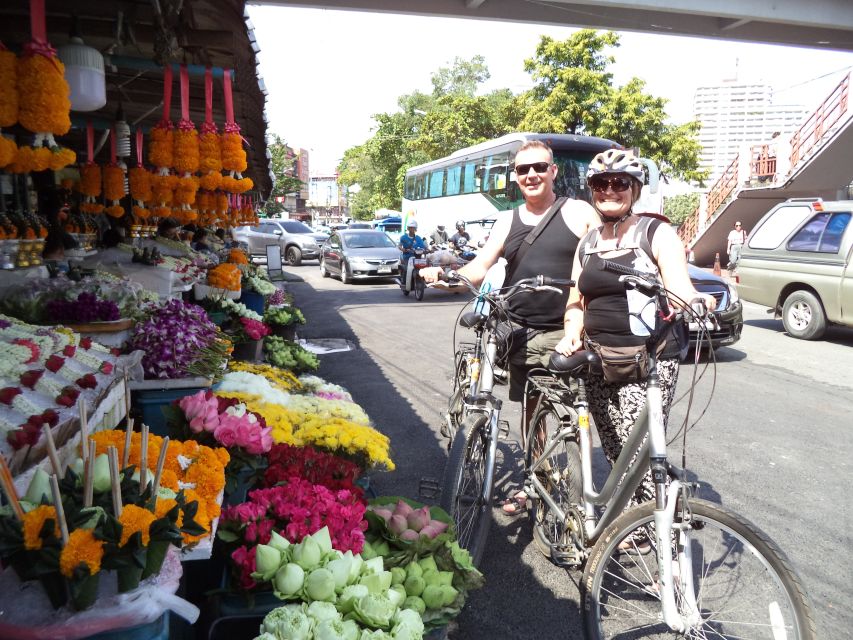
The return follows a surprising route back to the office rather than simply retracing the outward journey. That keeps the second half from feeling like a repeat and gives you another look at back roads and smaller lanes.
The route is designed to show Chiang Mai at street level. You may pass through places you would not choose on a first independent ride because they are not listed as major sights. That is where the guide matters most. A good guide can explain what you are seeing, keep the group moving, and help you feel comfortable on unfamiliar roads.
One guide, Dong, has been praised for humor and engaging stories about temple history. Deo has been praised for being informative and cautious with riders while showing the old city and markets. Those details suggest that the guide’s role is not limited to leading from the front. Careful pacing and clear instructions make a difference on a long urban ride.
The experience is offered in English, Thai, and Dutch, with small groups available. The exact group size is not given, so you should confirm the option when booking if a smaller group is important to you.
Fitness, clothing, and practical comfort
The biggest planning point is the distance. Twenty-five kilometers over four and a half hours is not an extreme athletic challenge, but it requires you to be comfortable riding for a substantial part of a morning or afternoon.
Temple visits and market stops break up the cycling. The route also favors quiet roads and small lanes, which should make the ride more pleasant than a trip spent beside heavy traffic. Even so, you should bring water-minded clothing and be prepared for warm conditions. Water or soft drinks are included, but personal expenses are not.
Long pants are required because you visit temples. Shorts and short skirts are not allowed. This is worth planning before you leave your hotel, since changing clothes during the activity would be inconvenient.
The tour includes a helmet and insurance. It begins and ends at Recreational Chiang Mai Biking, so you return to the meeting point rather than finishing at a separate attraction. The starting time depends on availability.
Solo travelers are welcome, but the tour operates only with a minimum of two participants. If that minimum is not reached, the operator may offer another time, day, or tour, or cancel the reservation. You can cancel up to 24 hours in advance for a full refund, and the reserve-now, pay-later option keeps you from paying at the time of booking.
Who should book this Chiang Mai ride?
I would choose this tour if you want to cover several important sights while also seeing markets, craft work, and local streets. It suits visitors who prefer active sightseeing and want a guide to explain temple details rather than simply provide directions.
It is also a good match for first-time visitors who want to get their bearings in Chiang Mai’s center. The combination of Wat Chedi Luang, Wat Phra Singh, Wat Srisuphan, Chinatown, and a local market gives you a useful first look at different sides of the city.
I would think twice if you dislike cycling in warm weather, have trouble riding for several hours, or want long, unhurried visits at each temple. The route covers a lot of ground, so each stop is part of a moving half-day rather than a full cultural study of any one temple.
At $43, the value is strongest when you count the bicycle, helmet, guide, entrance fees, refreshments, snack, and insurance together. The real benefit is the route design and the local explanation. You are paying to connect the city’s famous temples with its markets, lanes, river crossing, and craft traditions.
Should you book it?
Book this ride if you want a lively introduction to Chiang Mai that combines major temples with ordinary city life. The careful guides, especially Dong and Deo as noted in the supplied feedback, add the kind of clear explanation and safe pacing that can make a long ride worthwhile.
Skip it if 25 kilometers sounds tiring or if you would rather explore slowly on foot. For an active visitor with suitable clothing and a half-day to spare, this is a practical way to see much more than the standard temple circuit.
FAQ
How long does the Chiang Mai City Culture Bicycle Ride last?
The ride lasts approximately four and a half hours. Starting times depend on availability.
How far do you cycle?
The route covers about 25 kilometers through Chiang Mai’s center and surrounding streets.
Which temples are included?
The tour visits Wat Chedi Luang, Wat Phra Singh, and Wat Srisuphan, also known as the Silver Temple.
Does the tour include markets?
Yes. The route passes a fresh and flower market in Chiang Mai’s Chinatown and stops at another local market after crossing the river.
Is food included?
Yes. A Thai meal or snack is included, along with water or soft drinks. Personal expenses are not included.
What languages are available?
The live tour guide may speak English, Thai, or Dutch.
What should I wear?
Bring and wear long pants. Shorts and short skirts are not allowed because the tour visits temples.
Where does the tour start and finish?
You meet the guide at Recreational Chiang Mai Biking, and the activity ends back at the same meeting point.
Can a solo traveler book this tour?
Solo travelers are welcome, but the tour requires a minimum of two participants to operate. If that minimum is not reached, another time, day, or tour may be offered, or the reservation may be canceled.
Newly reviewed around Chiang Mai
- Workshop Making Herbal ball & herbal inhaler★ 4.3 · 3 reviews
- Chiang Mai Zipline White Water Rafting and Elephant Sanctuary★ 4.0 · 11 reviews
- Walk With Monks Collecting Alms(meeting point maybe change)★ 4.9 · 8 reviews
- Trek to a Jungle Waterfall★ 5.0 · 14 reviews
- Zipline+Sticky waterfall+Long Neck Village Private Tour★ 5.0 · 22 reviews
- Meditation Retreat and Self-Care in Nature★ 5.0 · 4 reviews
- Full Day Yoga, Meditation, and Thai Cultural Immersion in Chiang Mai★ 5.0 · 3 reviews
- Long Neck Village, White & Blue Temple, Black House Day Tour From Chiang Mai★ 4.0 · 14 reviews
Chiang Mai Cycling Tours, compared.
Chiang mai Hike & Downhill Bike Adventure –Suthep National Park
Read our review →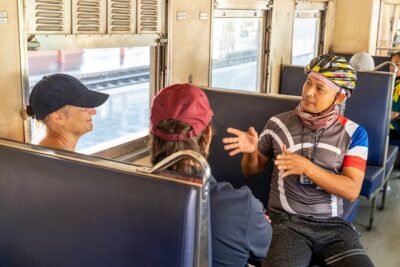
Half-day E-bike Nam Phrae (hilly, fully paved roads, GUIDED)
Read our review →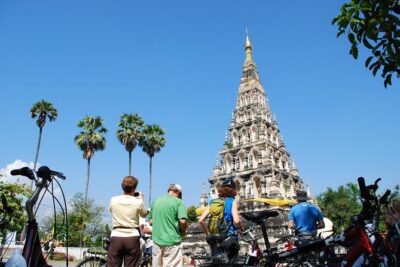
Half-day E-bike Countryside and rice paddies (flat land, GUIDED)
Read our review →Browse the lists this tour appears in