
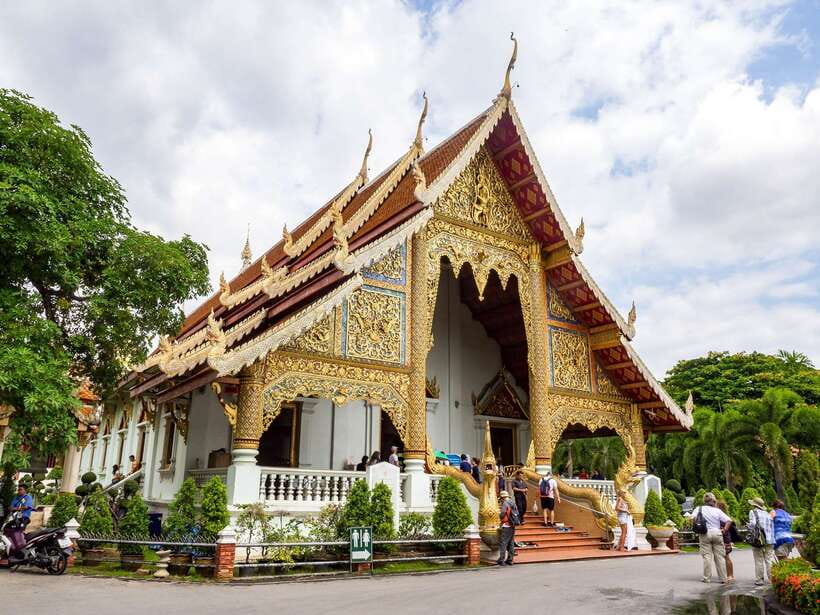
Reviewed · CHIANG MAI OLD CITY WALKING TOURS
Chiang Mai: 3 Hour Old City and Temples Guided Walking Tour
Chiang Mai’s best-known temples sit close together inside the old city, but their stories are easy to miss when you explore alone. This three-hour walking tour gives you a clear route through Wat Chedi Luang, Wat Phan Tao, and Wat Phra Singh, with a local guide explaining Buddhism, Lanna design, and the city’s past as you go.
I like the way the tour moves from Chiang Mai’s largest stupa to a small teak sanctuary, then finishes at its most lavish temple. I also like the price: at $16, you get a guide who can explain what you are seeing for less than the cost of many private sightseeing options.
The main drawback is the walking and the heat. You will spend about an hour at each temple, remove your shoes several times, and pay another 120 baht in entrance fees. Some people have found the full outing longer than expected, so it is not the best choice if you need a quick one-hour look.
What makes this tour worth considering
- Three major temples in one compact route: You visit Wat Chedi Luang, Wat Phan Tao, and Wat Phra Singh within Chiang Mai’s old city.
- A useful range of temple styles: You see a huge brick stupa, a modest teak building, mosaic decoration, gilded pagodas, and a large Lion Buddha image.
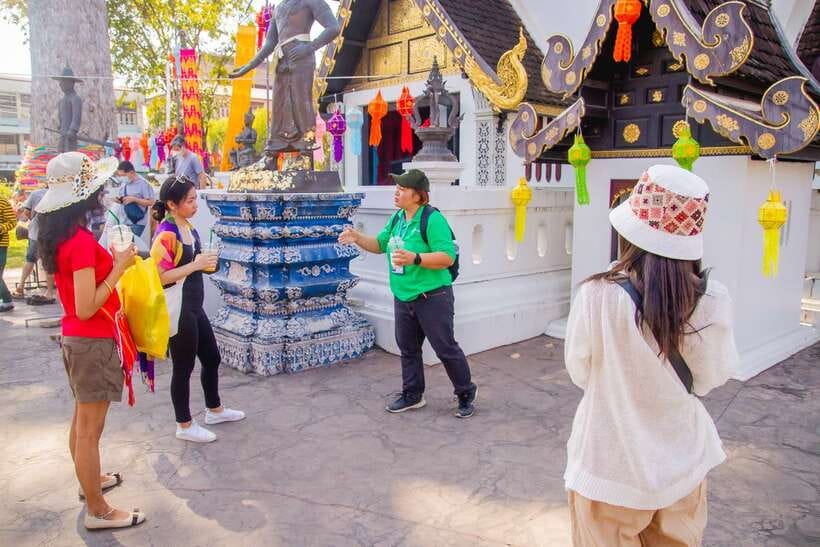
- Local explanation, not just photographs: Guides cover Lanna history, Buddhist beliefs, Thai culture, language, and daily life.
- Strong value at $16: The guide is included, while the three temple entry fees total 120 baht.
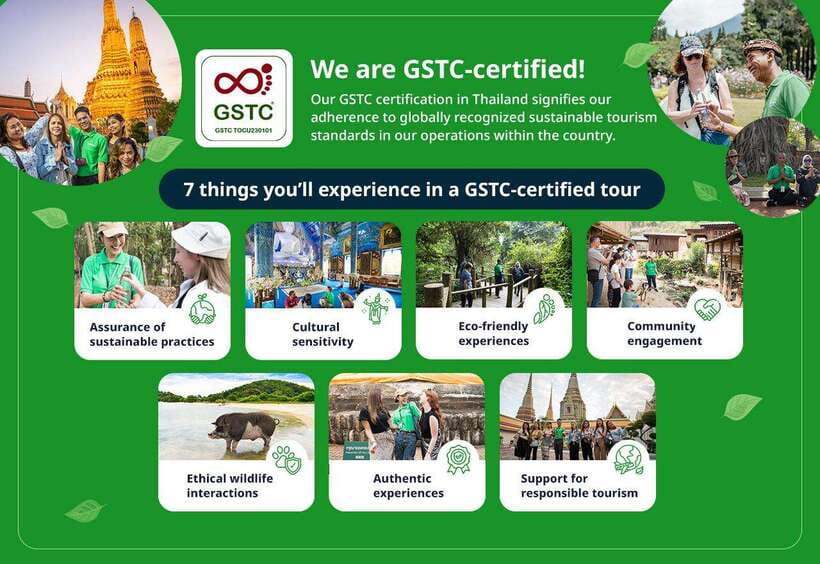
- A genuinely low-impact format: You walk between sights rather than adding a vehicle transfer, and the tour is GSTC-certified.
- Good small details from the guides: Guides including Nana, Sunny, TomTam, and Popcorn have been praised for humor, clear English, photographs, and even simple meditation instruction.
Starting at Wat Chedi Luang
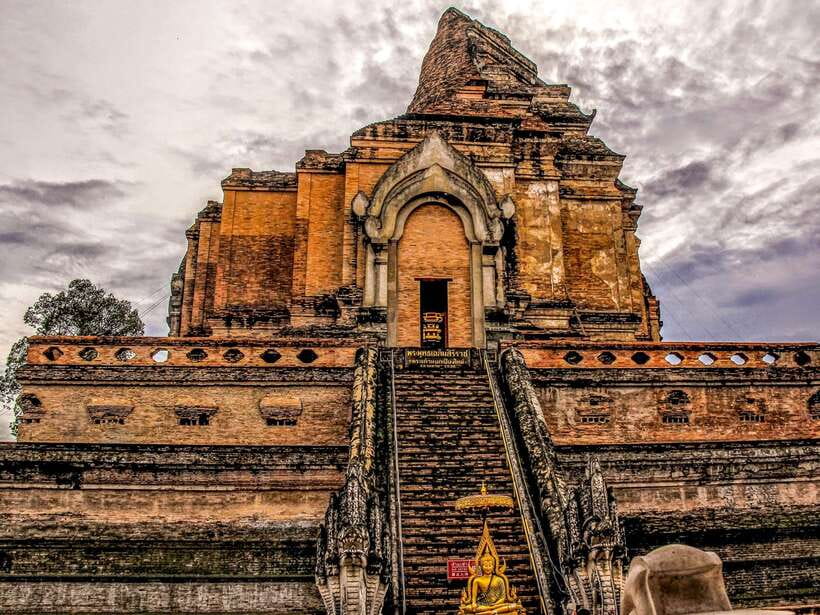
Meet at the entrance of Wat Chedi Luang, where your guide will hold a TripGuru sign. You should arrive 10 minutes early. The operator sends an email the evening before with the confirmed meeting details, so check your inbox before setting out.
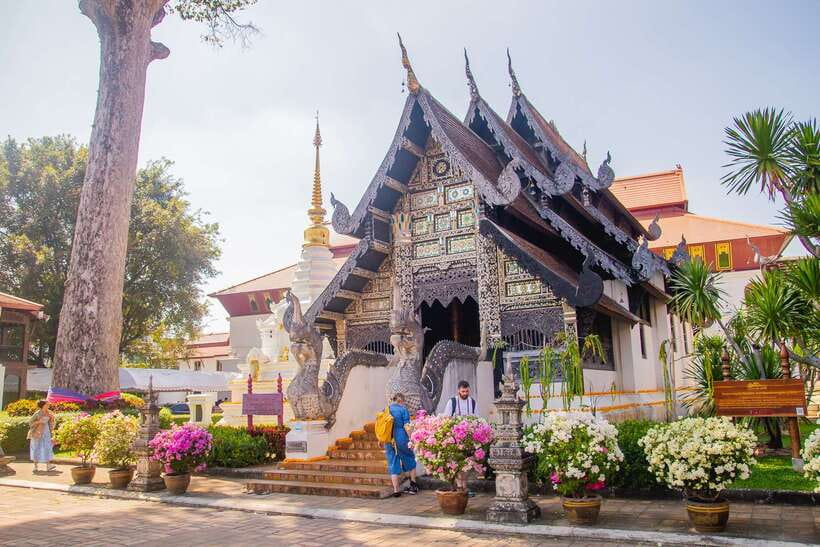
Wat Chedi Luang is the right place to begin because it gives you the tour’s biggest visual moment first. Built between the 14th and 15th centuries, the temple compound contains Chiang Mai’s largest stupa, a broad, weathered structure that immediately shows the scale and ambition of the old Lanna kingdom.
Your guide spends about an hour here. That is useful because the compound has more to it than one famous structure. You can look closely at Lanna-style details, walk through the grounds, and learn how the temple fits into Chiang Mai’s religious and civic past.
I would not rush this stop. The large stupa is impressive from a distance, but the smaller architectural details make more sense once a guide points them out. Several people have particularly valued explanations of Buddhism and Thai beliefs on this tour, which can make a familiar-looking temple feel far less mysterious.
The practical catch is the entrance fee. Wat Chedi Luang costs 50 baht, not included in the tour price. Bring cash, and keep your ticket money separate from your phone or camera so you are not searching through your bag at each entrance.
More Old City Walking Tours in Chiang Mai:
- Chiang Mai: Historic Old City Bike Tour – Morning or Night
★ 4.7 · 263 reviews - Chiang Mai: Historic Old City Bike Tour – Morning or Night
★ 5.0 · 202 reviews - Private Chiang Mai Old City Half Day Tuk Tuk Tour
★ 4.5 · 157 reviews
Wat Phan Tao and the appeal of a smaller temple
The next temple gives the tour a welcome change of scale. Wat Phan Tao is much smaller and quieter in appearance than Wat Chedi Luang, but its modest size is part of its charm.
The building is known for its carefully carved teak facade. It once served as a throne hall for King Mahotara Prateth before becoming a place of prayer. That change in purpose gives your guide a natural way to explain how buildings and royal spaces could take on new religious roles.
This is one of the stops where a guide adds real value. Without context, you may simply see a beautiful wooden building and move on. With an explanation of the carving, the former throne hall, and its place among Chiang Mai’s temples, you have a better reason to pause and look closely at the woodwork.
The entrance fee is 20 baht. You will also take off your shoes at temple buildings, so wear footwear that slips on and off easily. One useful tip from the experience is to bring socks if you prefer not to walk barefoot on warm floors.
The route is not presented as a silent, private visit. You are walking with a guide and group, asking questions and stopping for explanations. That suits people who want cultural background, but anyone seeking long stretches of quiet photography time may find the pace more structured than going alone.
Finishing at Wat Phra Singh
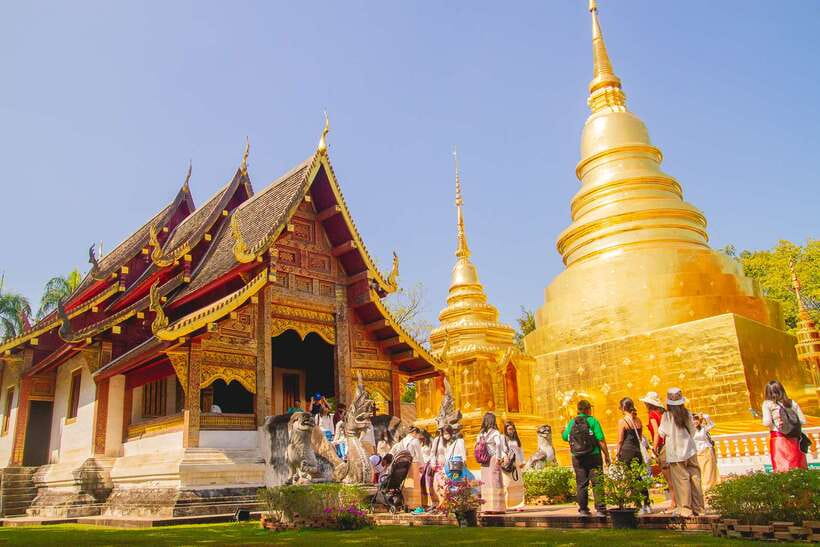
The final stop is Wat Phra Singh, one of Chiang Mai’s finest and most decorated temples. Built in the 14th century, it provides a strong finish because the visual style shifts again, from the massive stupa and carved teak to a more lavish collection of ornament.
Here you can expect mosaic decoration, a large Lion Buddha statue, gilded pagodas, and carefully finished grounds. There are plenty of places to take photographs, but the building is also a place of worship, so photography should not replace respectful behavior.
Your guide spends about an hour at Wat Phra Singh. That gives you time to see the sanctuary and grounds without having to race through them. Guides have also used temple visits to explain meditation and how Buddhism shapes everyday life. One especially memorable aspect for some people has been learning a simple meditation practice at a temple rather than only hearing dates and architectural terms.
The entry fee is another 50 baht. The tour ends at Wat Phra Singh Woramahawihan, so you are not returned to your hotel. That is convenient if you plan to continue exploring the old city, eat nearby, or arrange your own ride back. It matters less if you have luggage, a fixed appointment, or a hotel outside the central area.
What the guide adds to the experience
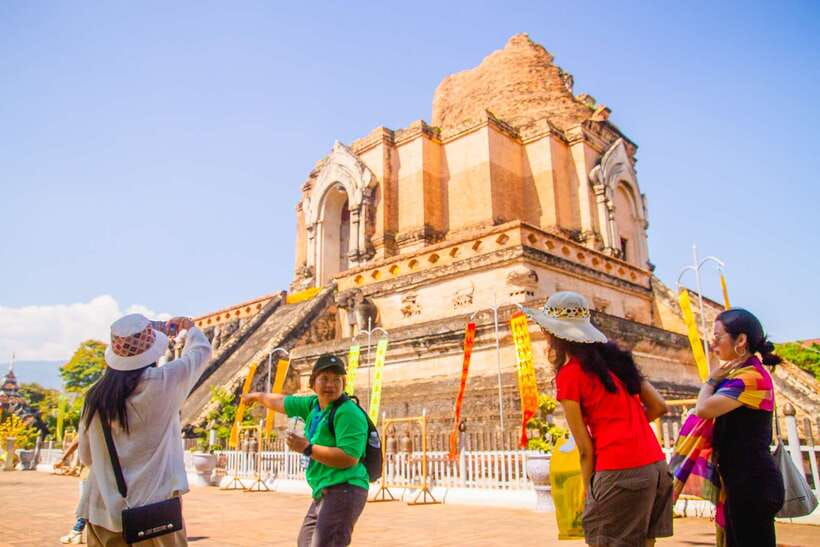
The strongest part of this tour is the live explanation. The temples are attractive on their own, but the guide helps you connect buildings with Lanna history, Buddhist practice, Thai customs, and local life.
English is the tour language. The strongest guide feedback centers on clear explanations, friendly personalities, and a willingness to answer questions. Names that have received particularly warm attention include Nana, TomTam, Nuttaya, Sunny, James, Popcorn, Katy, Peter, and Nattiya Kanya.
You should not book expecting one guaranteed guide by name unless the operator confirms that in advance. Instead, treat these names as examples of the guide style available on the tour. Nana has been praised for helping a person with a spinal problem arrange a tuk-tuk after the walk. Popcorn has been praised for teaching meditation, taking photographs, and sharing his experience of growing up as a monk. Sunny has been appreciated for patient answers and helpful photos.
The personal touch is important at religious sites. A guide can explain why people behave in certain ways, what details are worth noticing, and how to enter a sanctuary respectfully. You can also ask questions about Thai culture instead of trying to decode every sign yourself.
More Temple Tours in Chiang Mai:
- Chiang Mai: Doi Suthep and Wat Umong Enchanting Evening Tour
★ 4.6 · 1,811 reviews - Chiang Mai: Doi Suthep, Wat Umong, and Pha Lat Sunrise Tour
★ 4.7 · 1,425 reviews - Chiang Mai: Wat Pha Lat & Wat Phra That Doi Suthep Tour
★ 4.8 · 1,207 reviews - Wat Phra That Doi Suthep spiritual Sunrise Tour with an Ex-monk
★ 5.0 · 798 reviews
A realistic look at the three-hour pace
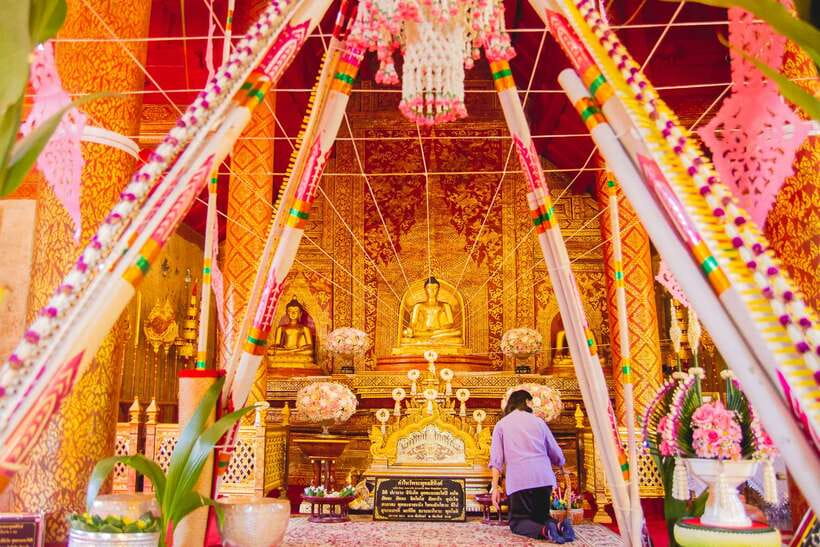
The advertised duration is three hours, with about one hour at each temple. That sounds simple, but the actual finish time can vary with group size, questions, walking speed, and how long the guide spends at each site.
Some people have found the pace just right, while others have felt the tour became longer than expected, sometimes reaching four hours or more. This is not necessarily a problem if you enjoy discussion, but it can matter if you have a restaurant booking, a massage appointment, or an afternoon excursion.
The walk is best for people with moderate fitness. You do not need to treat it as strenuous hiking, but you should expect steady time on your feet, warm weather, temple courtyards, and repeated shoe removal. One useful warning is to bring more water than you think you need. Even during the cooler February period, the shade can still feel hot.
Wear comfortable shoes, sunglasses, a hat, sunscreen, and insect repellent. Carry cash for the entry fees and drinks. A scarf is useful for covering your shoulders when needed.
Dress rules and temple manners
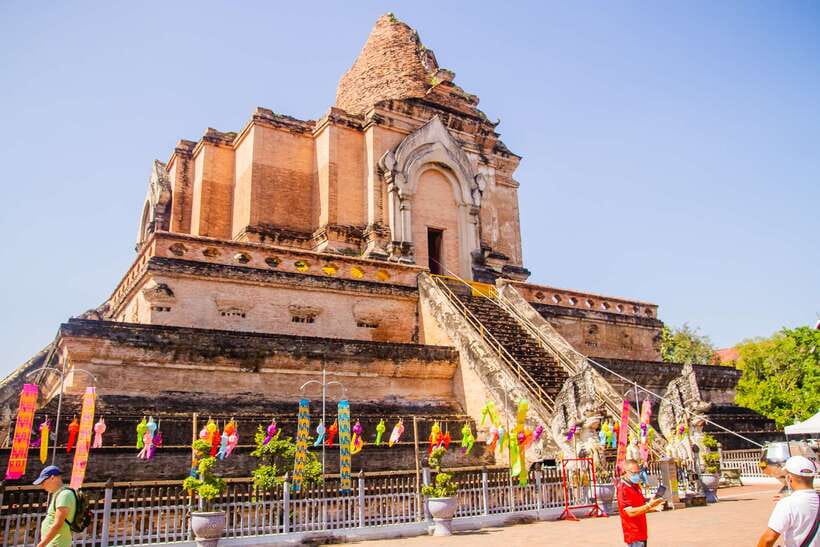
Temple clothing rules are important here. You cannot wear clothing that reveals your shoulders, underarms, back, or knees. Bring a scarf, but do not rely on a last-minute cover-up alone if your outfit is very revealing.
You will take off your shoes before entering some buildings. Easy slip-on shoes make the stops faster and more comfortable. If you dislike walking barefoot, bring socks.
The tour is a good chance to learn respectful habits from a local guide. Keep your voice low inside sanctuaries, follow instructions about photography, and remember that these are active religious places rather than museum displays. The guide can help you avoid small mistakes that are easy to make when you are unfamiliar with local customs.
Is $16 a good price?
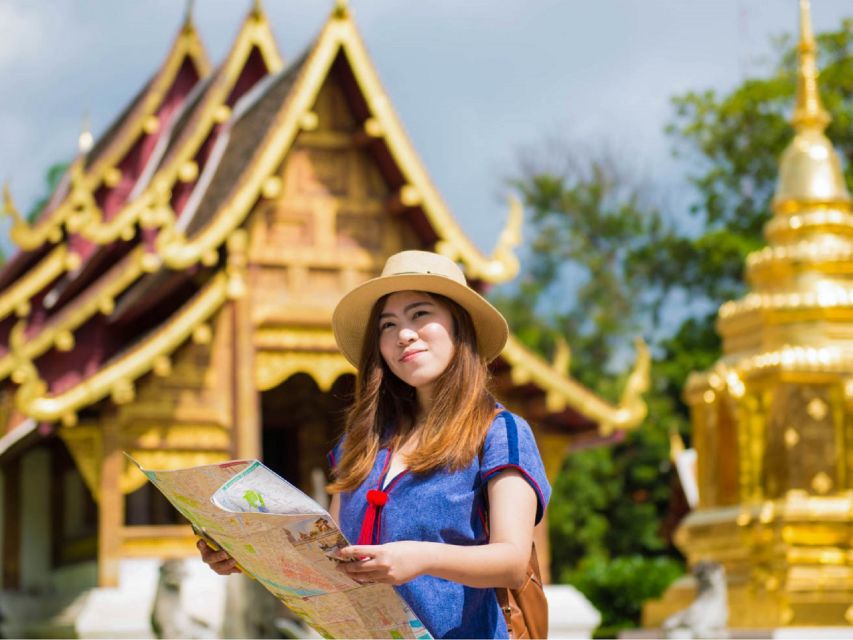
At $16 per person, this is a strong-value introduction to Chiang Mai’s old city. The price includes the local English-speaking guide and walking tour, while the temple fees are separate.
The three listed entrance charges come to 120 baht:
- Wat Chedi Luang: 50 baht
- Wat Phan Tao: 20 baht
- Wat Phra Singh: 50 baht
You will also need to pay for your own food and drinks. Hotel pickup and drop-off are not included, so you must reach Wat Chedi Luang yourself and make your own way onward after the finish.
The value is strongest if you are visiting Chiang Mai for the first time or usually walk through historic places without knowing what you are seeing. You get a route, explanations, cultural context, and the chance to ask questions. If you already know these three temples well, the tour may feel less essential, though a particularly good guide can still add useful insight.
The GSTC certification and low-impact format are also worth noting. You explore on foot, and the experience is designed around reducing environmental impact and offsetting carbon emissions. That does not remove every environmental cost, but it is a sensible choice compared with adding unnecessary transport for a compact old-city route.
Who should book this walking tour?
I would recommend it to a first-time Chiang Mai visitor who wants a quick cultural foundation. It also suits solo visitors who prefer company, couples who want more than a photo stop, and anyone interested in Buddhism, Lanna art, or Thai history.
It works especially well near the start of your stay. After three hours with a local guide, you will have a better sense of the old city and may feel more confident visiting other temples on your own.
It is less suitable if you have mobility impairments, heart problems, respiratory issues, or are pregnant. The experience also may not suit you if long periods of walking in warm weather are difficult. The operator recommends moderate fitness, and that advice should be taken seriously.
I would also skip it if you need a tightly timed outing. The planned duration is three hours, but questions and temple visits can stretch the schedule. If you have flexibility, the extra time can be a benefit. If not, choose a shorter independent visit.
Should you book it?
Book this tour if you want three famous Chiang Mai temples explained by a local English-speaking guide at a modest price. The best reasons are the range of architecture, the clear old-city route, and the cultural detail that turns temple visits into something more than sightseeing.
Bring cash, water, modest clothing, and shoes that come off easily. Allow more than three hours if your schedule is tight, and do not expect hotel transport. With those details in mind, this is a practical, low-cost way to get oriented in Chiang Mai and understand what you are looking at.
FAQ
Where does the Chiang Mai temple walking tour start?
The tour starts at the entrance of Wat Chedi Luang. Your guide will hold a TripGuru sign.
Where does the tour finish?
The tour finishes at Wat Phra Singh Woramahawihan.
How long does the tour last?
The stated duration is three hours. Each of the three temple visits is planned for about one hour, though the outing can take longer if the group has many questions or the guide spends extra time at a site.
What language is the tour conducted in?
The live tour guide speaks English.
What is included in the $16 price?
The price includes a local guide and the walking tour. Hotel pickup, hotel drop-off, temple entrance fees, food, and extra drinks are not included.
How much are the temple entrance fees?
Wat Chedi Luang costs 50 baht, Wat Phan Tao costs 20 baht, and Wat Phra Singh costs 50 baht. The total is 120 baht.
What should I wear?
Wear modest clothing that covers your shoulders, underarms, back, and knees. Bring a scarf if needed, and choose shoes that are easy to remove because you will take them off at temple buildings.
Is the walk suitable for people with limited mobility?
The tour recommends moderate fitness and is not suitable for people with mobility impairments. It is also listed as unsuitable for pregnant women and people with heart or respiratory problems.
Can I cancel or pay later?
You can cancel up to 24 hours before the activity for a full refund. The reserve-now, pay-later option lets you book without paying at the time of reservation.
More Three-Hour Experiences in Chiang Mai
- Doi Suthep Temple Tour by Local Red Car 3 Hour Adventure
★ 5.0 · 34 reviews - No.1 Chiang Mai: 3-Hour Monk Trail Hike to Wat Doi Suthep & Palad
★ 5.0 · 11 reviews - Chiang Mai Old City & Temples 3 hour Twilight Walking Tour
★ 5.0 · 9 reviews - 3 hour Fah Lanna Wisdom Luxury Spa Package
★ 4.5 · 4 reviews
More Walking Tours in Chiang Mai
- Chiang Mai: Historic Temples and City Guided Walking Tour
★ 4.7 · 650 reviews - Chiang Mai: Temple And City Walking Tour Part I
★ 4.7 · 244 reviews - Chiang Mai: Local Food and Markets Guided Walking Tour
★ 4.3 · 175 reviews - Chiang Mai Untouched Elephant: Nature Walk & Waterfall Trek
★ 4.7 · 77 reviews
Newly reviewed around Chiang Mai
- Workshop Making Herbal ball & herbal inhaler★ 4.3 · 3 reviews
- Chiang Mai Zipline White Water Rafting and Elephant Sanctuary★ 4.0 · 11 reviews
- Walk With Monks Collecting Alms(meeting point maybe change)★ 4.9 · 8 reviews
- Trek to a Jungle Waterfall★ 5.0 · 14 reviews
- Zipline+Sticky waterfall+Long Neck Village Private Tour★ 5.0 · 22 reviews
- Meditation Retreat and Self-Care in Nature★ 5.0 · 4 reviews
- Full Day Yoga, Meditation, and Thai Cultural Immersion in Chiang Mai★ 5.0 · 3 reviews
- Long Neck Village, White & Blue Temple, Black House Day Tour From Chiang Mai★ 4.0 · 14 reviews
Chiang Mai Old City Walking Tours, compared.



Chiang Mai Old City & Temples Guided Walking Tour – 3 Hrs
Read our review →
Old Town Chiang Mai Food Tour with 10+ Local Dishes Tastings
Read our review →Browse the lists this tour appears in