
Reviewed · CHIANG MAI OLD CITY WALKING TOURS
Chiang Mai: Ancient City Tour of Wiang Kum Kam
Wiang Kum Kam gives you a different view of Chiang Mai. Instead of spending the whole morning inside the Old City, you head south to a former capital where old temples sit among modern streets and homes. The horse-drawn carriage ride adds a relaxed, old-fashioned way to move between the ruins.
I like the practical hotel pickup and return, since you avoid arranging transport to an out-of-the-way archaeological area. I also like the pairing of outdoor ruins with the City Arts and Cultural Centre, which helps explain what you have seen. The main drawback is simple: if you are staying near Chiang Mai’s Old City, you may find plenty of temples closer to your hotel, and one stop can feel less rewarding if you want a large, intact monument.
Key points at a glance
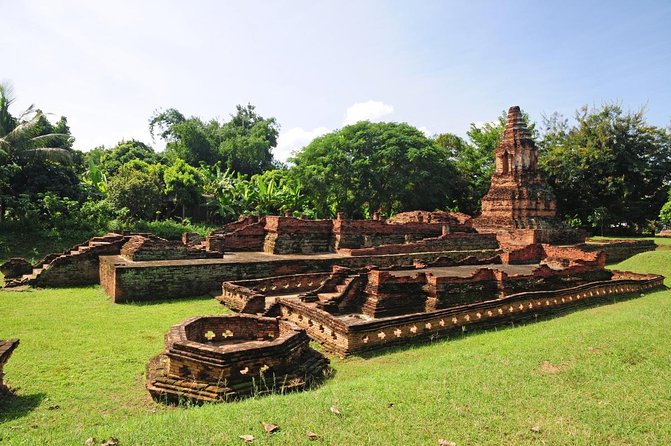
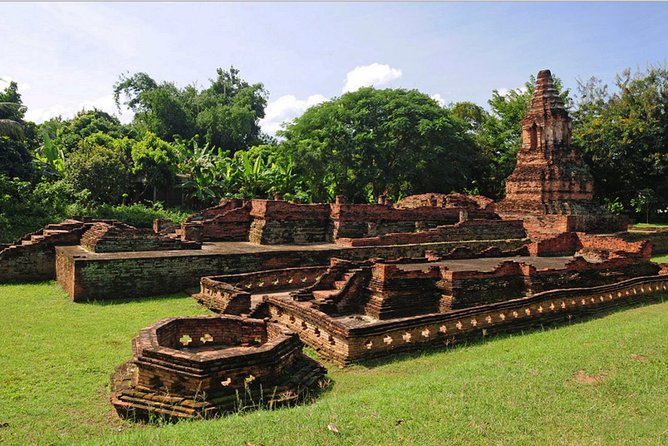
- Wiang Kum Kam was King Mangrai’s earlier capital, built beside the Ping River before Chiang Mai became the main seat of power.
- A horse-drawn carriage is included, so you do not need to negotiate or pay for the ride locally.
- Wat Kuu Kham, also called Wat Chedi Liam, is the opening temple stop and gives you a first look at the old settlement.
- The City Arts and Cultural Centre fills in the gaps, with maps, old objects, photographs, displays, and an audio visual presentation.
- The group is limited to 15 people, keeping the tour smaller than a large coach outing.
- The tour lasts about three and a half hours, making it a manageable morning or afternoon addition to a Chiang Mai stay.
Why Wiang Kum Kam is worth your time
Wiang Kum Kam is not a single enclosed ruin complex with one grand entrance. It is an archaeological area spread through the modern surroundings of Chiang Mai. You visit old temple remains, then continue through an area where daily life carries on around them.
That setting is part of the appeal. You get a sense of how old sites can remain part of a living city rather than being separated from it. It also means you should set your expectations correctly. This is a tour of scattered ruins and historical clues, not a dramatic palace complex with every wall still standing.
King Mangrai the Great established Wiang Kum Kam as his capital before moving the seat of power to Chiang Mai. The settlement stood along the Ping River, an important part of the region’s development. Many of the ruins seen today were uncovered from beneath river sediment during excavation work in the 1980s, which gives the site an unusual story. What you see is not simply an abandoned city left untouched. It is a place that had to be found again.
A guide matters here. Without context, a ruined brick base or weathered chedi can be hard to read. With an explanation of the former capital and the excavation work, the remains make more sense. One guide associated with this tour, Mr Boy, has been noted for punctual hotel pickup and clear explanations at the temples. Guide quality can vary on any group outing, but this is the sort of tour where good interpretation adds real value.
More Old City Walking Tours in Chiang Mai:
- Chiang Mai: 3 Hour Old City and Temples Guided Walking Tour
★ 4.6 · 1,568 reviews - Chiang Mai: Historic Old City Bike Tour – Morning or Night
★ 4.7 · 263 reviews - Chiang Mai: Historic Old City Bike Tour – Morning or Night
★ 5.0 · 202 reviews
Wat Kuu Kham and the first look at the old capital
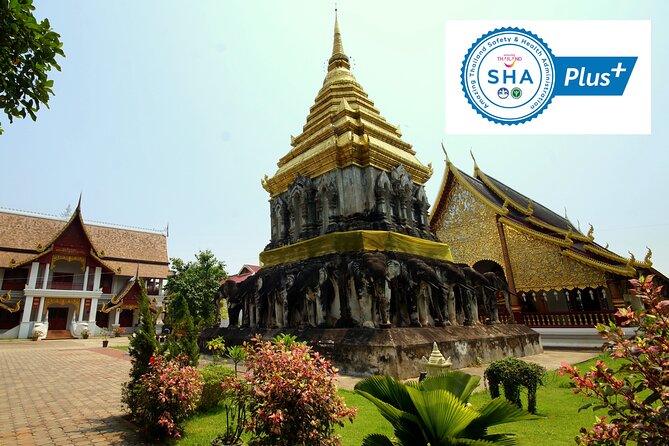
The first scheduled stop is Wat Kuu Kham, also known as Wat Chedi Liam. You have about 30 minutes here, with admission included in the tour price.
This is a useful opening stop because it introduces the style of Wiang Kum Kam without asking you to absorb the entire site at once. Your guide can point out the temple’s place within the former capital and explain what makes it different from the active temples you see in central Chiang Mai.
Thirty minutes is enough for a guided look and photographs, but it is not a long independent visit. If you like to study architectural details slowly, you may wish the schedule allowed more time. On the other hand, the short stop helps keep the entire outing focused. You are not left wandering around one temple while the rest of the group waits.
The tour then moves into the wider Wiang Kum Kam area. The carriage ride is one of the most distinctive parts of the experience. You see the historic temples from a slower vantage point, and the ride removes the need to pay for a carriage separately at the site.
Do not expect the carriage to turn this into a private romantic outing. This is a group tour, and the ride is included as transport and atmosphere rather than as a luxury add-on. Still, it is a pleasant change from being placed in a van for every short transfer.
Reading the ruins of Wiang Kum Kam
You have about an hour at Wiang Kum Kam, the main historical focus of the tour. This is where the guide’s explanations are most useful.
The settlement was built as a capital before Chiang Mai, so the ruins help you understand that Chiang Mai’s story did not begin with the Old City walls. The former capital’s location beside the Ping River also matters. Rivers shaped trade, settlement, travel, and danger, and the site’s later burial under river sediment is central to why the ruins look the way they do now.
Some visitors will find the scattered nature of Wiang Kum Kam fascinating. You move through a historical area where old structures and present-day surroundings meet. Others may find it less immediately impressive than Chiang Mai’s better-known temples. I would choose this stop for the story, not only for dramatic photographs.
One guide’s description of Wiang Kum Kam as an underground city caused confusion for a participant who expected caves or a buried settlement that could be entered. That is a useful warning. The phrase refers to the way parts of the old settlement were buried and later uncovered, not to an underground attraction like a cave town. Ask your guide to clarify the excavation story if the wording seems vague.
The site is best for you if you enjoy connecting fragments. You may see a chedi, temple remains, old foundations, and traces of a former capital rather than a fully preserved urban center. The guide helps tie those pieces together.
The group cap of 15 people is helpful here. A smaller group makes it easier to hear explanations and ask questions than on a large coach tour. It does not guarantee a private experience, but it keeps the outing from feeling like a moving crowd.
The Three Kings Monument and Chiang Mai’s story
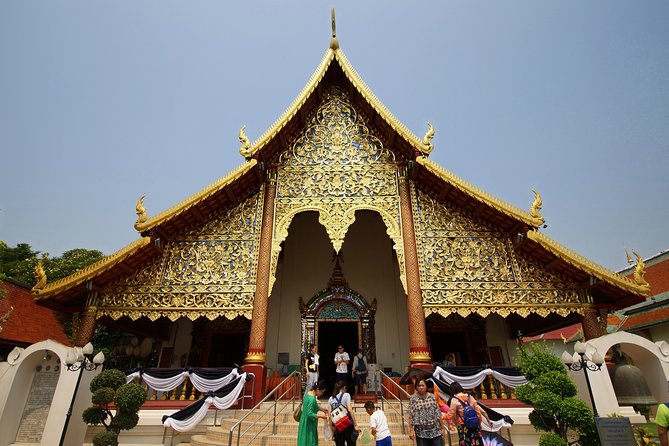
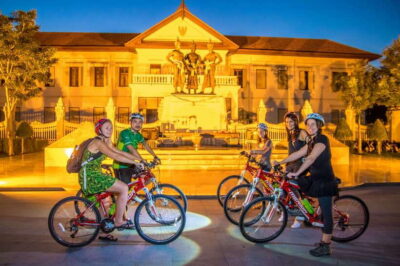
The tour also includes the Three Kings Monument in the Old City. The monument itself is important as a Chiang Mai landmark, but the real benefit is its link to the next stop, the City Arts and Cultural Centre.
The Three Kings Monument sits in the middle of the Old City, directly in front of the cultural center. Including it gives you a quick point of reference for Chiang Mai’s political and cultural identity after your visit to the earlier capital at Wiang Kum Kam.
You should not expect a long formal visit here. It works best as part of the wider explanation of Chiang Mai’s founding and development. If you have already spent several days in the Old City, the monument may feel familiar. If this is your first day in Chiang Mai, it gives the later museum visit a useful setting.
More City Tours in Chiang Mai:
- Chiang Mai: Historic Temples and City Guided Walking Tour
★ 4.7 · 650 reviews - Chiang Mai: Temple And City Walking Tour Part I
★ 4.7 · 244 reviews - The Best City Tour View Points Wat Doi Suthep, Wat Chedi Luang and Wat Pha Lat
★ 5.0 · 184 reviews - Private Chiang Mai Old City Half Day Tuk Tuk Tour
★ 4.5 · 157 reviews
One hour inside the City Arts and Cultural Centre
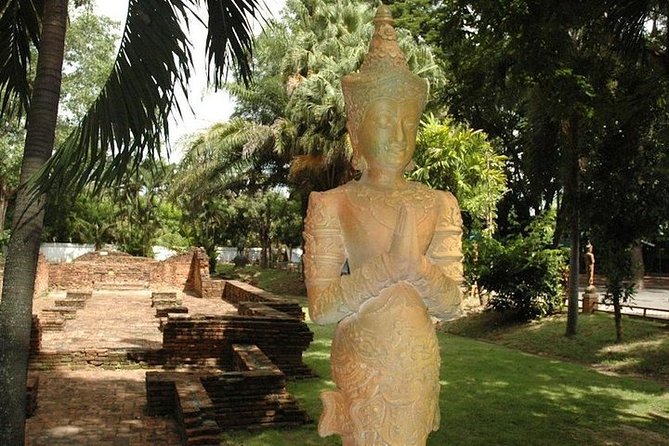
The final major stop lasts about an hour and is included in the price. The Chiang Mai City Arts and Cultural Centre occupies a restored former provincial government hall dating from the 1920s.
This is more than a quick museum stop. Inside, you find photographs, old objects, maps, and an audio visual presentation tracing Chiang Mai from its first settlers to the modern city. There is also a small replica of a traditional wooden village.
I like this part of the tour because it gives you a way to organize what you saw at Wiang Kum Kam. Ruins can be hard to understand in isolation. Maps and visual displays help show how settlements shifted and how Chiang Mai developed after the earlier capital.
The museum also gives the tour a welcome change of pace. After time outside at temple sites, you have a quiet indoor hour with information presented in a more structured way. The main limitation is that the center is closed on Mondays. The tour can still run that day, but this museum stop will not be available, so check the operating day before booking if the indoor history section matters to you.
What the $47.07 price really covers
At $47.07 per person, this is not the cheapest way to see a temple in Chiang Mai. You can visit many Old City temples independently and spend less. The price makes more sense when you count the parts together.
Your fee includes round-trip transfers from Chiang Mai hotels, the horse-drawn carriage ride, a guide, the Wiang Kum Kam visits, the Three Kings Monument, and admission to the City Arts and Cultural Centre. You also avoid arranging separate transport to the archaeological area and working out how to move between scattered sites.
For a solo visitor, the value depends on whether the minimum group requirement is met. At least two people are required for the activity to operate, although a single person can book subject to availability. A private tour upgrade is available for Spanish, French, German, or Russian guidance, with an additional 800 baht paid for the whole party.
Food, drinks, and snacks are not included. The tour lasts about three and a half hours, so plan your own refreshments around it rather than expecting a meal break as part of the schedule.
I would call the price fair for someone who wants transport, interpretation, and a set program in one booking. I would call it less attractive for a confident independent visitor staying near the Old City who mainly wants to see temples and does not care about the museum or carriage ride.
Timing, group size, and who should book
This tour suits a first visit to Chiang Mai, especially if you want an introduction to the city’s earlier capital before spending more time in the Old City. It also works well for anyone who enjoys historical sites but prefers a guide to explain what remains.
Families can consider it too. Children aged 11 and younger must be with a paying adult, and children aged one and younger are complimentary. Most people can take part, though the supplied information does not give detailed accessibility specifications, so ask the operator directly if you have mobility concerns.
The group limit is 15 people. That is small enough for a more personal guide experience, while still keeping the cost below a fully private outing. The tour requires at least two participants to run, and the provider may offer another date or experience, or a full refund, if that minimum is not reached.
Pickup is offered from Chiang Mai hotels, which is one of the strongest practical features. Exact pickup times are not provided here, so check your confirmation carefully. Confirmation is sent at booking, and free cancellation is allowed up to 24 hours before the start time. Changes or cancellations inside that window are not refunded.
How this tour compares with Old City sightseeing
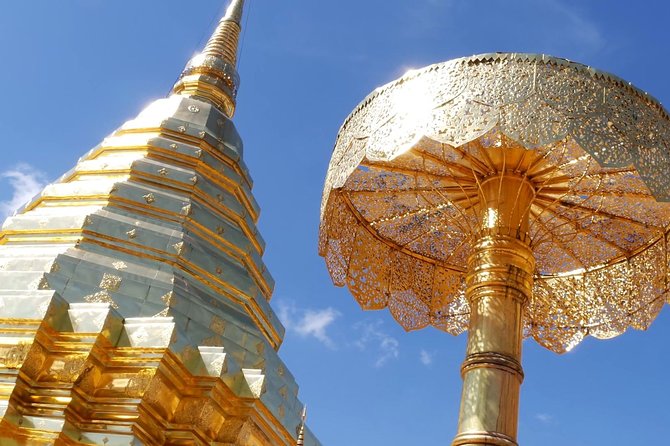
The Old City is easier to explore on foot, and its temples are closer together. If your main goal is to photograph ornate active temples, you may prefer to stay near your hotel and explore independently.
Wiang Kum Kam offers a different payoff. You are seeing the remains of an earlier capital, learning how parts of the site were recovered from beneath river sediment, and riding by carriage between historical stops. The experience has more movement and more explanation than a simple temple walk.
I would not book this expecting every stop to be a grand architectural showpiece. Book it because you want context, a former capital, a guide, and a gentle way to reach sites outside the usual Old City circuit.
Should you book the Wiang Kum Kam tour?
Book it if you want to understand how Chiang Mai grew from an earlier capital and prefer a guided half-day outing with hotel transport. The guide’s explanation of the ruins may be the most valuable part, especially because Wiang Kum Kam can be difficult to interpret on your own.
Skip it if you have limited time, are staying in the Old City, and mainly want famous temples that you can reach on foot. Also check the day of the week if the City Arts and Cultural Centre is important to you, since it closes on Mondays.
For history-minded visitors, families, and anyone who likes a slower carriage ride, this is a solid addition to a Chiang Mai itinerary. Just arrive with realistic expectations: you are visiting a spread-out archaeological area, not an underground city or a single perfectly preserved ancient town.
FAQ
How long does the Wiang Kum Kam tour last?
The tour lasts approximately 3 hours and 30 minutes.
What is included in the tour price?
The price includes a horse-drawn carriage ride, a guided visit to Wiang Kum Kam’s ruined temples, the Three Kings Monument, the Chiang Mai City Arts and Cultural Centre, and round-trip transportation from Chiang Mai hotels.
Is hotel pickup provided?
Yes. Round-trip transfers from Chiang Mai hotels are included.
Is the horse-drawn carriage ride included?
Yes. You do not need to pay separately for the included carriage ride.
Is admission to the attractions included?
Admission to the Chiang Mai City Arts and Cultural Centre is included. The listed admission for Wat Kuu Kham and Wiang Kum Kam is free.
Is the tour available every day?
The Chiang Mai City Arts and Cultural Centre is closed on Mondays, although the tour can still operate on that day.
How many people can join the group?
The activity has a maximum of 15 travelers.
Can I cancel for a refund?
You can cancel up to 24 hours before the experience start time for a full refund. Cancellations or changes made less than 24 hours before the start time are not refunded or accepted.
Newly reviewed around Chiang Mai
- Workshop Making Herbal ball & herbal inhaler★ 4.3 · 3 reviews
- Chiang Mai Zipline White Water Rafting and Elephant Sanctuary★ 4.0 · 11 reviews
- Walk With Monks Collecting Alms(meeting point maybe change)★ 4.9 · 8 reviews
- Trek to a Jungle Waterfall★ 5.0 · 14 reviews
- Zipline+Sticky waterfall+Long Neck Village Private Tour★ 5.0 · 22 reviews
- Meditation Retreat and Self-Care in Nature★ 5.0 · 4 reviews
- Full Day Yoga, Meditation, and Thai Cultural Immersion in Chiang Mai★ 5.0 · 3 reviews
- Long Neck Village, White & Blue Temple, Black House Day Tour From Chiang Mai★ 4.0 · 14 reviews
Chiang Mai Old City Walking Tours, compared.
3 Hour Old City and Temples Guided Walking Tour
Read our review →



Chiang Mai Old City & Temples Guided Walking Tour – 3 Hrs
Read our review →Browse the lists this tour appears in