
Reviewed · CHIANG MAI THAI COOKING CLASSES
Chiang Mai: Half Day Evening Cooking Class with Market Tour
The best part of this Chiang Mai cooking class happens before you touch a wok. At Kad Kom Market, you learn what Thai herbs, sauces, chilies, tofu, and fresh vegetables actually look like, then use those ingredients in five dishes later that evening. Making your own curry paste by hand gives the class a real connection to Thai cooking.
I like the individual cooking station, since you do not have to wait for a partner to finish chopping. I also like the chance to choose your menu and take home a PDF recipe book, so the class can continue in your own kitchen.
The main consideration is the open-air kitchen. There is no air conditioning, and Chiang Mai evenings can still feel warm. The class is also active, with standing, chopping, pounding, and cooking, so it may not suit anyone with back problems or limited mobility.
Key points to know before booking
- Five dishes per person: You cook a full set of Thai dishes, not just one shared recipe.
- Market visit first: You shop for fresh ingredients at Kad Kom Market and learn what you are buying.
- Traditional curry paste: You pound your own paste by hand and learn how Thai flavors are balanced.
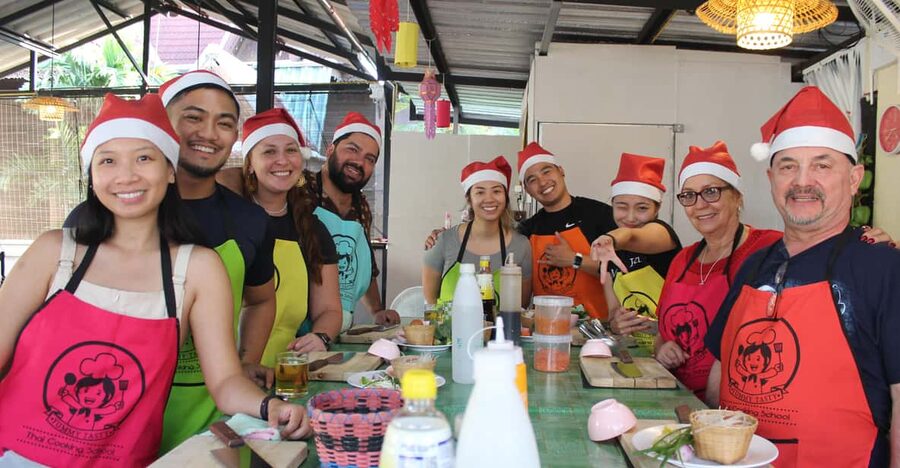
- Your own workstation: Each participant gets an individual cooking station and step-by-step guidance.
- Small evening group: The class runs from 3:30 p.m. to 8 p.m. with up to 10 participants.
- Pickup has a firm limit: Hotel transport is included only within 3 km of Kad Kom Market. Nimman hotels and farther locations require meeting at the market.
Starting at Kad Kom Market with a shopping basket
The evening begins with hotel pickup between 3 and 3:30 p.m., provided your accommodation is within 3 km of Kad Kom Market. The exact pickup time comes after booking. If you are staying in the Nimman area or farther away, you need to meet the group at Kad Kom Market instead.
That location rule matters. Chiang Mai looks compact on a map, but traffic and the city’s spread can make a short distance take time. Check your hotel before paying, and do not assume that every central address qualifies for pickup.
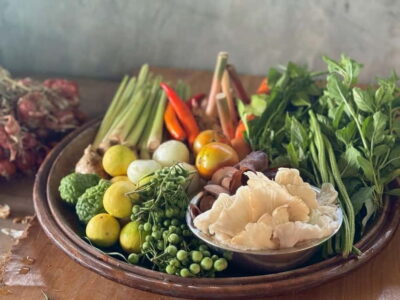
At the market, your English-speaking instructor leads you through the ingredients used in class. This is more useful than a quick stroll past food stalls because you are shopping with a purpose. You learn about fresh vegetables, Thai herbs, seasonings, sauces, chilies, and other items that will soon end up in your cooking pot.
The market stop also helps solve a common problem for first-time Thai cooks: ingredient confusion. Several chilies can look similar, and Thai sauces often come in bottles with labels you may not be able to read. The instructor explains differences and points out possible substitutions for cooking at home.
Sanja specifically appreciated learning how to choose tofu and tell different types of chili apart. That is the kind of small lesson that stays useful after your holiday. You may not find every ingredient back home, but you will have a better idea of what to look for and what can replace it.
Allow yourself to pay attention here rather than treating the market as a short prelude. The class makes more sense when you know where the ingredients came from and how Thai cooks use them.
More Thai Cooking Classes in Chiang Mai:
- Half-Day Thai Cooking Class at Organic Farm in Chiang Mai
★ 5.0 · 19,087 reviews - Chiang Mai: Cooking Class, Market & Thai Herbs Garden Tour
★ 4.9 · 4,824 reviews - Chiang Mai: Authentic Cooking Class with Market & Farm Visit
★ 4.9 · 4,546 reviews
Settling into an open-air cooking school
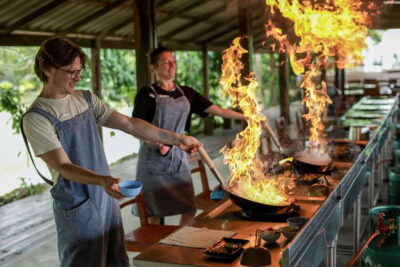
After the market, you move to Yummy Tasty Thai Cooking School. Welcome snacks, fruit, and drinking water are provided before the cooking starts. The kitchen is open air, not air-conditioned, which gives the class a more outdoor feel but also means heat and humidity are part of the deal.
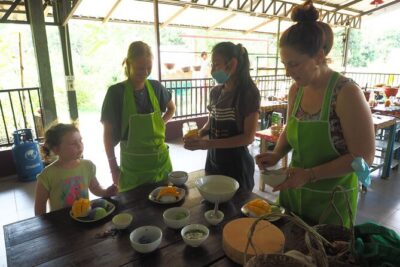
You receive your own cooking station. That is a meaningful advantage for a hands-on class. Instead of watching one person cook while everyone else crowds around, you prepare your own food and can adjust your pace with the instructor’s help.
The group is limited to 10 participants. Some sessions may be smaller. Tamara’s class had only four people, which allowed plenty of room for questions and attention. A larger group can still work well because each person has a station, but the small-group limit keeps the lesson from feeling like a mass demonstration.
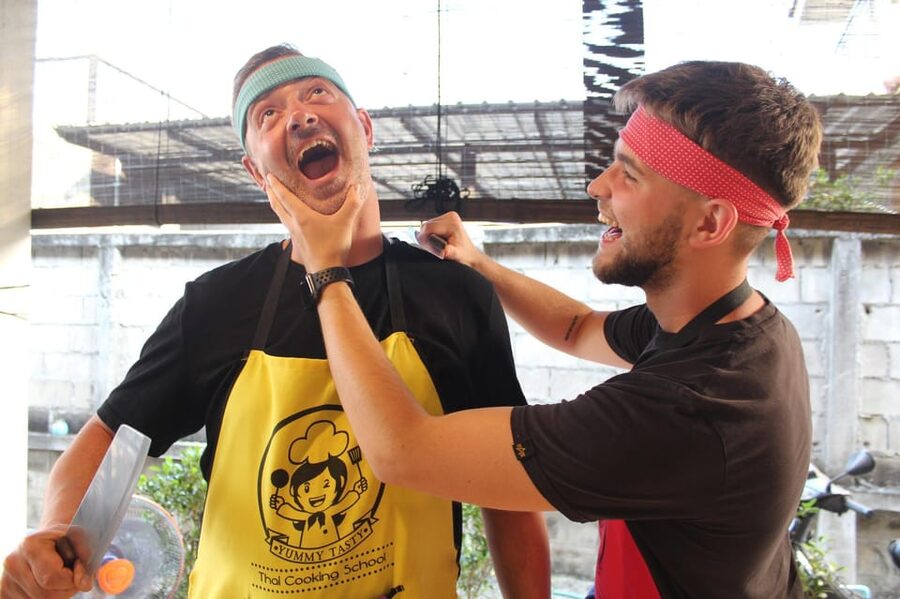
The instructors use humor as well as instructions. Sky received praise for being funny and entertaining, while Noodle was singled out for her clear explanations and warm teaching. The names may depend on the session, but the important point is that the instructor is present throughout the process rather than simply handing out ingredients.
The cooking area is cleaned between dishes, and the class provides drinking water. Still, bring a light, comfortable outfit and expect to stand for much of the evening. You will be working with food, heat, knives, and a mortar, so practical clothing is a better choice than anything delicate.
Pounding curry paste the traditional way
The curry paste session is one of the most useful parts of the class. You do not simply scoop a premade paste from a container. You pound your own paste in the traditional Thai manner, working the ingredients together until their oils and aromas combine.
This takes effort, but that is exactly why it is worth doing. Curry paste can look like a simple red or green mixture when you buy it in a shop. Making it yourself shows how many ingredients create its flavor and why the finished curry tastes more layered than a quick sauce.
The instructor explains Thai herbs and seasonings as you work. You also learn what may be substituted when you cook at home. That advice is important because some ingredients may be easy to find in Chiang Mai but difficult to locate in your local supermarket.
The class also teaches the balance of sweet, salty, sour, and spicy flavors. Thai food is not just about adding heat. A good dish depends on the relationship between those tastes, and your instructor helps you understand how to adjust them.
This is where the class moves beyond a pleasant meal. You gain a method for tasting and correcting food. At home, that may be more valuable than memorizing a recipe.
Cooking five dishes at your own station
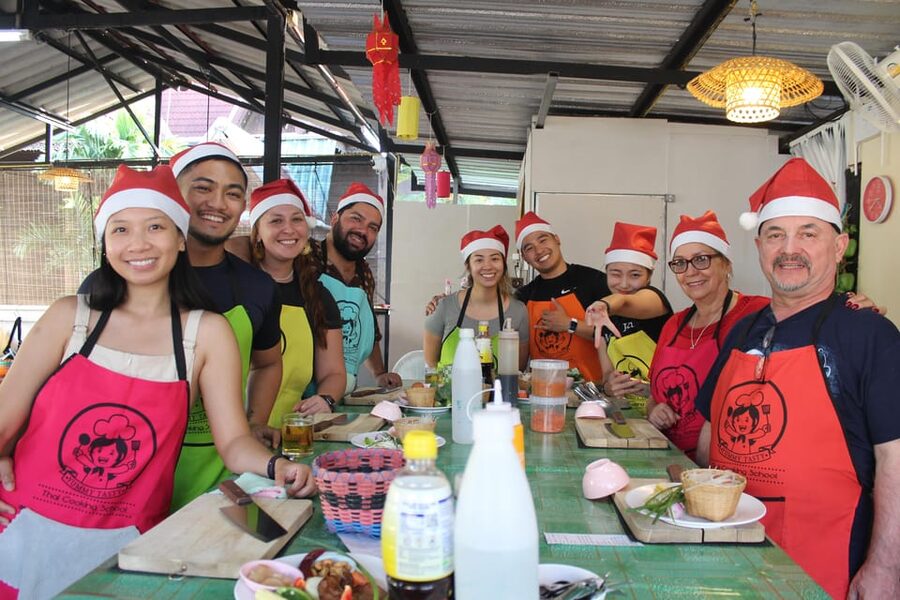
You cook five dishes during the four-hour program. The menu is individual, so you can choose what to prepare rather than receiving one fixed meal for the whole group. The exact choices are not specified in advance, so check the available menu when booking or confirming your class.
Examples from the cooking sessions include Pad Thai, red curry, mango sticky rice, and spring rolls. The range gives you a useful mix of techniques: stir-frying noodles, preparing curry, handling dessert ingredients, and wrapping food neatly.
You move through the dishes with step-by-step instruction. The teacher explains how the herbs and sauces work, then shows you what to do at your own station. Beginners can follow along, while experienced home cooks can pay closer attention to knife work, flavor balance, and substitutions.
The five-dish format also makes the $35 price easier to judge. You are not paying only for a restaurant meal. The fee includes transport within the pickup area, a market visit, instruction, ingredients, snacks, water, five dishes, your own station, curry-paste practice, and a PDF recipe book.
That is strong value if you want an active evening. If you only want to eat Thai food, a restaurant will be simpler and less work. This class earns its price through participation and the recipes you can reuse later.
You can also try dishes made by other participants. That adds variety without requiring you to cook every menu option yourself. If you cannot finish everything, you can take the leftovers with you, a practical touch after five dishes.
A different kind of day out of Chiang Mai altogether:
- Chiang Mai: Elephant Sanctuary, Waterfall & Bamboo Rafting
★ 4.9 · 9,160 reviews - Chiang Mai: Doi Inthanon National Park Eco-Friendly Tour
★ 4.6 · 6,667 reviews - Chiang Mai: Elephant Sanctuary & Waterfall Group Tour
★ 4.9 · 5,780 reviews - Chiang Mai: Chiang Rai Temples, Karen Tribe and Hot Springs
★ 4.7 · 5,401 reviews
Why the market lesson improves the meal
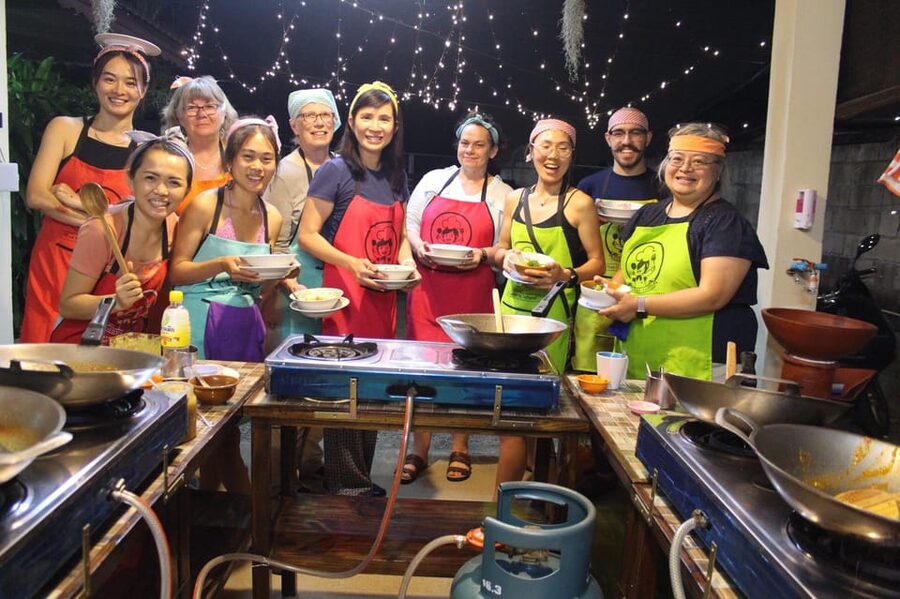
A cooking class can sometimes feel disconnected from local food culture when every ingredient has already been measured and placed in front of you. Here, the market visit gives the meal some context.
You see the raw materials before they are chopped, mixed, or heated. You learn which vegetables are fresh, how chilies differ, and how Thai seasonings contribute to the final taste. Then you recognize those ingredients at your station.
The sequence also helps you understand that Thai food is built from contrasts. Sweet mango sticky rice has a different balance from spicy curry. Pad Thai needs its own mix of savory, sweet, and sour flavors. Spring rolls call for careful preparation and wrapping rather than a long cooking time.
Sanja found the market especially valuable for learning about tofu and chilies. Nell liked the clear link between shopping and cooking, since the class selects ingredients and then uses them in the recipes. That connection makes the visit more than a photo stop.
You should expect a practical lesson rather than a formal food lecture. The exact depth depends on the instructor and the group size. Jo found the class very efficient and clear, but felt it offered less detail about ingredients and cooking ability than another class she had taken. That is a fair warning: the teaching is designed to help you succeed with five dishes, not to turn you into a professional chef.
The pace, comfort, and level of effort
The evening session runs from 3:30 p.m. to 8 p.m. The timing works well if you want to spend the morning sightseeing and still have a full activity later in the day. It also gives you dinner without needing to find another restaurant afterward.
Four hours is long enough to cover the market, introduction, curry paste, five recipes, and eating. It is not a quick demonstration. You need to be ready for a steady sequence of chopping, stirring, pounding, tasting, and cleaning.
The open-air setup is the biggest comfort issue. There is no air conditioning, so the kitchen may feel warm while you work. Drinking water is provided, but you should still arrive prepared for heat and wear clothes that allow easy movement.
The activity is not suitable for wheelchair users or people with back problems. The provider also lists several age restrictions, including children under 2, 3, 4, 5, and 6 years, as well as babies under 1 year and children under 90 cm. The repeated age information is unclear, so families should confirm the applicable minimum age before booking.
The class is also not intended for people with a cold, altitude sickness, or a body weight over 130 kg, and it is not suitable for people over 95. These restrictions are part of the published conditions and deserve attention before you reserve.
The instructors make the difference
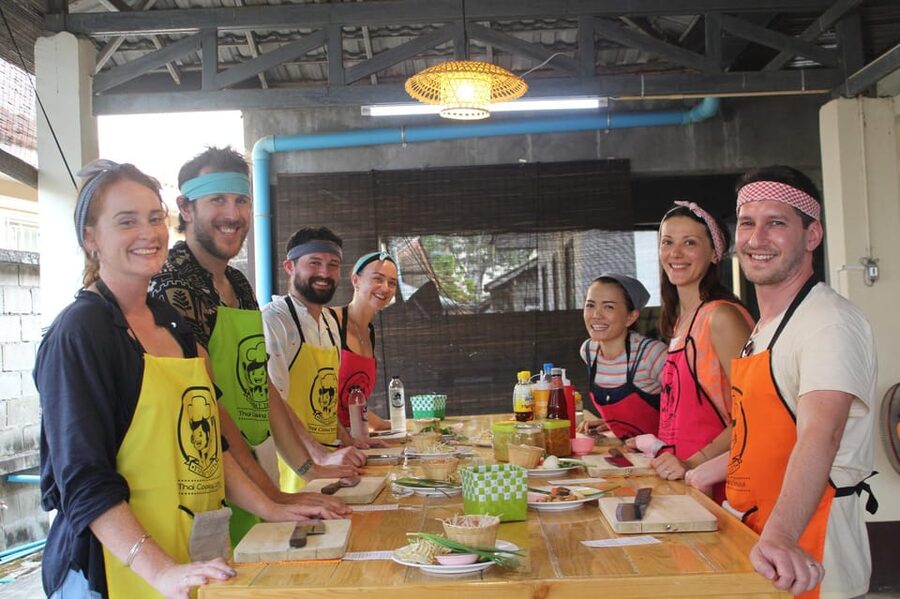
The strongest part of this experience is the teaching style. You are not left to copy a recipe from a screen. The instructor guides each step, answers questions, and explains what you can change at home.
Noodle is praised for explaining ingredients and cooking steps carefully. Sky is described as funny and entertaining, which can make a long cooking session feel relaxed. Another instructor used stories about Thai culture, food, and history to give the recipes more meaning.
That combination of humor and practical help suits beginners. You can make mistakes without feeling foolish, and the instructor can correct you before a small problem ruins a dish.
At the same time, the class seems designed to produce successful food rather than test your independence. Jo felt the clear preparation left little room for error. If you want to source every ingredient, design your own menu, or work without much guidance, this may feel too structured.
For most people, that structure is a benefit. You get to cook five dishes in one evening without spending half the session wondering what to do next.
What you take home beyond a full stomach
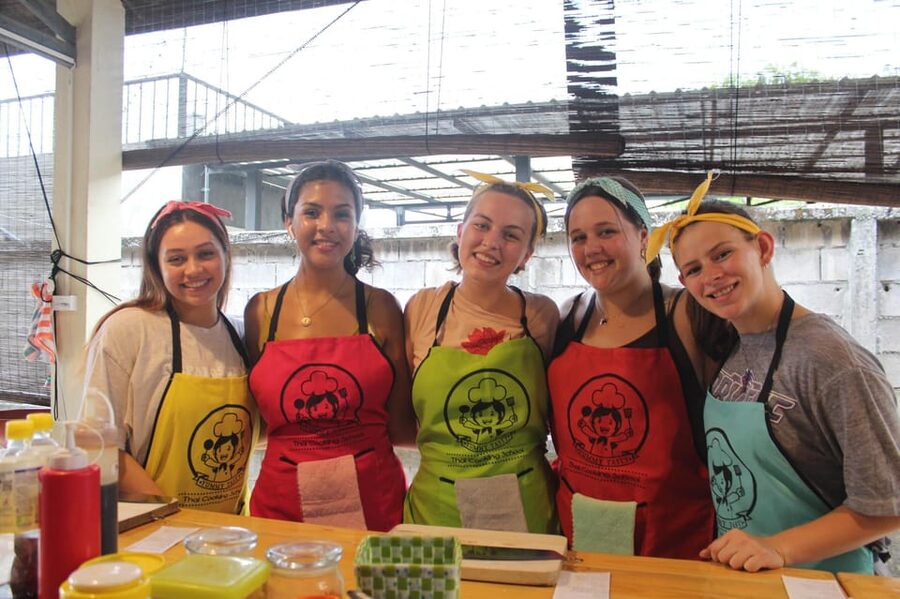
The class finishes with food to eat and a PDF recipe book to keep. The recipes give you a way to repeat the dishes at home, while the market lesson helps you shop for the ingredients.
The most useful take-home skill is not any single recipe. It is learning how to taste for balance, make curry paste, and substitute ingredients when the Thai original is unavailable. Those techniques can help with many dishes.
You may also have food left over. The class allows you to take what you cannot finish, which is helpful after preparing five dishes. You can eat at the school, sample what others made, and decide what deserves a place in your own kitchen.
The recipe book is digital rather than printed. Make sure you know where you will access it after the class, especially if your phone has limited storage or internet access.
Who should book this Chiang Mai cooking class?
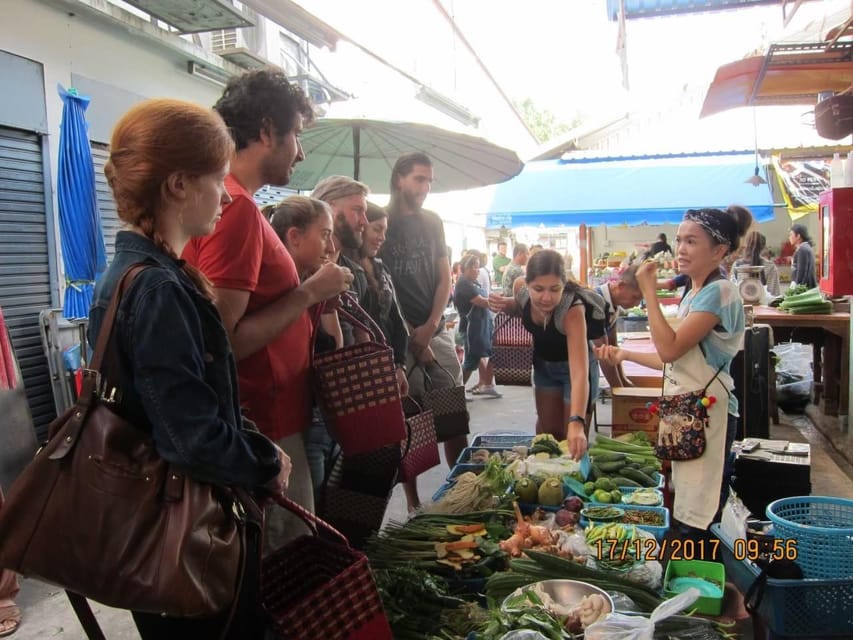
I would choose this activity for anyone who wants more than a meal and has an interest in Thai food. It suits first-time cooks because the instruction is direct, and it also works for experienced cooks who want to learn curry paste and local ingredients.
It is a good fit for couples, small friend groups, and teenagers who can safely manage a cooking station. The small-group format gives it a more personal feel than a large food demonstration.
You should think twice if you dislike heat, standing, or structured instruction. It is also a poor match for anyone with back problems, wheelchair users, or people who fall under the listed age and health restrictions.
The $35 price is reasonable for four hours of teaching, a market visit, ingredients, five dishes, transport within the service area, snacks, water, and recipes. The value is strongest if you will actually cook the food again at home. If you only want a relaxed dinner, choose a restaurant instead.
Cancellation is flexible up to 24 hours before the start time for a full refund, and you can reserve now and pay later. Those policies make it easier to fit the class around a changing Chiang Mai schedule.
Should you book it?
Book this class if you want to pound curry paste, shop for ingredients, and cook a full Thai meal with personal guidance. The individual station and five-dish format give you plenty to do, while Sky, Noodle, and the other instructors add humor and useful cooking advice.
Skip it if you need air conditioning, cannot stand comfortably, or prefer a quiet meal with no hands-on work. For most food-minded visitors, though, this is a practical and enjoyable way to spend an evening, with skills and recipes that can follow you home.
FAQ
How long does the evening cooking class last?
The evening program lasts four hours, from 3:30 p.m. to 8 p.m.
Is hotel pickup included?
Pickup and drop-off are included for hotels within 3 km of Kad Kom Market.
What if my hotel is in the Nimman area?
If your hotel is in Nimman or farther than 3 km from Kad Kom Market, you need to meet the group at Kad Kom Market.
How many people can join the class?
The class is limited to 10 participants.
Is the class taught in English?
Yes. The listed instruction language is English.
Do I get my own cooking station?
Yes. Each participant receives an individual cooking station.
How many dishes will I cook?
You will cook five dishes during the class. The menu is individual, so you can choose your dishes from the available options.
Will I make curry paste?
Yes. The class teaches you to make your own curry paste using a traditional Thai method.
Is food and drinking water included?
Yes. Snacks, fruit, drinking water, and the ingredients used for cooking are included.
What happens if I cannot finish all the food?
You can take home what you cannot finish.
Is the kitchen air-conditioned?
No. The kitchen is open air and does not have air conditioning.
Can I cancel the booking?
You can cancel up to 24 hours in advance for a full refund. You can also reserve now and pay later.
More Hands-On Classes in Chiang Mai
- Thai and Akha Cooking Class in Chiang Mai
★ 5.0 · 4,358 reviews - Chiang Mai: Cooking Class with Organic Farm at Mama Noi
★ 4.9 · 1,151 reviews - Cooking Class with Organic Farm in Chiang Mai at Mama Noi
★ 5.0 · 502 reviews - Evening Cooking Class in Organic Farm with Local Market Tour
★ 5.0 · 394 reviews
More Market Visits in Chiang Mai
- Chiang Mai: Cooking Class with Market and Pickup
★ 4.9 · 1,365 reviews - Chiang Mai: Evening Cooking Class and Local Market Visit
★ 4.9 · 648 reviews - Chiang Mai: Evening Local Street Food Market Tour
★ 4.8 · 604 reviews - Chiang Mai: Kalare Night Bazaar Boxing Stadium Muay Thai
★ 4.7 · 507 reviews
Newly reviewed around Chiang Mai
- Workshop Making Herbal ball & herbal inhaler★ 4.3 · 3 reviews
- Chiang Mai Zipline White Water Rafting and Elephant Sanctuary★ 4.0 · 11 reviews
- Walk With Monks Collecting Alms(meeting point maybe change)★ 4.9 · 8 reviews
- Zipline+Sticky waterfall+Long Neck Village Private Tour★ 5.0 · 22 reviews
- Trek to a Jungle Waterfall★ 5.0 · 14 reviews
- Meditation Retreat and Self-Care in Nature★ 5.0 · 4 reviews
- Full Day Yoga, Meditation, and Thai Cultural Immersion in Chiang Mai★ 5.0 · 3 reviews
- Long Neck Village, White & Blue Temple, Black House Day Tour From Chiang Mai★ 4.0 · 14 reviews
Chiang Mai Thai Cooking Classes, compared.
Half-Day Thai Cooking Class at Organic Farm in Chiang Mai
Read our review →
Cooking Class, Market & Thai Herbs Garden Tour
Read our review →
Authentic Cooking Class with Market & Farm Visit
Read our review →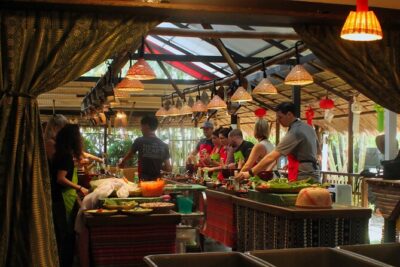
Browse the lists this tour appears in