
Reviewed · CHIANG MAI TEMPLE TOURS
Chiang Mai: Temple & City Tour Part II
Chiang Mai’s best temple experience may be the one that takes you away from the famous postcard stops. This walking tour visits four historic temples, including the city’s oldest, then connects their stories to Buddhism, Shan culture, Burmese rule, and daily life in northern Thailand.
I like the personal teaching here. Guides such as Katoon and Big have experience as former monks, while Eddy and Son are praised for clear explanations and patient answers. I also like the chance to see quieter religious spaces and temples you might skip on your own. The main drawback is simple: you walk for hours in the heat, and the tour may feel tiring if you have already spent the morning on another temple walk.
Key points to know before booking
- Wat Chiang Man dates to 1296, making it Chiang Mai’s oldest temple.
- Four temple visits cover Thai, Shan, and Burmese religious traditions.
- Former monks may guide the tour, offering practical insight into meditation, prayer, and monastic life.
- The walk costs $31 per person, a fair price if you value interpretation rather than just temple photographs.
- The tour starts at 8:20 am, when walking is generally more comfortable than later in the day.
- Private and small-group options are available, with English, Chinese, and Thai guides.
Four temples, four different chapters of Chiang Mai
This is not a quick temple photo stop followed by a van ride. It is a walking route through the northern side of Chiang Mai’s old city and nearby temple areas, with time to ask questions and notice details.
The route begins at 8:20 am. That early start matters. Chiang Mai can become hot quickly, and the route involves several hours on foot. Bring water, an umbrella, cash, and clothing that covers your shoulders and knees. Short skirts are not suitable for the temples, and respectful dress is part of the experience rather than a minor rule.
The tour is described as a one-day activity, but the supplied details do not give a precise end time. You should plan for a substantial morning or longer walking session, especially if your guide spends time explaining Buddhist practice or answering questions. If you want the most relaxed pace, a private booking is likely the better choice.
More Temple Tours in Chiang Mai:
- Chiang Mai: Doi Suthep and Wat Umong Enchanting Evening Tour
★ 4.6 · 1,811 reviews - Chiang Mai: 3 Hour Old City and Temples Guided Walking Tour
★ 4.6 · 1,568 reviews - Chiang Mai: Doi Suthep, Wat Umong, and Pha Lat Sunrise Tour
★ 4.7 · 1,425 reviews
Wat Chiang Man and the beginning of Chiang Mai
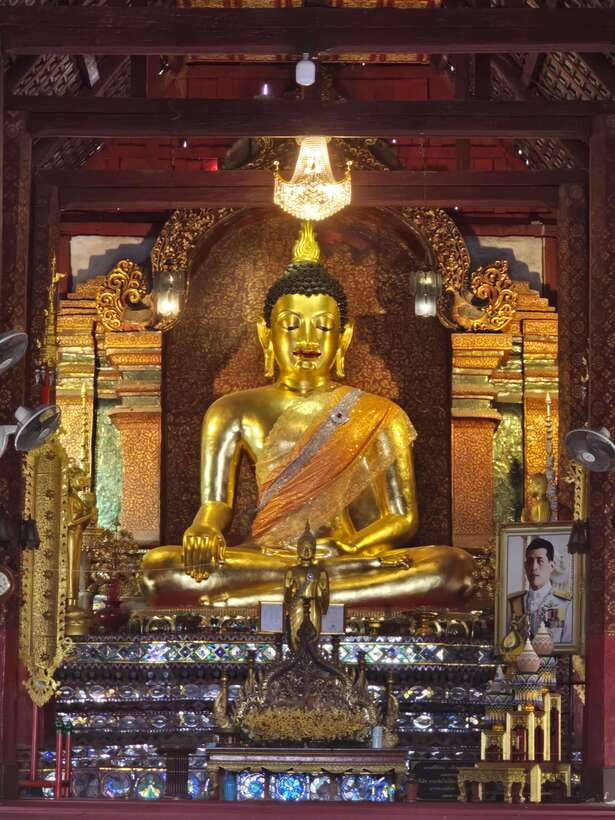
Wat Chiang Man is the natural first stop. King Mengrai built it in 1296, the year associated with the founding of Chiang Mai, and it is considered the oldest temple in the city.
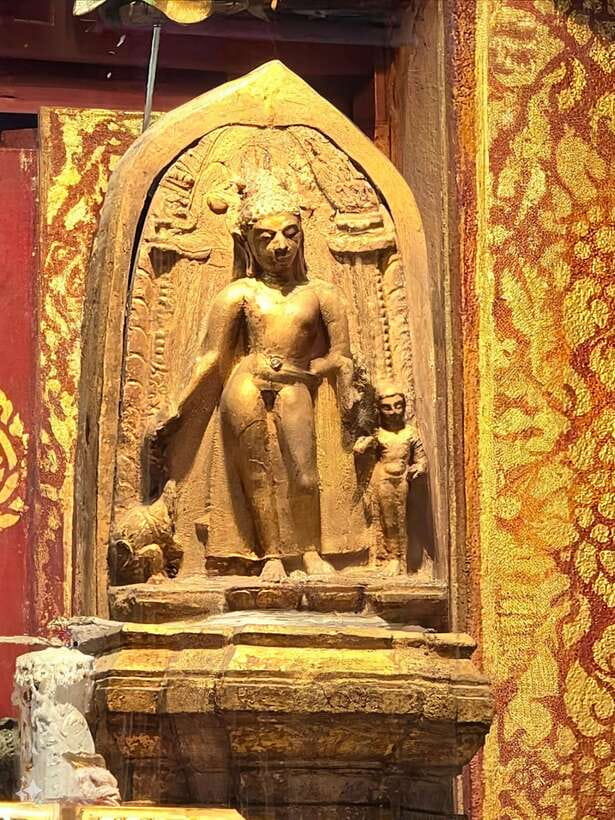
The temple matters because it gives you a starting point for understanding Chiang Mai as more than a place filled with attractive roofs and gold decoration. This is an early royal foundation, tied to the birth of the city itself. The tour also points out the crystal Buddha statue enshrined here, one of the temple’s important sacred images.
I would pay close attention to the guide’s explanation at this stop. The value is not just seeing an old building. It is learning how royal power, Buddhist devotion, and the growth of Chiang Mai were connected. Guides who have studied or lived monastic life can also explain why particular images and ritual spaces matter to worshippers.
The temple is a strong opening because it gives you a historical reference point for the rest of the walk. Later sites reflect Shan and Burmese influence, so Wat Chiang Man helps you see the city’s religious architecture as a layered story rather than one uniform style.
Wat Chiang Yuen and the Shan connection
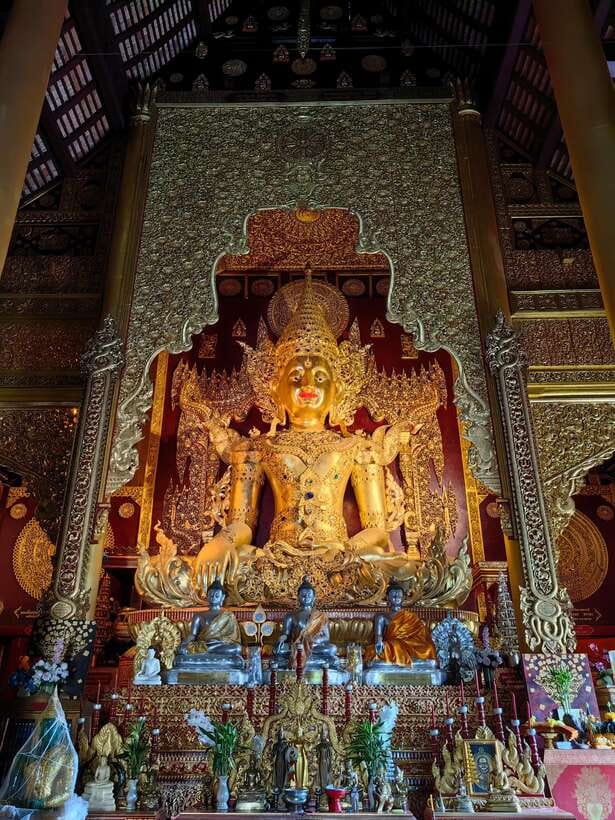
Wat Chiang Yuen brings a different strand of northern Thailand’s past into view. It is described as a 16th-century temple in an area that once served as a residential district for Shan people.
The Shan are an ethnic group with historic ties across parts of present-day Myanmar and northern Thailand. At this stop, you get a chance to connect a temple with the people who lived around it. That makes the walk more useful than a standard checklist of famous monuments. You are not only looking at a sanctuary. You are considering who used the area and how communities shaped Chiang Mai.
Your guide may also help you compare the temple’s appearance and atmosphere with Wat Chiang Man. The two stops belong to different periods and reflect different cultural connections. The contrast is one of the route’s strengths.
If you have already visited several major temples, this stop may be especially worthwhile. The tour is designed to show places you might not find by simply following the busiest route through the old city. You get the pleasure of a less obvious stop without giving up the historical explanation that makes it meaningful.
Wat Pa Pao and Shan Burmese design
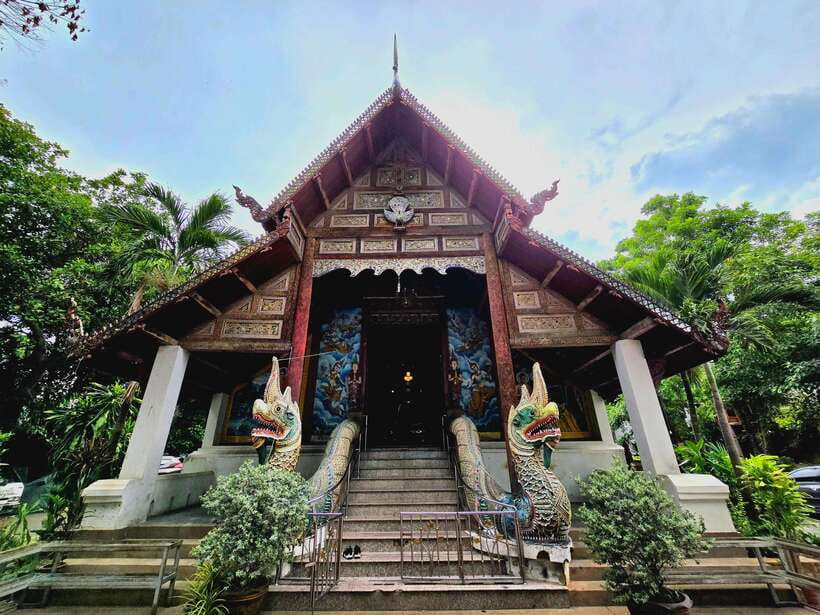
Wat Pa Pao is outside the old city walls and moats. Its Shan Burmese style gives the tour another change of pace, both visually and culturally.
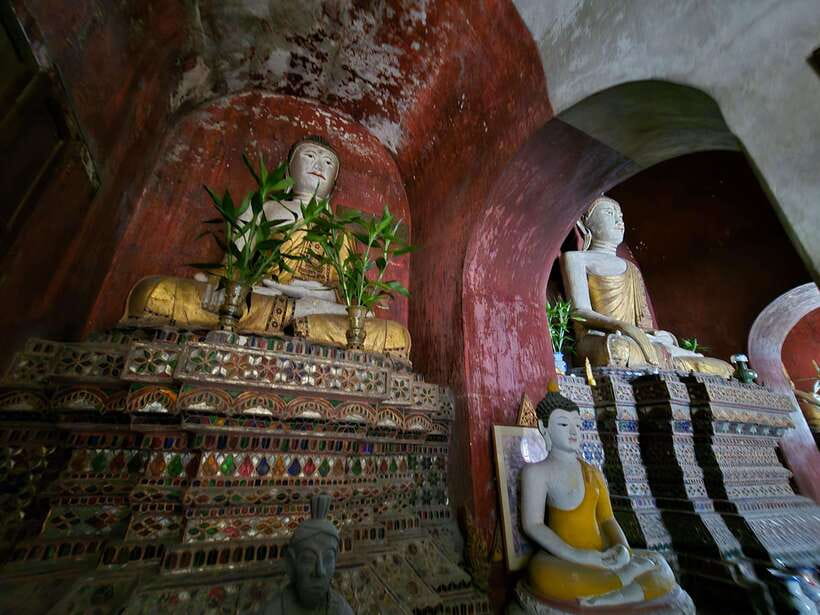
The temple is important for showing that Chiang Mai’s religious identity is not limited to the classic Lanna style many visitors expect. Shan and Burmese connections have shaped the city for centuries, and Wat Pa Pao provides a clear place to discuss that influence.
I would treat this as a stop for looking closely rather than rushing in for one photograph. Notice the design differences your guide points out. The tour’s strength is that it gives you a way to ask why a temple looks the way it does, not simply whether it is attractive.
This is also where the walking route becomes useful. Because you move between sites on foot, the temples do not feel like isolated attractions. Their location outside the walls, their links with Shan culture, and their relationship to the surrounding city become part of the lesson.
More City Tours in Chiang Mai:
- Chiang Mai: Historic Temples and City Guided Walking Tour
★ 4.7 · 650 reviews - Chiang Mai: Historic Old City Bike Tour – Morning or Night
★ 4.7 · 263 reviews - Chiang Mai: Temple And City Walking Tour Part I
★ 4.7 · 244 reviews - Chiang Mai: Historic Old City Bike Tour – Morning or Night
★ 5.0 · 202 reviews
Wat Ku Tao and a Burmese ruler’s ashes
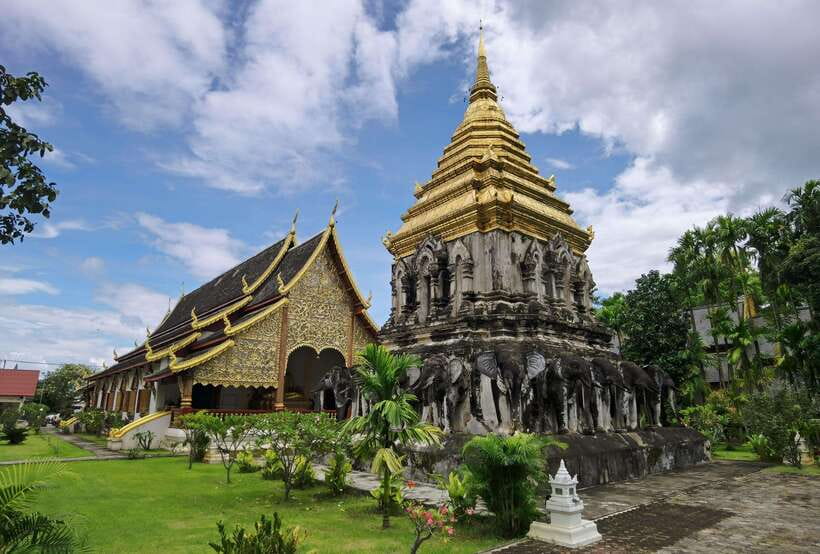
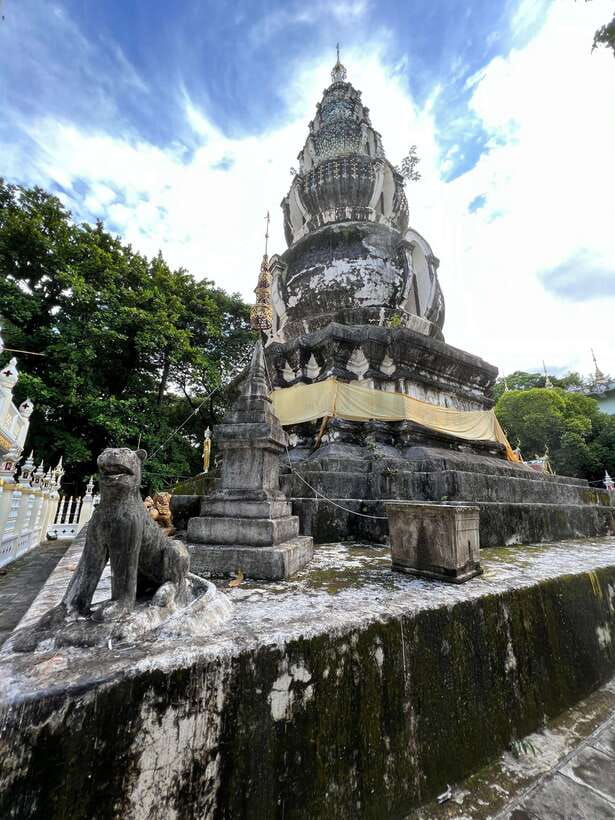
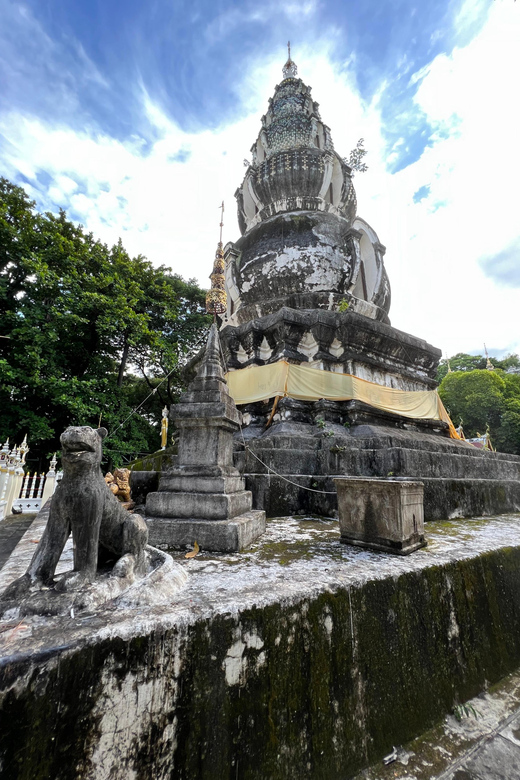
Wat Ku Tao has one of Chiang Mai’s more unusual chedis. It is thought to have been built in 1613 to hold the ashes of Prince Saravadi, who ruled from 1578 to 1607 and is identified as the first Burmese overlord of Chiang Mai.
That background gives the final temple a strong political angle. You are looking at a religious structure connected not only to devotion but also to a period when Burmese power shaped the city. The chedi’s unusual form makes this an especially good place to ask your guide about the meeting of Burmese, Shan, and northern Thai traditions.
The wording about the chedi is appropriately cautious: it is thought to have been built for this purpose. Religious buildings often carry layers of tradition, and a good guide can help you separate established facts from local interpretation.
By this point, you should have seen four temples with four different connections: the founding of Chiang Mai, a Shan residential area, Shan Burmese design, and Burmese rule. That range is what makes this tour more rewarding than a visit to several temples chosen only for size or fame.
The guides make the difference
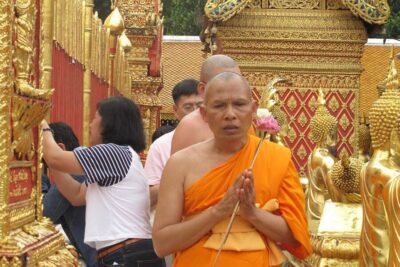
The strongest part of this experience is the guide-led interpretation. Katoon is repeatedly praised for explaining Buddhism, temple art, meditation, monk life, and Thai customs. He previously spent 18 years as a monk, which gives him a personal frame of reference when discussing monastic food, daily routines, prayer, and Buddhist teaching.
Big is also described as a former monk and as an enthusiastic guide. He can show you how to pray, explain the life of monks, and discuss temple etiquette. Eddy is noted for being friendly, attentive, and helpful with photographs. Son is praised for patient explanations of Buddhism, belief, practice, and Thai culture.
Guide quality can vary by departure, so you should not assume one particular person will lead every date. Still, the available guide names and repeated comments point to a tour company that puts real weight on human explanation, not only transportation between monuments.
The conversations may be especially valuable if you are new to Buddhism. You can ask basic questions without feeling that you should already know the answers. The tour also covers practical behavior, such as how to enter a temple respectfully and how to approach prayer and meditation.
Some departures may be conducted in English, Chinese, or Thai. If you want a detailed discussion in English, check the language offered for your chosen date.
A walking tour that asks something of you
The route is described as relatively easy, but easy does not mean effortless. You walk between four temples, often in a warm climate, and the total session can leave your feet tired. One participant who combined this with the tour’s first part found both walking tours worthwhile but exhausting by the end of the day.
I would avoid scheduling this after a long day of sightseeing. Wear comfortable shoes, carry water, and use the umbrella for both sun and sudden rain. Drinks and food are not included, so bring what you need or carry cash for your own purchases.
This is not a suitable choice for children under two, babies under one, pregnant women, wheelchair users, or people using electric wheelchairs. Baby strollers are also not allowed. Those restrictions are important because the experience depends on walking through temple grounds and city streets rather than riding between stops.
Smoking indoors, alcohol, drugs, intoxication, drones, weapons, sharp objects, and noisy behavior are not allowed. These rules fit the setting. You are visiting active religious spaces, not a theme park.
Is $31 a good value?
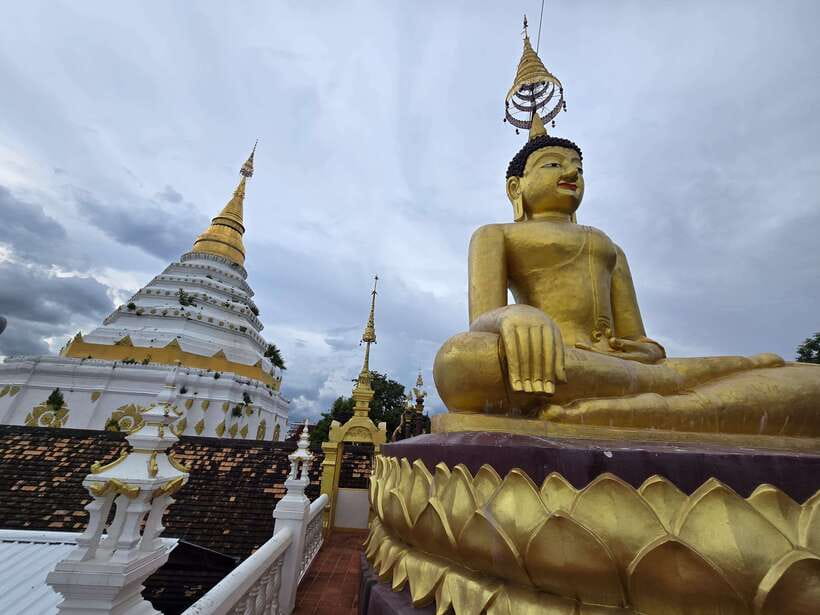
At $31 per person, this tour offers fair value if you want context, questions answered, and access to less obvious temples. You could walk near some of these sites independently for less money, but you would give up the explanations that connect them to Chiang Mai’s founding, Shan communities, Burmese influence, Buddhism, and monk life.
The price also makes sense for a private or small-group option, though the exact format depends on the booking. A small group can offer a good balance: you get a guide’s attention without arranging a fully private outing. A private tour may suit you if you want to ask many questions or need a slower pace.
Hotel pickup and drop-off are included only when you select the private option. Otherwise, pay close attention to the meeting point. One practical problem reported about the experience is that a plus-code address was confusing to visitors, taxi drivers, and even a person at a hotel lobby. A clear landmark such as the Three Kings Monument would be easier to use, so confirm the exact meeting instructions before setting out and leave extra time.
Free cancellation is available up to 24 hours before the activity for a full refund, and you can reserve now and pay later. Those terms help if your Chiang Mai plans are still shifting.
Who will enjoy this temple walk most?
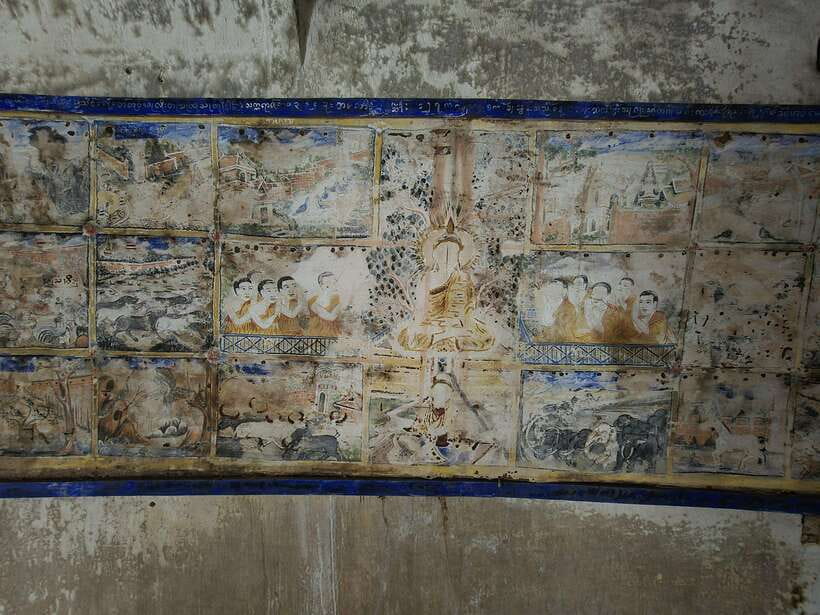
I would choose this tour if you want to understand what you are seeing instead of collecting temple photographs. It suits first-time visitors who want an introduction to Buddhist customs and Chiang Mai’s cultural layers, as well as returning visitors who have already seen the most famous sites.
It is also a good match for anyone curious about monastic life. A guide with former monk experience can discuss subjects that are hard to understand from signs or guidebooks, including meditation, prayer, food, and the daily life of monks.
You should think twice if you dislike walking, tire quickly in hot weather, or want a short, relaxed temple visit. The activity is not a ride with brief stops. It asks you to stay on your feet and remain attentive for several hours.
The experience can work as a stand-alone tour, but it also pairs with the provider’s first temple tour. If you book both on the same day, leave a real break for lunch and rest. The temples may be the highlight, but tired feet can take some shine off the final stop.
Small details that improve the day
- Wear clothing that covers your shoulders and knees, especially for entering temple buildings.
- Bring water, an umbrella, comfortable shoes, and cash.
- Start early and allow extra time to locate the meeting point.
- Ask questions. The guide-led conversation is the main reason to pay for this experience.
- If you care about photography, mention it to your guide. Eddy, for example, is noted for helping with pictures.
- Choose a private option if you need hotel pickup, a more personal pace, or plenty of time for questions.
- Treat the temples as active places of worship. Keep your voice low and follow the guide’s instructions.
The tour also gives attention to offsetting carbon emissions and reducing environmental impact. Since the experience is built around walking rather than motor transport between every temple, that goal fits the route.
Should you book Chiang Mai Temple and City Tour Part II?
Book it if you want a thoughtful introduction to Chiang Mai’s temples, Buddhist practice, and the city’s Shan and Burmese connections. The combination of Wat Chiang Man’s early royal history, Wat Chiang Yuen’s Shan setting, Wat Pa Pao’s Shan Burmese style, and Wat Ku Tao’s link with Burmese rule gives the day a clear shape.
I would especially recommend it to curious adults, returning visitors, and anyone who wants a former monk or culturally focused guide to explain what happens inside these sacred places. I would skip it if you want air-conditioned transport, a very short outing, or a route designed for limited mobility.
For $31, the real purchase is not four temple entrances. It is the explanation between them. Bring water, dress properly, confirm the meeting point, and prepare to walk. If that sounds like a fair trade for a closer look at Chiang Mai, this is a strong choice.
FAQ
What temples does the tour visit?
The tour visits Wat Chiang Man, Wat Chiang Yuen, Wat Pa Pao, and Wat Ku Tao.
What time does the tour start?
The tour starts at 8:20 am.
How much does the tour cost?
The listed price is $31 per person.
How long is the experience?
It is sold as a one-day activity. The exact end time is not provided, and the walking portion can last for several hours.
Are hotel pickup and drop-off included?
Hotel pickup and drop-off are included when you select the private option.
What languages are available?
Live guides are available in English, Chinese, and Thai.
Can I cancel for a refund?
You can cancel up to 24 hours in advance for a full refund.
What should I bring?
Bring an umbrella, drinks, and cash. Comfortable walking shoes and temple-appropriate clothing are also practical choices.
Newly reviewed around Chiang Mai
- Workshop Making Herbal ball & herbal inhaler★ 4.3 · 3 reviews
- Chiang Mai Zipline White Water Rafting and Elephant Sanctuary★ 4.0 · 11 reviews
- Walk With Monks Collecting Alms(meeting point maybe change)★ 4.9 · 8 reviews
- Trek to a Jungle Waterfall★ 5.0 · 14 reviews
- Zipline+Sticky waterfall+Long Neck Village Private Tour★ 5.0 · 22 reviews
- Meditation Retreat and Self-Care in Nature★ 5.0 · 4 reviews
- Full Day Yoga, Meditation, and Thai Cultural Immersion in Chiang Mai★ 5.0 · 3 reviews
- Long Neck Village, White & Blue Temple, Black House Day Tour From Chiang Mai★ 4.0 · 14 reviews
Chiang Mai Temple Tours, compared.
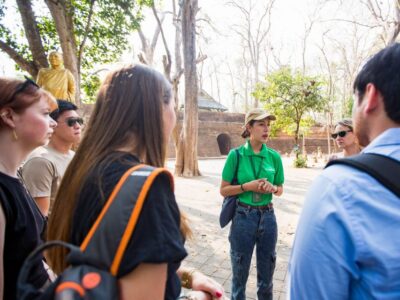
Doi Suthep and Wat Umong Enchanting Evening Tour
Read our review →
3 Hour Old City and Temples Guided Walking Tour
Read our review →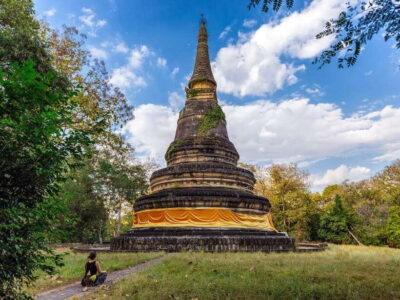
Doi Suthep, Wat Umong, and Pha Lat Sunrise Tour
Read our review →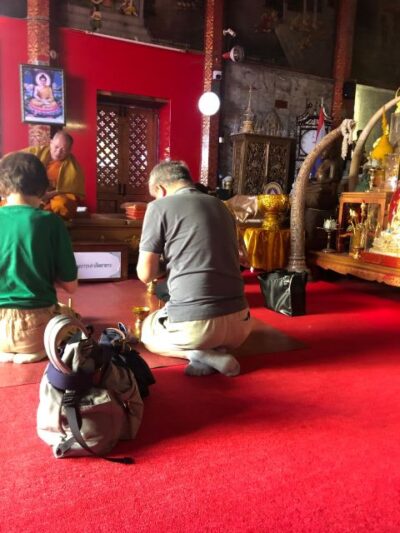
Wat Phra That Doi Suthep spiritual Sunrise Tour with an Ex-monk
Read our review →
4-Hour Doi Suthep & Hmong Hill Tribe Village from Chiang Mai
Read our review →
Spiritual Sunrise Wat Doi Suthep, Pha Lat, Alms & Meditation
Read our review →Browse the lists this tour appears in