
Reviewed · CHIANG MAI TEMPLE TOURS
Mastering Chiang Mai Temples in Halfday – Visit 7 Temples
Chiang Mai packs more than 300 Buddhist temples into one province, so the hard part is not finding a temple. It is choosing which ones deserve your limited time. This four-hour private tour solves that problem with seven carefully chosen stops, from the old city’s grand chedis to the hilltop Buddha at Wat Phrathat Doi Kham.
I like the time-saving transport and the range of sights. You see major landmarks, smaller artistic treasures, and a hilltop temple without arranging several rides yourself. Guide Faan has also been noted for giving plenty of information and taking photos. The main drawback is pace: seven temples in four hours gives you a useful introduction, not long, quiet visits at every stop.
I also like that the tour is private, so only your group participates. Still, the experience may feel more like a well-run temple circuit than a slow cultural walk. If you want extended time for prayer, photography, or detailed study, you may prefer visiting fewer temples on your own.
Key points at a glance
- Seven temples in about four hours: Cover Chiang Mai’s best-known religious sites without spending half the day planning routes.
- Private vehicle and private group: Pickup is offered, and only your group takes part in the activity.
- A strong mix of temple styles: See a sacred Buddha image, a huge chedi, a teakwood hall, elephant-supported architecture, white pagodas, and a giant hilltop Buddha.
- Guide support from Faan: The guide can add context and take photos, though the amount of explanation may vary.
- The tour ends with a view: Wat Phrathat Doi Kham adds mountain scenery and a dramatic 17-meter seated Buddha.
- Dress for temple rules: Cover your shoulders and knees. Sandals and flip-flops are allowed.
Why seven Chiang Mai temples can make sense
Chiang Mai’s temples are not interchangeable stops. Each has a different shape, age, artistic style, or setting. That makes this route useful for a first visit, especially if you want a broad look at northern Thai Buddhist architecture rather than one long visit at a single complex.
The route begins in the old city, where several temples sit close together, then moves to Wat Lok Molee, Wat Suan Dok, and Wat Phrathat Doi Kham. The vehicle matters here. You avoid negotiating separate transport rides and can move from one part of Chiang Mai to another without trying to read a map in the heat.
At $93.71 per person, the price is not aimed at the cheapest temple visit. Its value comes from combining private transport, a four-hour route, and guide support. The calculation works best for a small group that wants convenience. If you are traveling alone and already know how to get around, the cost may feel high. For a group dividing the transport cost, the private format is easier to justify.
The tour starts at 9:00 am. Since the entire experience lasts about four hours, you should have much of the afternoon free. That makes it practical for a short stay, a day with other plans, or a first morning in Chiang Mai when you want to get your bearings quickly.
More Temple Tours in Chiang Mai:
- Chiang Mai: Doi Suthep and Wat Umong Enchanting Evening Tour
★ 4.6 · 1,811 reviews - Chiang Mai: 3 Hour Old City and Temples Guided Walking Tour
★ 4.6 · 1,568 reviews - Chiang Mai: Doi Suthep, Wat Umong, and Pha Lat Sunrise Tour
★ 4.7 · 1,425 reviews
Wat Phra Singh and Chiang Mai’s most sacred Buddha
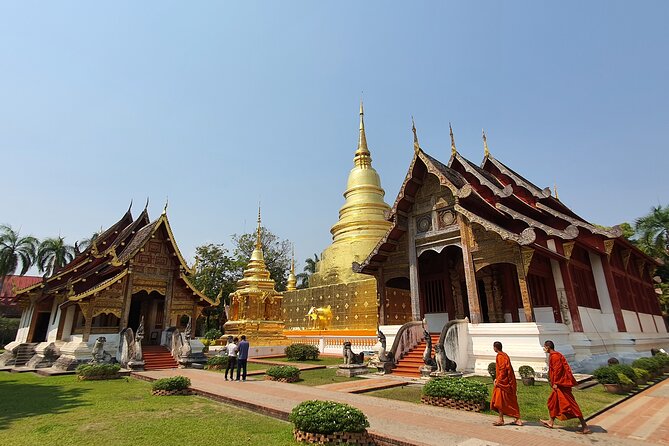
The first stop is Wat Phra Singh, with about 30 minutes to look around. The temple is home to Chiang Mai’s most sacred Chiang Saen-style Buddha image, a detail that gives the visit special local importance beyond its attractive buildings.
The Buddha image has a strong connection to Songkran, Thailand’s traditional New Year celebration. From April 13 to 15, it is carried through town in a parade, and people bathe it with scented water for good luck. If your visit falls outside the festival, you will not see that procession, but knowing this custom helps explain why the image matters to the city.
Thirty minutes is enough for a focused visit. You can see the principal features and take photographs without letting the first stop consume the morning. It is not enough for a slow inspection of every hall, mural, and decorative detail, so listen closely if your guide provides background.
Wat Phra Singh is a good opening stop because it introduces both the religious role of Chiang Mai’s temples and the northern Thai style that appears throughout the morning.
Wat Chedi Luang and the power of scale
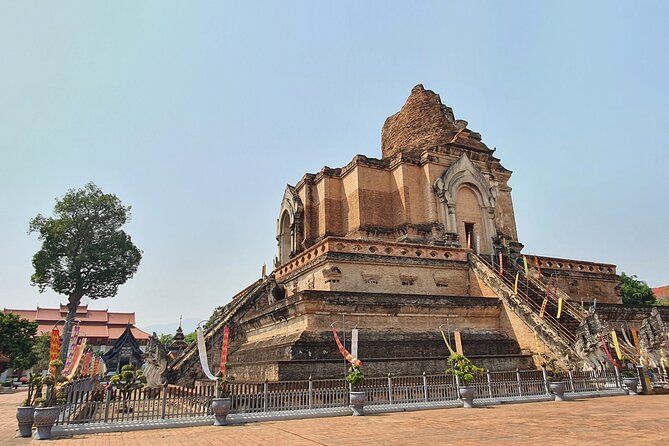
Next comes Wat Chedi Luang Varavihara, with another 30 minutes. The massive chedi dominates the site and gives this visit a very different feel from Wat Phra Singh.
Here, size does much of the talking. The towering structure is easy to photograph and remains the main reason to visit. Its broad form also helps you understand how temple compounds were designed around large central religious monuments.
Admission is included at this stop, while the other listed temple visits have no separate admission charge. That makes the tour simple once you arrive. You do not need to stop repeatedly to handle entrance payments.
Use your half hour for a look at the chedi from more than one angle. The schedule allows time to appreciate its scale, but not to linger indefinitely. If monumental architecture is your priority, this may be one of the morning’s strongest stops.
Wat Phantao, a short visit to a teakwood hall
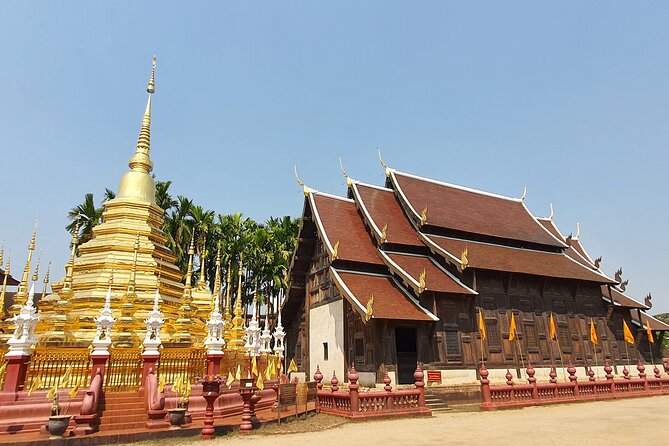
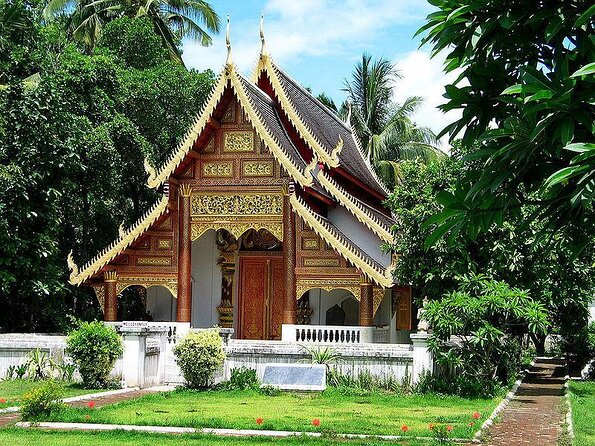
Wat Phantao receives about 10 minutes, the shortest stop on the route. Its appeal is specific: the Lanna-style ordination hall, or Wihan, is made entirely of teakwood and once served as a throne hall.
That timber construction gives the temple a warmer, more intimate character than the huge masonry chedi at Wat Chedi Luang. The stop is brief, so you will want to move directly toward the teak hall rather than treating this as a full temple visit.
The limited time is the clear tradeoff. You can admire the building and take a few photographs, but you should not expect an unhurried visit. Still, this is exactly the sort of smaller architectural stop that can get missed when you only visit Chiang Mai’s biggest temples.
A different kind of day out of Chiang Mai altogether:
- Half-Day Thai Cooking Class at Organic Farm in Chiang Mai
★ 5.0 · 19,087 reviews - Chiang Mai: Elephant Sanctuary, Waterfall & Bamboo Rafting
★ 4.9 · 9,160 reviews - Chiang Mai: Doi Inthanon National Park Eco-Friendly Tour
★ 4.6 · 6,667 reviews - Chiang Mai: Elephant Sanctuary & Waterfall Group Tour
★ 4.9 · 5,780 reviews
Wat Chiang Man, the oldest temple in town
Wat Chiang Man is described as the oldest temple in Chiang Mai town, and the visit lasts about 20 minutes. Its signature feature is a Lanna-style chedi supported by rows of elephant-shaped buttresses.
Those elephants give the structure an immediate visual identity. Look for the repeated forms supporting the chedi, since they are the detail that separates this temple from the others on the route.
Twenty minutes works well for a compact stop with one main feature to seek out. The visit also adds a chronological sense to the morning. After seeing major religious and royal architecture, you reach a site connected with Chiang Mai’s earliest temple tradition.
As with the rest of the route, the guide can help you notice details that might otherwise pass quickly. If your guide is Faan, you can also expect help with photographs, which is useful for a private group that wants pictures without constantly asking strangers.
Wat Lok Molee and fine Lanna decoration
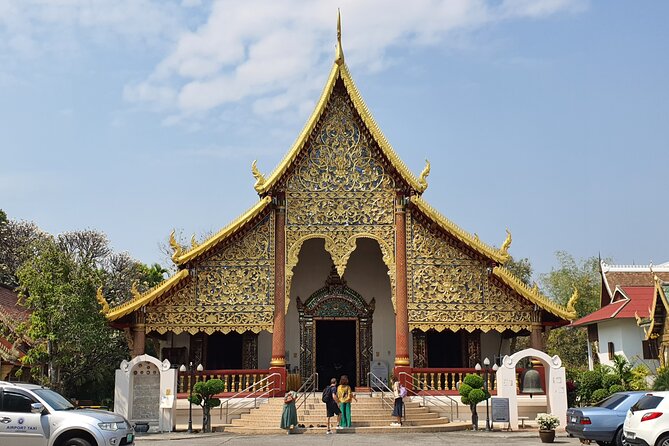
Wat Lok Molee takes about 15 minutes. Its pagoda and stucco patterns are considered masterpieces of Lanna art, making this a stop for close attention to surface detail rather than sheer size.
The shorter visit suits the site. You can focus on the pagoda and decorative plasterwork, then move on before the schedule begins to slip. I would use this stop to look carefully at patterns, edges, and relief work. The artistry is easy to miss if you only take a quick wide photograph.
Because the morning includes both large monuments and smaller works, Wat Lok Molee helps keep the experience from becoming a parade of similar golden roofs. It shows how much of northern Thai temple design is found in craftsmanship and decoration.
Wat Suan Dok and its field of white chedis
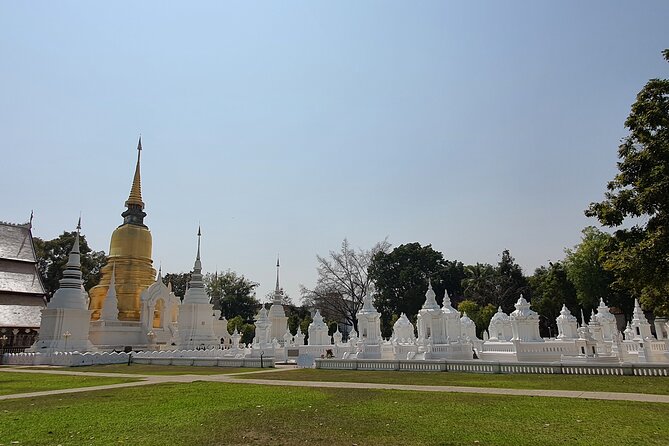
The route then reaches Wat Suan Dok for about 20 minutes. The temple is known for its many white chedis, or pagodas, and its name means flower garden temple. The grounds once served as a royal flower garden for the ruler of Chiang Mai.
The group of white structures gives the site a distinct appearance. Instead of one massive central monument commanding attention, you get a wider view filled with repeated pale pagodas. That change of rhythm is welcome after the darker teak hall and the monumental chedi earlier in the morning.
Twenty minutes gives you time to take in the arrangement and hear the basic story behind the name. You will not have much time for a leisurely wander, so stay aware of the meeting time.
Wat Suan Dok also shows how temple grounds can preserve a memory of royal use. The flower garden connection adds a layer of place and purpose that is easy to miss if you only treat the stop as a photo break.
Wat Phrathat Doi Kham and the final hilltop view
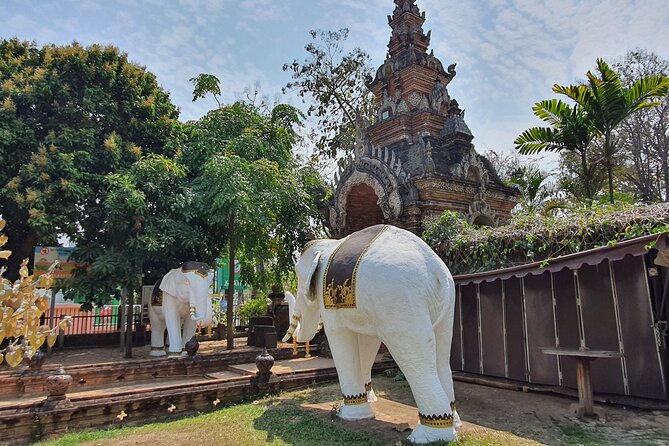
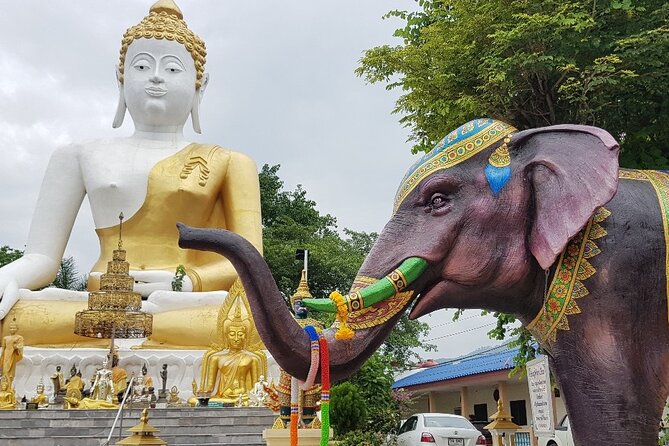
The final stop is Wat Phrathat Doi Kham, or Temple of the Golden Mountain. It sits on Doi Kham hill and takes about 40 minutes, the longest visit on the route.
The main feature is a huge seated Buddha in the Calling the Earth to Witness mudra. At 17 meters high, the statue dominates the hilltop and can be seen from miles away. This gives the final stop a sense of arrival that the compact city temples do not provide.
You also get views of the surrounding mountains from the hill. The setting changes the mood of the tour. Instead of looking closely at woodwork, stucco, or chedi supports, you can step back and take in the temple’s position above Chiang Mai.
Forty minutes is helpful here. The hilltop setting gives you time to see the Buddha, look around, and enjoy the outlook without rushing through the stop in 10 or 15 minutes. Since this is the final temple, it also gives the morning a clear finish.
What the private transport adds
The strongest practical feature is the route itself. You are not simply paying to enter seven temples. You are paying to connect them in a short period without arranging transportation between each one.
The private format means only your group participates. That can make the morning easier for families, couples, or friends who want to keep together. It also gives you a more personal setting for questions and photographs.
The vehicle was described as clean and modern, with the driver arriving on time. Those details matter in a four-hour schedule. Late pickups or slow transfers could quickly reduce your time inside the temples.
Still, you should understand the role of the driver and guide. One account described the experience mainly as a chauffeur service that leaves you time to enjoy each site. Another praised the amount of information and the photos provided by Faan. That suggests the experience can include useful guiding, but you should not assume a long formal lecture at every stop.
Dress, weather, and the pace of the morning
Temple visits require covered shoulders and knees. Sandals and flip-flops are allowed, but choose footwear that you can manage easily during repeated stops.
May through October is the rainy season. The tour runs in wet weather, so bring an umbrella or raincoat. Rain can affect the hilltop views and make moving between the vehicle and temple buildings less comfortable, but the schedule may still go ahead.
The timing at each site is approximate and can change because of weather or other interruptions. That flexibility is normal for a route covering seven locations. It also means you should avoid planning another activity with a tight start immediately after the tour.
The pace suits you best if you enjoy sampling many places. It is less suitable if you prefer sitting quietly in one temple or photographing every detail. Think of it as a well-planned introduction, not a scholarly temple study.
Who should book this half-day temple route?
I would recommend it to a first-time visitor with limited time in Chiang Mai, especially if you want the major sights without working out transport. It also fits a private group that values a clean vehicle, an on-time driver, and a fixed route.
The tour is a good match if you want variety: a sacred Buddha image, an enormous chedi, teak architecture, elephant-shaped supports, Lanna stucco, white pagodas, and a hilltop statue. Few four-hour outings offer such a broad sample of Chiang Mai’s temple styles.
I would hesitate if you are on a strict budget, traveling alone, or already comfortable arranging local transport. I would also choose a slower plan if your main goal is detailed photography or extended time for worship.
Free cancellation is available if you cancel at least 24 hours before the 9:00 am start. Cancellations made less than 24 hours before the start, along with late changes, are not refunded or accepted.
Should you book it?
Book this tour if your priority is efficient coverage with private transport. Seven temples in four hours is a lot, but the route makes the variety feel purposeful rather than random. Wat Phra Singh, Wat Chedi Luang, and Wat Phrathat Doi Kham provide the biggest visual rewards, while Wat Phantao and Wat Lok Molee add smaller artistic details.
The price makes the most sense for a group splitting the cost and for anyone who would otherwise spend time arranging several rides. Just keep your expectations clear: you are sampling Chiang Mai’s temple culture at a brisk pace. For a short stay, that is a fair trade.
FAQ
What time does the tour start?
The tour starts at 9:00 am.
How long does the experience last?
The tour lasts approximately four hours.
Is this a private tour?
Yes. Only your group participates in the activity.
Is pickup available?
Pickup is offered.
How many temples are included?
The route includes seven temples: Wat Phra Singh, Wat Chedi Luang Varavihara, Wat Phantao, Wat Chiang Man, Wat Lok Molee, Wat Suan Dok, and Wat Phrathat Doi Kham.
What should I wear?
Your shoulders and knees must be covered when entering the temples. Sandals and flip-flops are allowed.
What happens if it rains?
The tour operates during rainy weather, including the rainy season from May to October. You should bring an umbrella or raincoat. The schedule may change because of weather or other unforeseen interruptions.
Newly reviewed around Chiang Mai
- Workshop Making Herbal ball & herbal inhaler★ 4.3 · 3 reviews
- Chiang Mai Zipline White Water Rafting and Elephant Sanctuary★ 4.0 · 11 reviews
- Walk With Monks Collecting Alms(meeting point maybe change)★ 4.9 · 8 reviews
- Trek to a Jungle Waterfall★ 5.0 · 14 reviews
- Zipline+Sticky waterfall+Long Neck Village Private Tour★ 5.0 · 22 reviews
- Meditation Retreat and Self-Care in Nature★ 5.0 · 4 reviews
- Full Day Yoga, Meditation, and Thai Cultural Immersion in Chiang Mai★ 5.0 · 3 reviews
- Long Neck Village, White & Blue Temple, Black House Day Tour From Chiang Mai★ 4.0 · 14 reviews
Chiang Mai Temple Tours, compared.
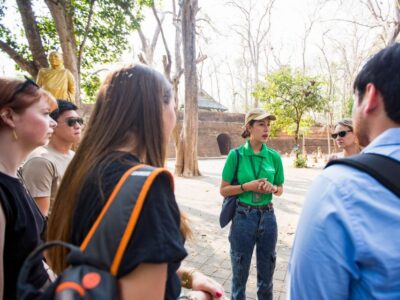
Doi Suthep and Wat Umong Enchanting Evening Tour
Read our review →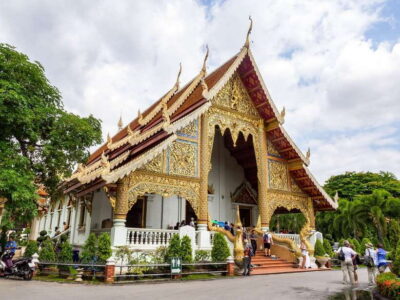
3 Hour Old City and Temples Guided Walking Tour
Read our review →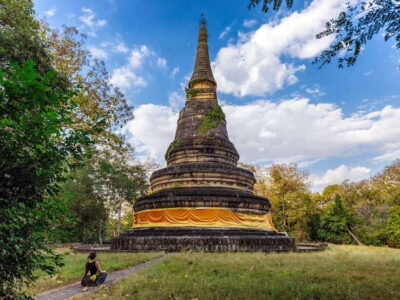
Doi Suthep, Wat Umong, and Pha Lat Sunrise Tour
Read our review →
Wat Phra That Doi Suthep spiritual Sunrise Tour with an Ex-monk
Read our review →
4-Hour Doi Suthep & Hmong Hill Tribe Village from Chiang Mai
Read our review →
Spiritual Sunrise Wat Doi Suthep, Pha Lat, Alms & Meditation
Read our review →Browse the lists this tour appears in