
Reviewed · CHIANG MAI ELEPHANT SANCTUARY VISITS
Chiang Mai: Elephant Dream Project Sanctuary – Half-Day
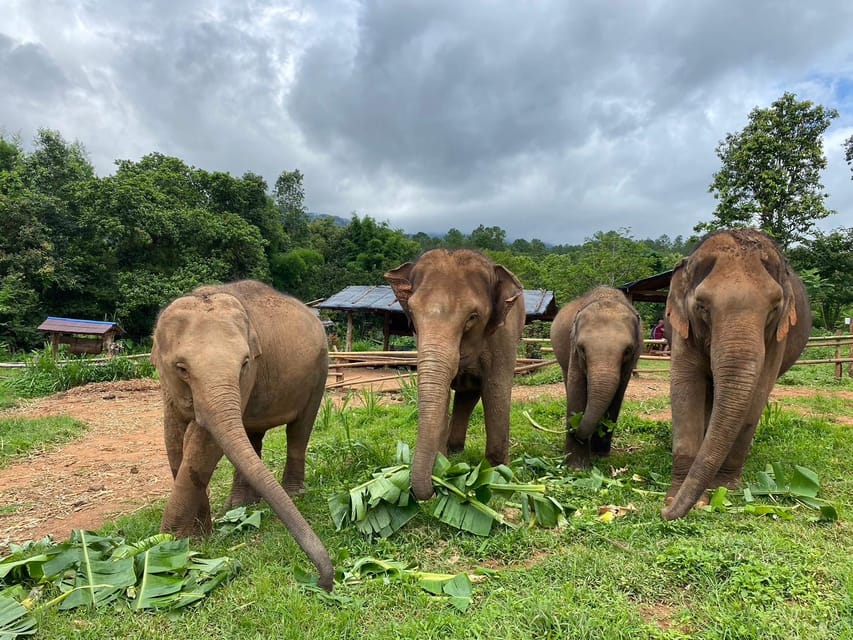
The best part of this Chiang Mai outing is simple: the elephants set the pace. You feed them, walk near them through the forest, and watch them follow their normal routines rather than perform tricks. Guides such as JJ and Mr Dee explain how the animals are cared for and why the project avoids riding and forced bathing.
I like the local, family-run feel, and I like that your money helps support food and care for the elephants. The main drawback is the long road time for a short visit. The published schedule runs from early morning until mid-afternoon, and the mountain drive can take about 1 hour and 45 minutes each way.
Key points to know before booking
- Elephant-led activities: Feed the elephants and walk with them, but do not expect riding, tricks, or a staged bathing session.
- Local care: The project is connected with Karen communities, and the elephants are treated as part of local families.
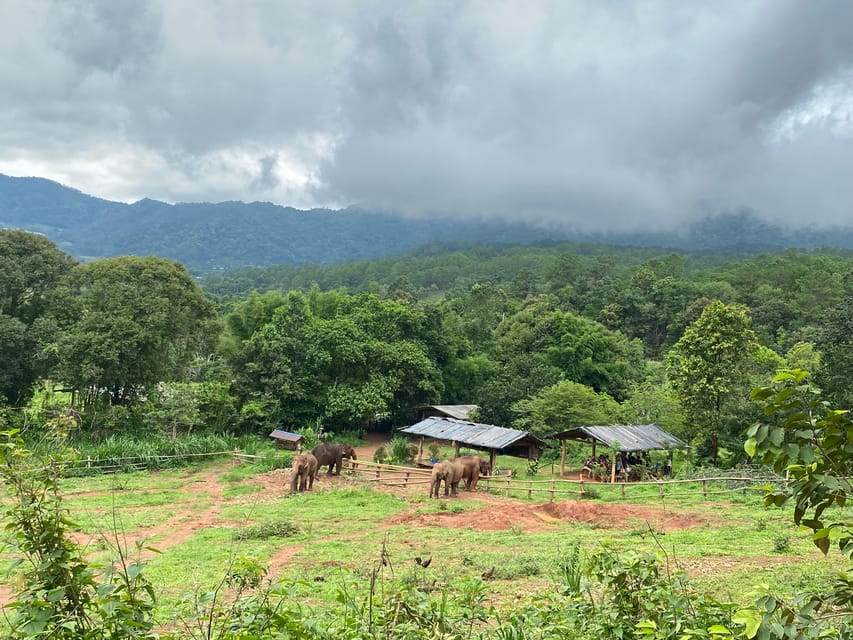
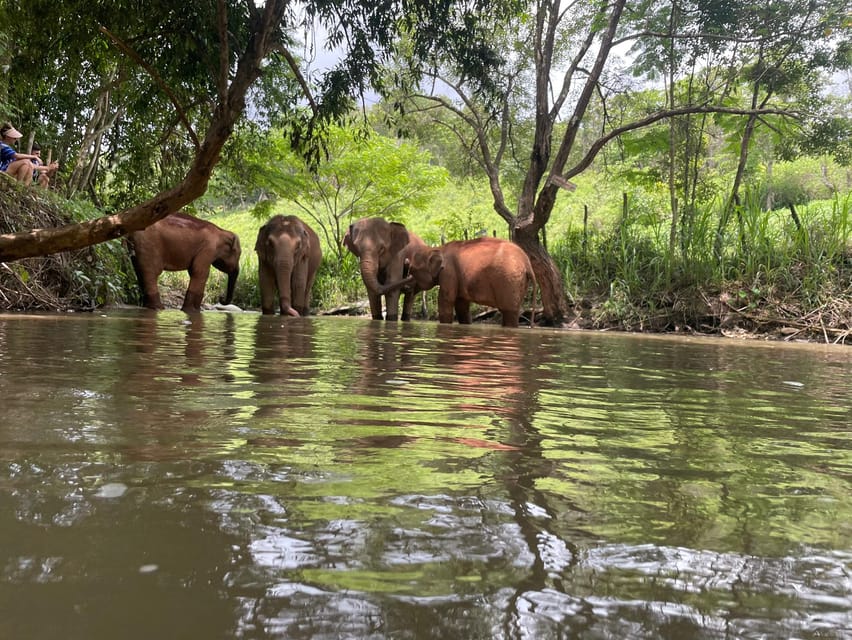
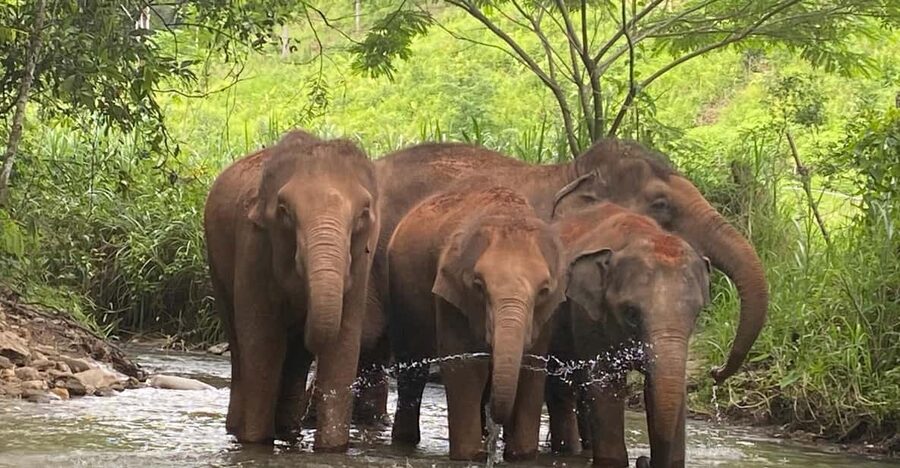
- Small-scale setting: You spend time around about five elephants rather than at a large, highly choreographed attraction.
- Mountain access: The sanctuary sits in a remote jungle and village area, with some slippery or steep walking.
- Lunch included: A Thai meal, seasonal fruit, water, and elephant food are part of the $51 price.
- Morning pickup: Hotel collection in Chiang Mai begins around 7:00 to 7:30 AM, with return around 2:30 to 3:00 PM.
Why the elephant care matters here
Chiang Mai has no shortage of elephant attractions. The hard part is telling the difference between a genuine sanctuary and a tourist show with a softer name.
At Elephant Dream Project, the central rule is that the elephants are not forced to entertain. If one wants to wander away, drink, bathe, or rest, the group follows at a respectful distance. That means your experience may feel less scripted than a standard animal attraction, but it also gives you a more honest look at elephant behavior.
You can feed the elephants, walk beside them, and watch them use the forest and river area. You are not promised a set of photo poses or a guaranteed bathing activity. That is a good thing if your priority is animal welfare rather than maximum hands-on contact.
The project is locally run, and the caretakers speak about the elephants as family members. The owner, often identified as Mr Dee or Mr D, grew up with elephants whose parents and grandparents were connected to his family village. This background gives the visit a personal side that large commercial operations often lack.
Still, keep your expectations grounded. The project owns the elephants but does not own all the land used by them, and income from tours helps pay for food and care. Supporting the visit has a clear practical purpose, but it does not mean the animals live in a completely wild setting. These are elephants accustomed to people and dependent on human care.
More Elephant Sanctuary Visits near Chiang Mai:
- Chiang Mai: Elephant Sanctuary, Waterfall & Bamboo Rafting
★ 4.9 · 9,160 reviews - Chiang Mai: Elephant Sanctuary & Waterfall Group Tour
★ 4.9 · 5,780 reviews - Chiang Mai: Elephant Sanctuary Feeding Program Half-Day Tour
★ 4.8 · 4,527 reviews
The early drive from Chiang Mai to the jungle
Pickup is scheduled between 7:00 and 7:30 AM from hotels in Chiang Mai city. You should wait in the lobby about five minutes before your assigned time and look for the Elephant Dream Project vehicle.
The drive to the sanctuary takes about 1 hour and 45 minutes. That is not a quick hop outside town. You leave the city behind and head toward mountain villages, with the countryside becoming part of the experience. Several visitors found the drive worthwhile because it brought them into a quieter, more remote setting.
Transport is included in the $51 price, along with the return trip. The vehicles have been described as comfortable vans, and the driving has received strong praise for being careful and professional. Still, if you dislike winding mountain roads or long car rides, factor this into your decision.
The timing also needs a little explanation. The activity is sold as a four-hour experience, but the full hotel-to-hotel day runs roughly from 7:00 AM to 2:30 or 3:00 PM because of the road journey. The time at the sanctuary itself is roughly from 9:30 AM until 1:00 PM, followed by the return drive.
Meeting the elephants at 9:30 AM
Once you arrive, a local English-speaking guide gives an introduction to Asian elephants and the purpose of the Elephant Dream Project. This briefing matters. You learn how to approach the animals, how to offer food, and how to behave around large animals that may be calm but are never harmless.
JJ has drawn particular praise for his warm manner and clear care for the elephants. Mr Dee may also lead or join the visit, especially when sharing the project’s family story. The strongest part of the guiding is not just animal facts. It is the explanation of why the elephants are allowed to choose their actions.
You might notice that the introduction is fairly informal. Some people would prefer a longer opening talk with more background before approaching the animals. If you have questions, ask them directly. The guides are happy to explain the individual elephants, their pasts, and the realities of elephant care in Thailand.
Feeding elephants without turning it into a show
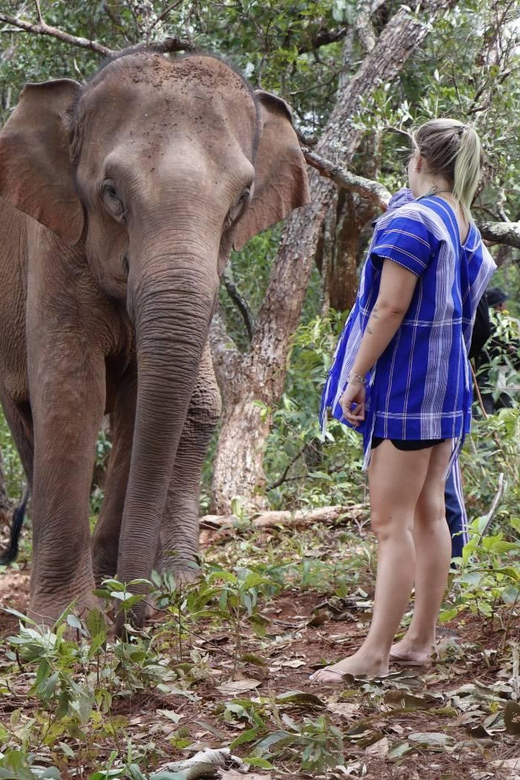
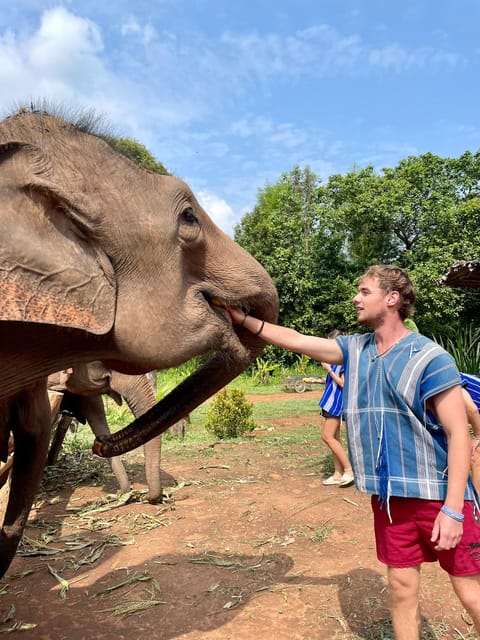
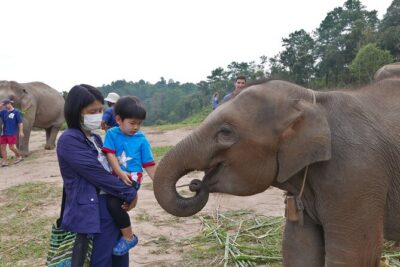
Feeding is the first close activity. Food for the elephants is included, and you receive plenty of chances to offer it by hand. Elephants eat a remarkable amount, so this part is lively and gives you a safe reason to interact.
The food also helps you understand the scale of the animals. Their trunks move with surprising precision, yet the animals can empty a bucket quickly. Guides stay nearby to help you feed in a sensible way and keep the contact calm.
The important distinction is that feeding does not become a trick routine. You are not asking the elephants to bow, pose, dance, or perform for a camera. They come over when interested, and they can move away when they have had enough.
You may be given a smock-style cover to help protect your clothes from mud and food. Bring a change of clothes anyway. The forest can be damp, and the walk may be messy underfoot.
More Half-Day Trips in Chiang Mai:
- Half-Day Thai Cooking Class at Organic Farm in Chiang Mai
★ 5.0 · 19,087 reviews - Chiang Mai: HALF-DAY COOKING COURSE at a Thai Cooking Farm
★ 4.9 · 705 reviews - Half-Day Elephant Experience at Rantong
★ 5.0 · 625 reviews - Chiang Mai: Sticky Waterfall Half-Day Tour & Hotel Transfers
★ 4.6 · 172 reviews
Walking through the forest at elephant pace
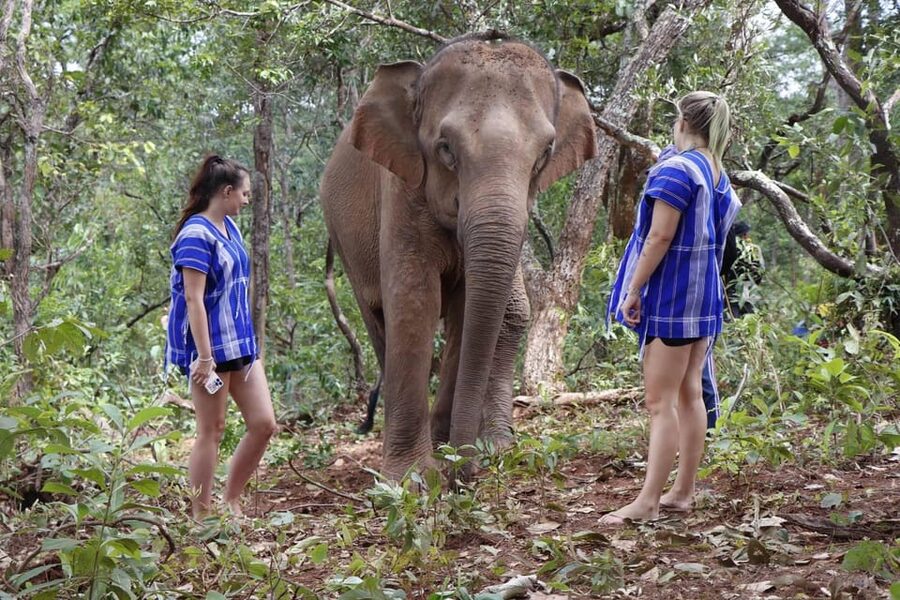
After feeding, you walk with the elephants in the jungle and up toward the mountain area. This is the part that gives the visit its strongest sense of place. Instead of standing in a fenced viewing area, you follow the animals as they move through their surroundings.
The route is not described as a long hike, but it can include uneven, steep, or slippery ground. One person specifically advised bringing shoes with strong traction. Hiking shoes are a smart choice, especially after rain.
This is not a fast activity. You may stop while an elephant eats, wanders, drinks, or investigates something along the path. That slower pace is exactly what makes the visit feel less like a show. You are watching the animals make choices rather than being moved from one photo stop to another.
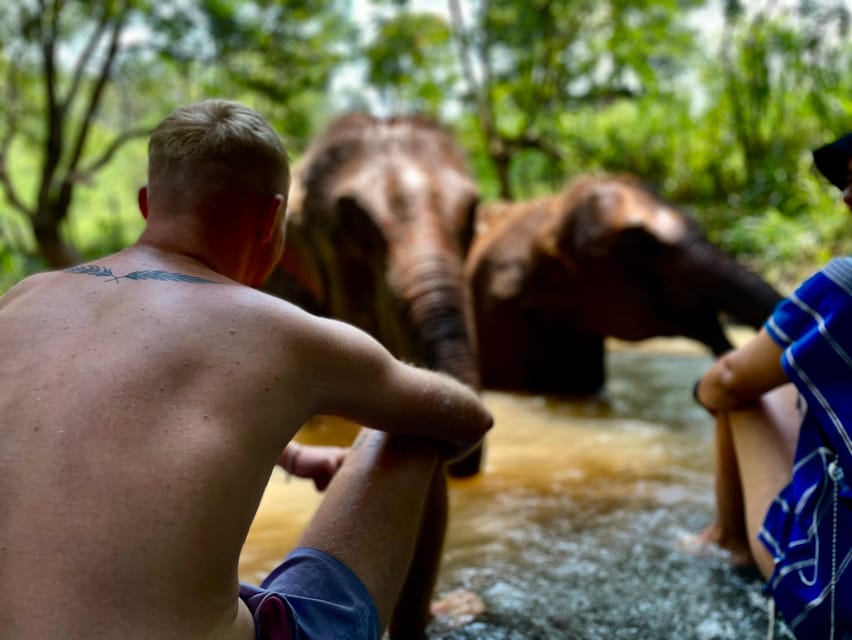
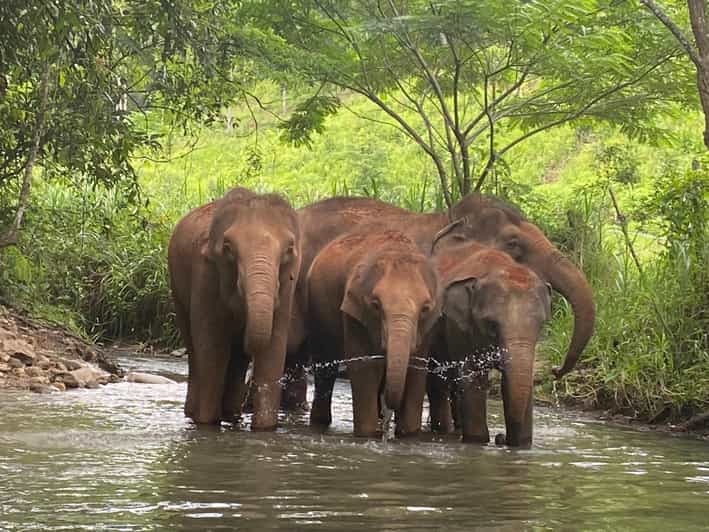
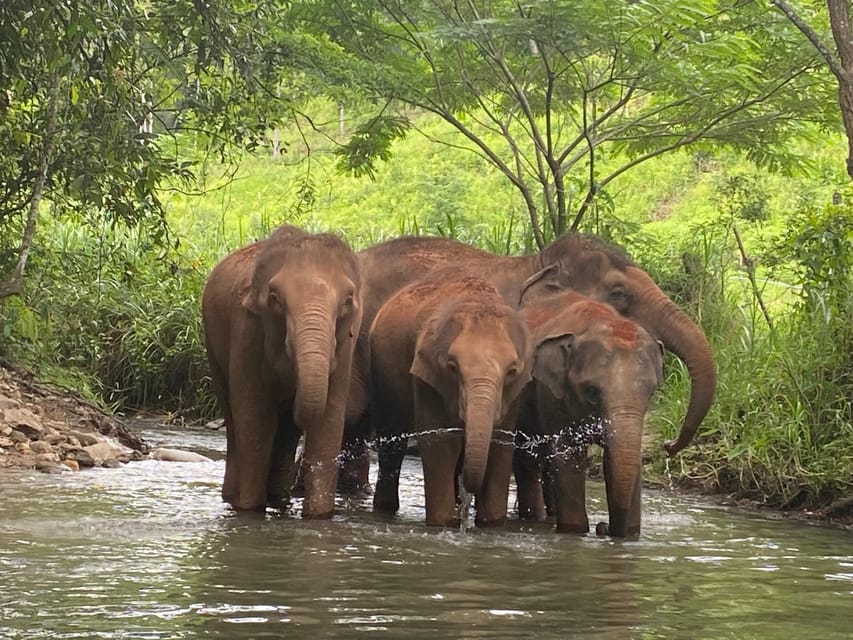
You may see the elephants walk toward a river or water area. Some activities include watching them drink or bathe themselves, but the key point is that you do not get into the water to bathe them. The project avoids forced bathing, mud spas, and similar contact-based activities.
That restraint will appeal to anyone who has researched elephant welfare. It may disappoint you if your dream image involves scrubbing an elephant in a river. The sanctuary’s approach is that the animals should control that moment.
A closer look at local village life
The project is not only about elephants. You also spend time in a village area and see something of the local way of life. The caretakers come from local communities, including Karen families, and their relationship with the elephants is tied to family history and village traditions.
That makes the visit feel more personal than a polished park attraction. You are seeing a working project that needs visitor income to buy food and care for the animals. The setting is simple, and that simplicity is part of the appeal.
It also raises a useful point about conservation. The elephants are not simply released into a vast forest and left alone. There is limited forest available, and many captive elephants need people for food, medical care, and protection. The project’s goal is to provide a better life within those limits.
You should not expect a formal cultural tour with a long list of village stops. The village component is woven into your time at the sanctuary. You see the place where the caretakers live and work, hear about their connection to the elephants, and share a meal.
Thai lunch and seasonal fruit at noon
At about noon, lunch is served at the sanctuary. The meal includes Thai food and seasonal fruit, with water provided. Soft drinks are not included, so bring extra cash if you want one.
The food is more than a convenient add-on. Eating at the project gives you extra time with the local team and keeps the day from feeling like a quick animal encounter before a restaurant stop. Several people praised the meal as tasty and filling.
Lunch is also a welcome pause after the forest walk. You can talk with the guides, ask about the elephants, and take stock of the morning. The setting is likely to be informal rather than restaurant-style, which suits the small local project.
If food is a major concern for you, the available information does not specify menus or dietary arrangements. You can ask before booking if you need a particular meal.
What $51 gets you
At $51 per person, the price includes hotel pickup and drop-off in Chiang Mai, transport, entry fees, lunch, water, and food for the elephants. That is a fair package when you consider the long return drive and the direct support for a small sanctuary.
The value is strongest if you want a quiet, animal-first visit. You are paying for access to a remote setting, local guiding, transport, food, and a chance to support ongoing elephant care. You are not paying for a full-day adventure park with many add-on activities.
The price may feel less attractive if you want a packed itinerary. There is no elephant riding, no tricks, and no forced bathing. The activity is built around feeding, walking, watching, learning, and letting the elephants decide what happens next.
Free cancellation is available up to 24 hours before the start time, and you can reserve now and pay later. Pickup is available from hotels in Chiang Mai city, not every location in the wider province.
Who will enjoy this half-day trip
I would choose this outing if you care about ethical elephant tourism and want close views without riding or forced animal contact. It suits couples, families with mobile older children, solo visitors, and anyone who prefers a small local project over a large attraction.
It is also a good fit if you want more than a photo. The guides explain elephant behavior, the project’s purpose, and the animals’ individual backgrounds. You come away with a better sense of the work involved in feeding and caring for elephants.
You should reconsider if you need wheelchair access, have limited mobility on uneven ground, or are over 80. The activity is not suitable for wheelchair users or people over 80, and the supplied information also lists people over 95 as unsuitable.
Bring hiking shoes, sunscreen, insect repellent, a towel, and spare clothes. A camera is useful, but keep your attention on the animals and follow the guide’s instructions about distance and contact.
The return to Chiang Mai
At about 1:00 PM, you say goodbye and begin the drive back. Hotel drop-off is expected between 2:30 and 3:00 PM.
The return makes this a substantial morning and afternoon commitment, even though the sanctuary portion is short. Do not schedule a tight airport transfer or another fixed tour immediately afterward. Traffic and mountain roads can affect the exact arrival time.
The payoff is that you return to Chiang Mai after seeing a very different side of the province. The city is replaced for a few hours by forest, village life, local food, and elephants moving on their own terms.
Should you book the Elephant Dream Project?
Book it if you want an honest, low-pressure elephant experience and are comfortable with a long drive for a few hours at the sanctuary. The most valuable features are the locally run care, elephant-led pace, clear refusal of riding and tricks, and the chance to support food and daily welfare.
Do not book it expecting a staged bathing session, guaranteed touching, or a full day of activities. This project works best for people who understand that a respectful elephant encounter may include waiting, watching, and letting an animal walk away.
For $51, the package is well priced because transport, lunch, admission, water, and feeding food are included. If your main goal is to see elephants treated with care in a natural jungle setting, this is a strong choice from Chiang Mai.
FAQ
How long does the Elephant Dream Project experience last?
The activity is listed as four hours, but the complete hotel-to-hotel schedule runs from about 7:00 or 7:30 AM until 2:30 or 3:00 PM because of the drive. Sanctuary time is roughly 9:30 AM to 1:00 PM.
Is hotel pickup included?
Yes. Pickup and drop-off are included from hotels in Chiang Mai city. You should wait in the lobby five minutes before pickup and look for the Elephant Dream Project car.
What activities can I do with the elephants?
You can feed the elephants, walk with them through the jungle, and learn about them from the English-speaking local guide. The activities follow the elephants’ natural behavior.
Are elephant riding and tricks included?
No. The project does not include riding or tricks. The elephants are not forced to perform for entertainment.
Can I bathe the elephants?
You do not bathe the elephants as a forced activity. You might watch them bathe themselves or drink from the river, depending on what they choose to do.
Is lunch included?
Yes. Thai food, seasonal fruit, and water are included. Soft drinks are not included.
What should I bring?
Bring a change of clothes, a towel, hiking shoes, sunscreen, and insect repellent. Shoes with good traction are especially useful because parts of the walk can be slippery.
Is the tour suitable for wheelchair users?
No. The activity is not suitable for wheelchair users. It is also listed as unsuitable for people over 80 and people over 95.
Newly reviewed around Chiang Mai
- Workshop Making Herbal ball & herbal inhaler★ 4.3 · 3 reviews
- Chiang Mai Zipline White Water Rafting and Elephant Sanctuary★ 4.0 · 11 reviews
- Walk With Monks Collecting Alms(meeting point maybe change)★ 4.9 · 8 reviews
- Trek to a Jungle Waterfall★ 5.0 · 14 reviews
- Zipline+Sticky waterfall+Long Neck Village Private Tour★ 5.0 · 22 reviews
- Full Day Yoga, Meditation, and Thai Cultural Immersion in Chiang Mai★ 5.0 · 3 reviews
- Meditation Retreat and Self-Care in Nature★ 5.0 · 4 reviews
- Long Neck Village, White & Blue Temple, Black House Day Tour From Chiang Mai★ 4.0 · 14 reviews
Chiang Mai Elephant Sanctuary Visits, compared.
Elephant Sanctuary, Waterfall & Bamboo Rafting
Read our review →

Elephant Sanctuary Feeding Program Half-Day Tour
Read our review →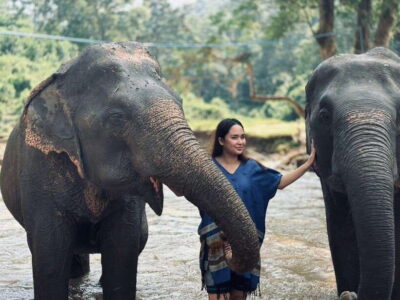
Elephant Sanctuary, Long Neck & Sticky Waterfall
Read our review →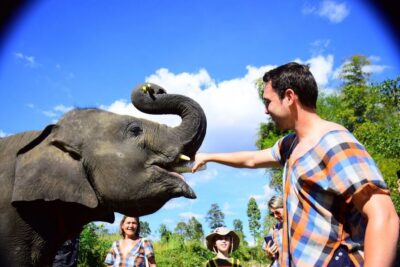
3-in-1: Doi Inthanon Tour, Elephant Sanctuary, and Trekking Trail
Read our review →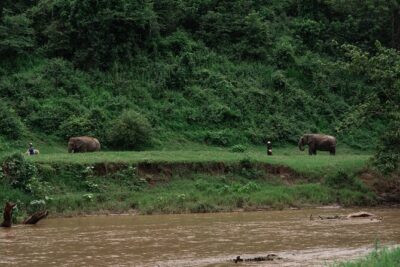
Chiang Mai Elephant Sanctuary, Bamboo Rafting and Waterfall Tour
Read our review →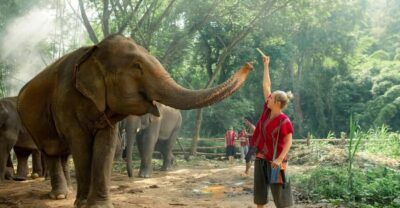
Browse the lists this tour appears in