
Reviewed · CHIANG MAI ELEPHANT SANCTUARY VISITS
Half-Day Elephant Experience at Rantong
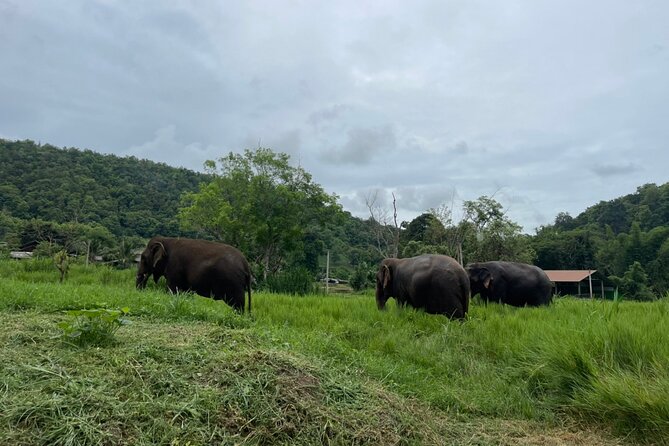
The best part of this Chiang Mai outing is the hands-on time with rescued elephants. You help make vitamins, feed the animals, walk beside them, and assist with bathing rather than simply watching from behind a fence. The visit also includes an elephant school, where your guide explains the center’s work and how to behave around these large, sensitive animals.
I like the small maximum group of 15, which gives you a better chance to ask questions and take your time. I also like the useful setup: hotel pickup, borrowed Karen-style clothing, boots or other gear at the center, a shower afterward, and a Thai meal with fruit. The main drawback is the drive, which can take about an hour each way and may be uncomfortable in a crowded van.
Key points at a glance
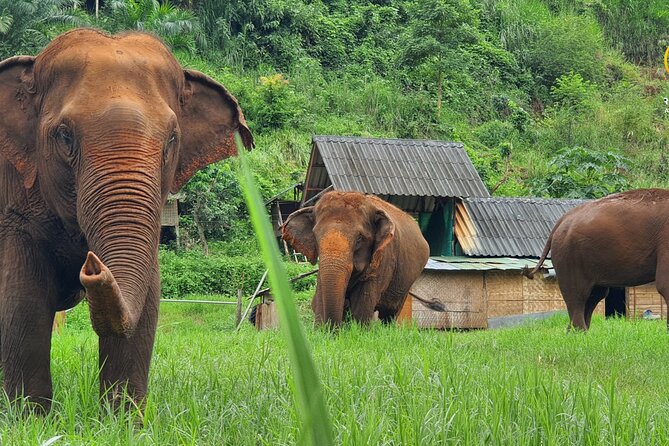
- Make vitamins for special-care elephants: Prepare food supplements for pregnant, injured, and older animals.
- Feed, walk with, and bathe elephants: The schedule gives you several ways to spend time with them.
- Small groups capped at 15: Guides such as Seven, Rambo, Nikon, and Oh-Oh have room to explain elephant behavior and help with photos.
- Hotel pickup in Chiang Mai: You do not need to find a meeting point, though pickup and return times can vary with traffic.
- Clothes, boots, showers, and lunch included: Expect mud, water, and a change of clothes before the ride home.
- About five hours in total: The center is in Mae Taeng District, roughly an hour from the city.
Meeting rescued elephants at Ran-Tong
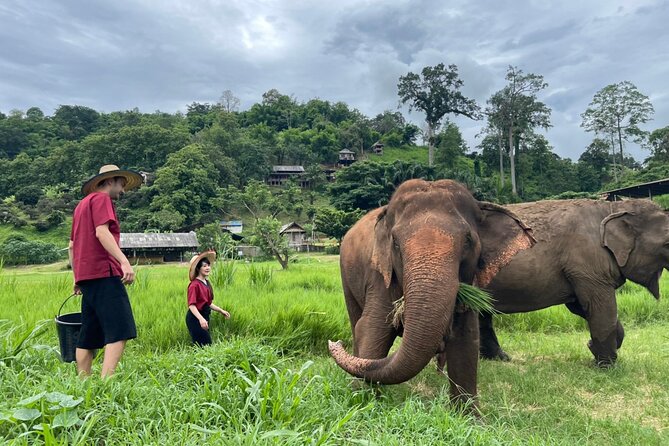
Ran-Tong Save & Rescue Elephant Centre sits in Mae Taeng District, outside central Chiang Mai. The outing lasts about five hours, with a morning or afternoon start, and hotel pickup and drop-off are included for accommodations in Chiang Mai city.
That door-to-door arrangement matters. Chiang Mai’s elephant centers are not close to the old city, and arranging your own transport can add cost and hassle. The tradeoff is time in the vehicle. The drive is usually described as about 45 minutes to an hour, and the van may collect several people around town before heading north.
Transport is the least consistent part of the experience. Several people found the van rough, crowded, or uncomfortable, especially on the longer ride. One account described unsafe driving, while another reported a long wait for the return pickup. These are not reasons to reject the elephant program itself, but they are good reasons to allow extra time and raise any transport concern with the operator promptly.
Once you arrive, the day becomes more focused and personal. You change into Mahout-style Karen clothing before the activities begin. This is practical as much as it is cultural: you will be around water, mud, food, and elephants, so keeping your regular travel clothes clean is useful.
More Elephant Sanctuary Visits near Chiang Mai:
- Chiang Mai: Elephant Sanctuary, Waterfall & Bamboo Rafting
★ 4.9 · 9,160 reviews - Chiang Mai: Elephant Sanctuary & Waterfall Group Tour
★ 4.9 · 5,780 reviews - Chiang Mai: Elephant Sanctuary Feeding Program Half-Day Tour
★ 4.8 · 4,527 reviews
The elephant school comes first
The first formal activity is the elephant school. Your guide introduces the rescue center and explains the animals in its care, including their daily routines and the work involved in looking after elephants that are pregnant, injured, or old.
This briefing is important. Elephants are powerful animals, even when they appear calm and friendly. You need to understand where to stand, how to approach, and how to respond to the guide’s instructions before moving close to them. The guides are a major part of the experience, and names that come up often include Seven, Rambo, Nikon, and Oh-Oh. Each guide helps with elephant facts, group movement, questions, and photographs.
The best guides keep the mood light without turning the animals into performers. Instructions are given clearly, and the pace allows you to become comfortable before the more physical activities begin. That is particularly helpful for children and anyone who has never been near an elephant.
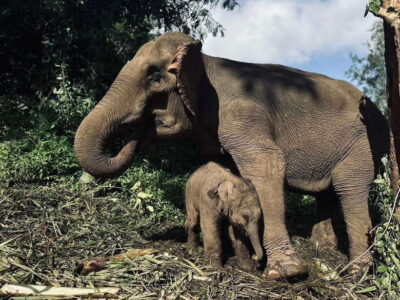
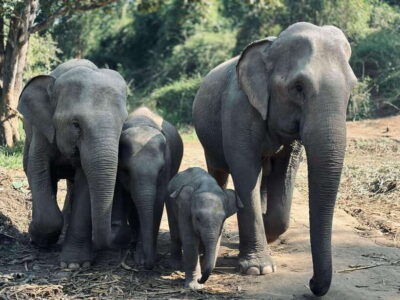
The center is described as caring for a modest herd, with figures in the supplied information ranging from about 13 to 20 elephants. Because the exact number can vary, focus less on counting animals and more on how the program treats them. The experience is presented as no-riding, and the activities allow the elephants to move away rather than being made to repeat a trick.
Making vitamins for older and injured elephants
One distinctive part of the visit is preparing vitamins for the elephants. These supplements are made for animals with extra needs, including pregnant, injured, and older elephants.
This gives you a better sense of the less glamorous side of rescue work. Feeding an elephant is memorable, but preparing food for animals that need additional care shows that a sanctuary is also a working care facility. You are not just stopping by for a photo. You are learning that large animals require regular food, supervision, treatment, and patient handling.
The activity may include processing sugar cane and feeding it to the elephants. The exact food preparation can vary, but the point is the same: you take part in a simple task connected to daily care. It also gives your guide a natural moment to explain what elephants eat and how to offer food safely.
Use the food as directed. An elephant’s trunk can move with surprising force, and the guide is there to show you the right position. Let the animal set the pace as much as possible, and do not crowd it while trying to get a photograph.
Feeding and walking beside the elephants
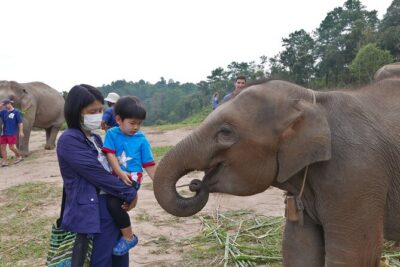
Feeding is usually the first close contact, and it is an easy way to settle into the visit. You may offer food by hand, watch the elephants use their trunks, and learn to read basic signs of comfort or interest.
The walking portion is more rewarding than a quick feeding line because you get to see the animals move through their surroundings. You are not simply facing an elephant for a picture. You follow along as it walks, pauses, eats, or changes direction.
That freedom matters. The most reassuring feature of the program is the instruction to let an elephant move away rather than forcing it back into position. The supplied details also describe the animals as being allowed to set their own pace. For anyone choosing an elephant activity on ethical grounds, this is a key point to watch for during your visit.
The center is said to cover roughly 10 to 20 acres and to hold around 20 elephants in some descriptions. That is enough space for the animals to move about, though it is not the same as releasing elephants into a fully wild setting. This is still a managed facility with close human contact. You should book it for education and supervised interaction, not for a guaranteed view of elephants behaving as they would in a remote forest.
More Half-Day Trips in Chiang Mai:
- Half-Day Thai Cooking Class at Organic Farm in Chiang Mai
★ 5.0 · 19,087 reviews - Chiang Mai: HALF-DAY COOKING COURSE at a Thai Cooking Farm
★ 4.9 · 705 reviews - Chiang Mai: Elephant Dream Project Sanctuary – Half-Day
★ 4.9 · 552 reviews - Chiang Mai: Sticky Waterfall Half-Day Tour & Hotel Transfers
★ 4.6 · 172 reviews
Bathing time is wet, muddy, and memorable
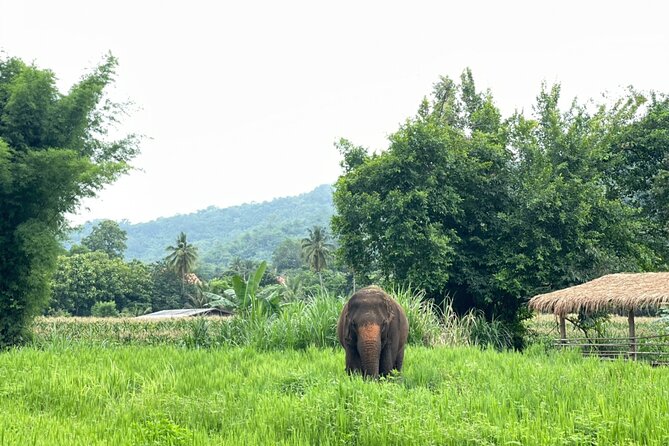
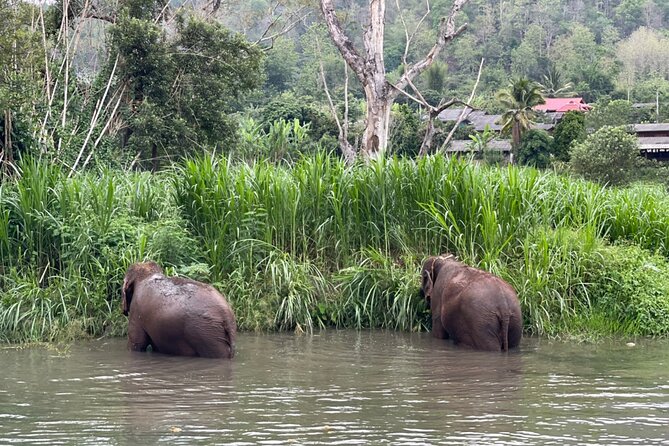
The bathing activity is the part most likely to leave you soaked. You help bathe the elephants in water, with the guide directing you on where to stand and what to do. Some programs call this a bath, but here it is more active than simply watching an elephant enter a pool.
Bring sandals or shoes you do not mind getting wet and dirty. Spare clothes are essential, especially if you are taking the afternoon option and still have evening plans. Mosquito spray is also sensible, along with soap and shampoo for the shower afterward.
The bathing session can be a lot of fun, but it should not be treated as a performance. The animal’s comfort comes first. If it walks away, that is part of the experience, not a problem for the staff to solve. A good guide will help you enjoy the moment without pushing you to maintain contact.
Afterward, you can change and shower. Facilities have been described as clean and spacious, with towels and shower products available. Bring your own spare outfit anyway, since the available supplies and your preferred clothing may not match your needs.
A simple Thai meal before the ride home
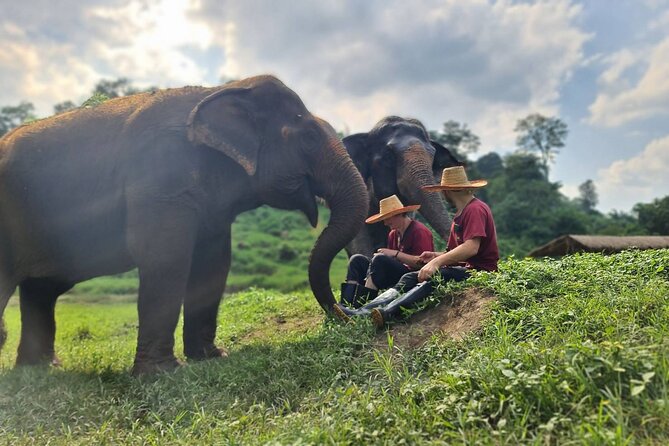
The included meal comes after the elephant activities. Expect Thai food, seasonal fruit, and drinking water, with dishes such as pad Thai mentioned in the supplied details.
This is a welcome ending to a physical morning or afternoon. You have been walking, standing, handling food, and getting wet, so a proper meal is more useful than a small snack. The food has received especially warm praise, and portions are described as plentiful.
Do not plan a tight restaurant reservation immediately after the tour. The return drive depends on the group and Chiang Mai traffic, and pickup or drop-off can run late. The afternoon option may also finish later than you expect if the van has several city stops.
Is $58.70 a fair price?
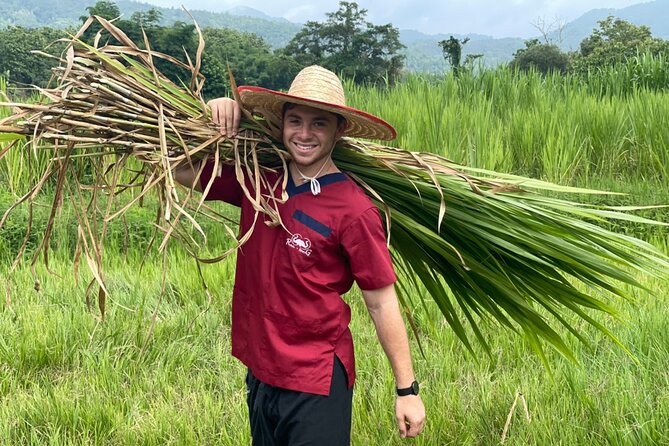
At $58.70 per person, this is not the cheapest way to see an elephant in Chiang Mai. It is a solid value if you want a half-day package that includes transport, clothing, guided instruction, food preparation, elephant contact, bathing, a meal, and return transfer.
The price also saves you from piecing together several separate arrangements. A private ride to Mae Taeng alone can change the math, especially if you are traveling alone or with only one other person. The small group limit of 15 is another useful part of the price. You are unlikely to receive completely private attention, but you should have more access to the guide than in a large bus group.
Value depends on your expectations. If you only want to observe elephants from a distance, this program offers more contact than you need. If you want a short, structured day with feeding and bathing, the price covers a great deal.
The ethical question deserves care. The program is described as no-riding, and the activities emphasize feeding, walking, care, and bathing. It also presents itself as a rescue center for elephants from poor conditions. Still, close interaction with elephants is not a passive wildlife viewing experience. You should choose it only if you are comfortable with supervised human contact and will follow instructions that put the animals first.
What to pack for a comfortable visit
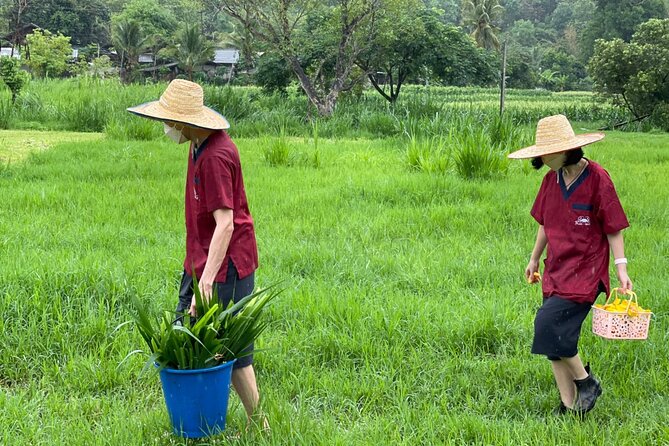
The center supplies some useful items, but you should arrive prepared for water, mud, insects, and changing clothes.
Bring:
- Spare clothing
- Comfortable shoes
- Sandals or shoes you do not mind getting wet and dirty
- Soap and shampoo
- A camera or phone
- Mosquito spray or insect repellent
Wear something easy to change out of. If you have a waterproof phone pouch, it could be useful, though one is not specifically included. Keep valuables to a minimum, and listen closely when the guide explains where to leave belongings during bathing.
Families can take part, and the activity is described as safe for children when properly supervised. The group format can also suit solo visitors, since guides may help with pictures and make sure you are included in the activities. Couples and families who want a shared memory will get the most from the feeding and bathing portions.
Who should book this half-day experience?
I would choose this outing if you want meaningful contact with elephants but have only half a day available. It suits first-time visitors to Chiang Mai, families, solo visitors, and anyone who values an organized package rather than arranging transport and meals separately.
It is also a good fit if you want to learn about elephant care, not just feed an animal for a few minutes. The vitamin preparation and elephant school add context, while the small group helps keep the day personal.
I would think twice if you dislike long van rides, need firm timing, or expect luxurious transport. The vehicle is the weak link, and the road journey can feel long after a wet and active session. This is also not the right choice if you want a purely observational wildlife experience with no close contact.
Cancellation is flexible up to 24 hours before the start time for a full refund. Changes or cancellations inside that window are not refunded, and the operator may offer another date or a full refund if the minimum number of participants is not met.
Should you book Ran-Tong?
Book it if your priority is close, guided contact with rescued elephants and you are willing to accept a long shared van ride. The strongest parts are the caring structure, the no-riding format, the chance to make vitamins, the bathing session, and the practical extras that make a wet day easier.
The price is fair for a five-hour package with pickup, food, clothing, showers, and several activities. Just keep your schedule loose on both ends, pack a full change of clothes, and treat the elephants as animals with their own choices rather than as photo props. If you can do that, Ran-Tong offers a memorable and active introduction to elephant care near Chiang Mai.
FAQ
Where is Ran-Tong Save & Rescue Elephant Centre?
The center is in Mae Taeng District, outside Chiang Mai. The drive from Chiang Mai city takes approximately 45 minutes to one hour each way.
How long does the elephant experience last?
The complete experience takes about five hours, including hotel pickup, the drive to the center, activities, food, and the return to Chiang Mai.
Is hotel pickup included?
Yes. Pickup and drop-off are offered from hotels or accommodations in Chiang Mai city.
Can I choose a morning or afternoon start?
Yes. The experience offers both morning and afternoon start times.
How many people can join the group?
The maximum group size is 15 people.
Can I feed and bathe the elephants?
Yes. The activities include feeding the elephants, walking with them, helping bathe them, and observing them in their surroundings.
Is elephant riding included?
No. The experience is described as a no-riding elephant program.
Is food included?
Yes. The meal includes Thai food, seasonal fruit, and drinking water. Pad Thai is one of the dishes specifically mentioned.
What happens if I need to cancel?
You can cancel at least 24 hours before the local start time for a full refund. Cancellations or changes made less than 24 hours before the start time are not refunded.
Newly reviewed around Chiang Mai
- Workshop Making Herbal ball & herbal inhaler★ 4.3 · 3 reviews
- Chiang Mai Zipline White Water Rafting and Elephant Sanctuary★ 4.0 · 11 reviews
- Walk With Monks Collecting Alms(meeting point maybe change)★ 4.9 · 8 reviews
- Trek to a Jungle Waterfall★ 5.0 · 14 reviews
- Zipline+Sticky waterfall+Long Neck Village Private Tour★ 5.0 · 22 reviews
- Meditation Retreat and Self-Care in Nature★ 5.0 · 4 reviews
- Full Day Yoga, Meditation, and Thai Cultural Immersion in Chiang Mai★ 5.0 · 3 reviews
- Long Neck Village, White & Blue Temple, Black House Day Tour From Chiang Mai★ 4.0 · 14 reviews
Chiang Mai Elephant Sanctuary Visits, compared.
Elephant Sanctuary, Waterfall & Bamboo Rafting
Read our review →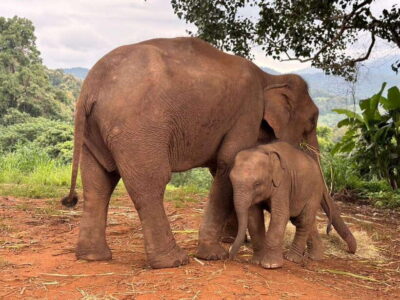
Elephant Sanctuary Feeding Program Half-Day Tour
Read our review →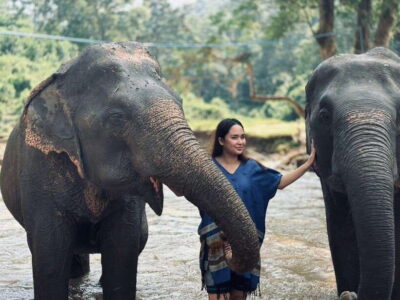
Elephant Sanctuary, Long Neck & Sticky Waterfall
Read our review →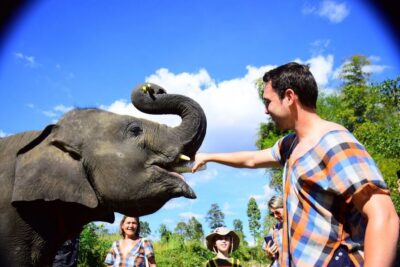
3-in-1: Doi Inthanon Tour, Elephant Sanctuary, and Trekking Trail
Read our review →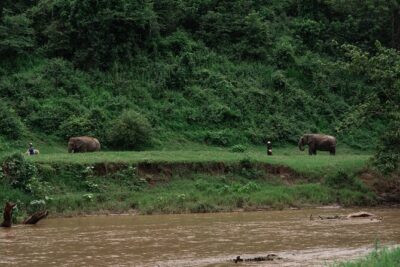
Chiang Mai Elephant Sanctuary, Bamboo Rafting and Waterfall Tour
Read our review →
Browse the lists this tour appears in