
Reviewed · CHIANG MAI ELEPHANT SANCTUARY VISITS
Chiang Mai: Elephant Sanctuary Bamboo Raft & Padthai Cooking
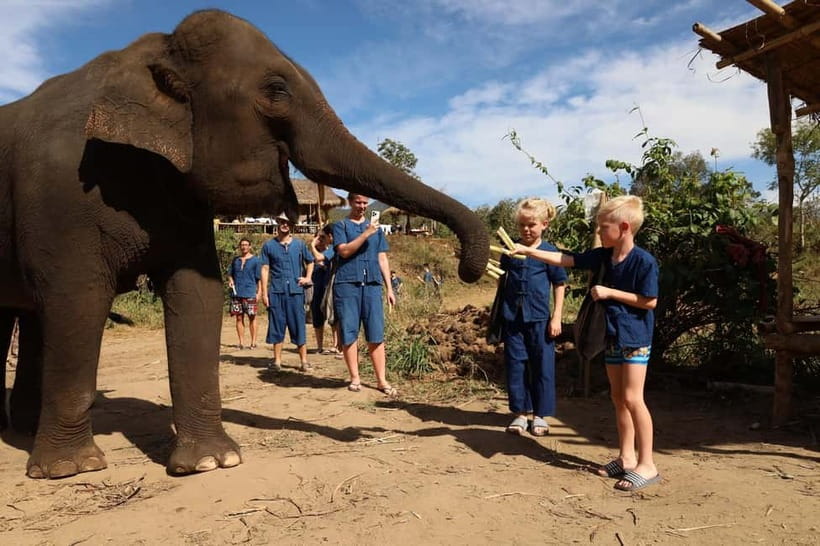
The best part of this Chiang Mai day trip is its mix of close elephant encounters and quiet time outdoors. You feed rescued elephants, walk beside them through the forest, then trade the mud and jungle for a bamboo raft on the Wang River. There is no riding, chaining, or forced show.
I especially like the personal touch of learning each elephant’s story and the simple Pad Thai workshop, where your lunch is made with your own hands. The $54 price also covers transport, food, clothing, guides, rafting, water, and insurance. The main drawback is the long day in a minibus, and a large group can make the cooking session less hands-on than expected.
- Elephant care comes first: Walk, feed, and watch the animals at their own pace, with no riding or performances.
- A full day outside Chiang Mai: The sanctuary is about 1.5 hours from the city, near the mountains of Inthanon National Park.
- Your lunch is part of the activity: Prepare vegetarian Pad Thai with local ingredients, then eat it with fresh fruit.
- Expect to get wet: The bamboo raft is open and low to the water, so a waterproof phone case and dry clothes are smart.
- Guides make the difference: Mark, Rainbow, Jon, Nim, Tuctuc, and other staff have been praised for clear explanations and friendly care.
- Weather can change the plan: Elephants are not pushed into cold water, and high river levels can cancel rafting.
A better kind of elephant day near Chiang Mai
Elephant tourism in northern Thailand calls for careful choices. This outing gives you contact with the animals, but it removes the activities that raise the biggest welfare concerns: no elephant riding, no circus tricks, no chains used as part of the visitor experience, and no forced bathing.
The elephants are rescued former working animals, and each has a mahout, or dedicated caretaker. They are not wild animals living without human contact. That matters. The sanctuary still manages the day around routines and safety, and one thoughtful note from a visitor raised the question of how much independence former working elephants can realistically have. I appreciate that this is not presented as a return to the wild. It is a care setting for animals already accustomed to people.
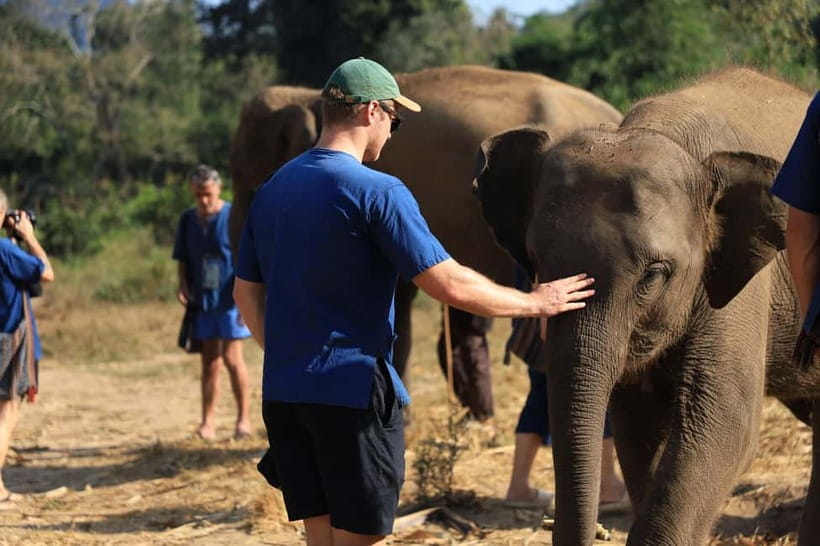
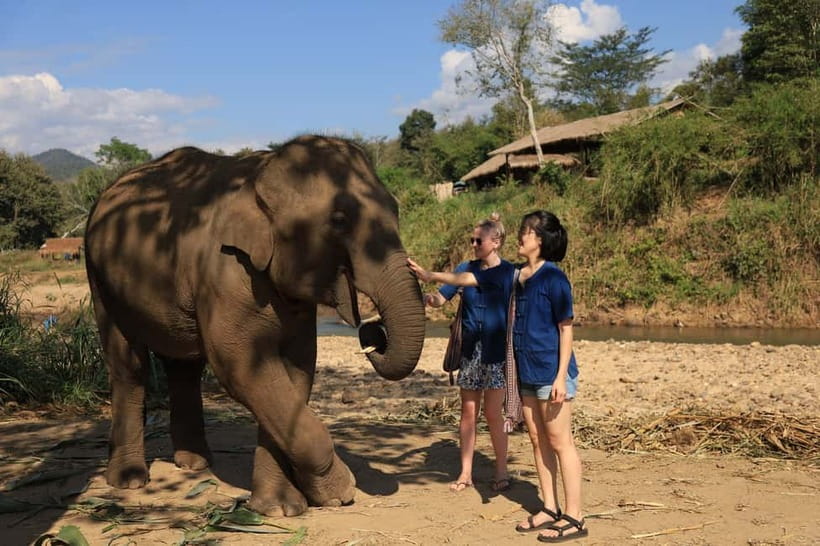
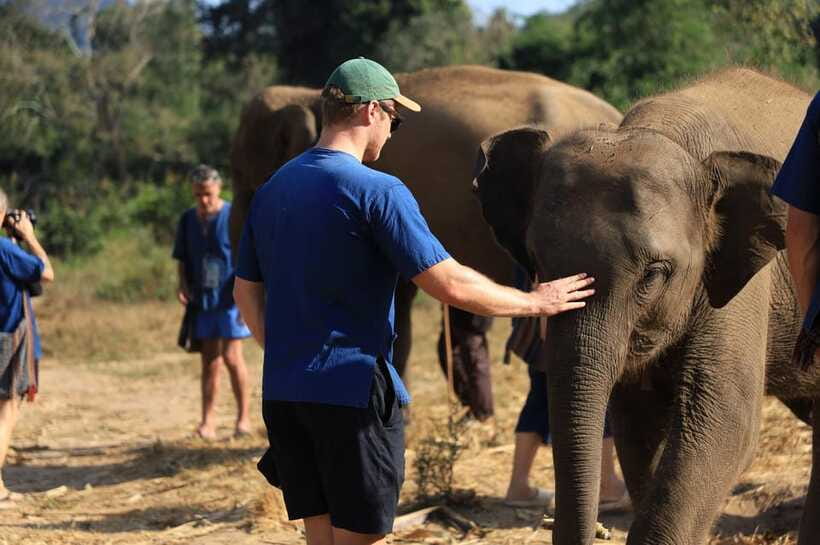
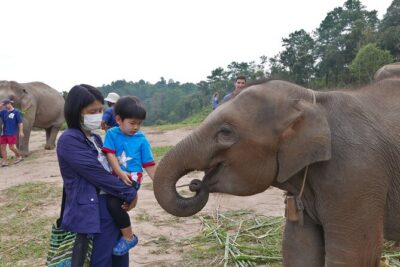
You will feed the elephants, walk with them, and watch their behavior in the forest and by the river. The experience is hands-on, but the staff say the elephants can choose whether to approach, bathe, or join the group. Follow the guide closely. Feeding should happen only as directed, even though hand-feeding is part of the program.
The 8:00 pickup and the road south
Your day begins with hotel pickup in Chiang Mai, generally between 8:00 and 8:30 in the morning. The drive takes about 1.5 hours and passes rivers, rice fields, and plantations before reaching Living Green Elephant Sanctuary.
This transfer is not just a way to fill time. It takes you from the city into a quieter part of Chiang Mai Province, near the mountain area around Inthanon National Park. Still, it is a long ride at both ends of the day. One useful point to know is that the minibus comfort and driving style can vary. Some people have found the ride perfectly comfortable, while others found the return drive fast and the braking abrupt.
If you are prone to motion sickness, sit near the front, carry water, and keep the morning light. You will have a full schedule once you arrive.
More Elephant Sanctuary Visits near Chiang Mai:
- Chiang Mai: Elephant Sanctuary, Waterfall & Bamboo Rafting
★ 4.9 · 9,160 reviews - Chiang Mai: Elephant Sanctuary & Waterfall Group Tour
★ 4.9 · 5,780 reviews - Chiang Mai: Elephant Sanctuary Feeding Program Half-Day Tour
★ 4.8 · 4,527 reviews
Traditional clothing and the sanctuary briefing
At the sanctuary, you change into traditional northern Mo Hom clothing. This is practical as well as photogenic. The fabric is comfortable for walking, and you can wear clothes underneath that you do not mind getting dirty or wet.
The welcome briefing introduces the sanctuary and explains the elephants’ individual backgrounds. Guides have been praised for describing the animals’ past working lives, their personalities, and the way staff care for them. Guides vary by date, but names that have come up include Mark, Nim, Rainbow, Jon, John, and Tuctuc.
This introduction is important because it sets the right tone. You are not arriving at an animal show with a fixed performance. You are entering a managed care environment where the schedule is shaped around the elephants’ condition, weather, and willingness to take part.
Feeding and walking with rescued elephants
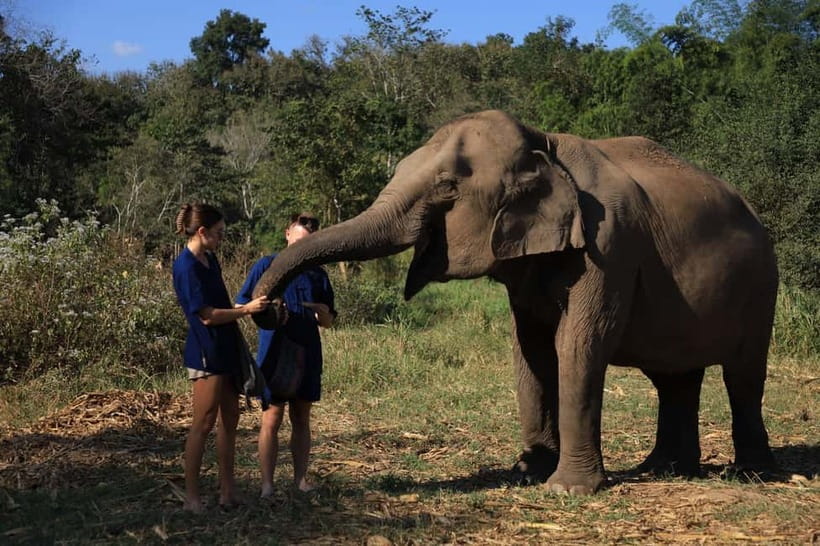
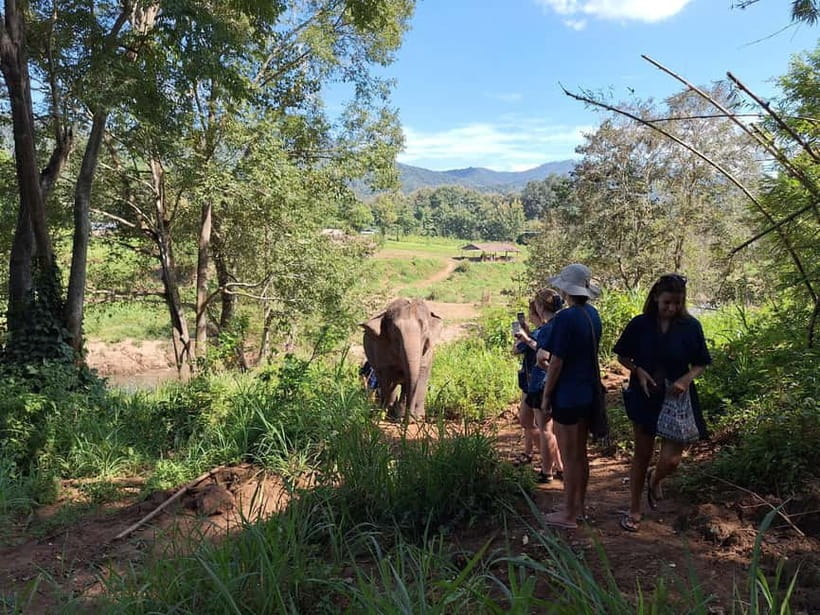
The main elephant session runs from roughly 10:45 until noon. You begin by feeding the animals, then walk with them through the forest. The close contact is a major reason to choose this program, but the best moments are often the quieter ones: watching an elephant pause, wander, interact with its caretaker, or decide how close it wants to come.
You may see playful behavior around mud and water. The staff explain what to do and keep an eye on both people and elephants. The program is designed around observing natural behavior rather than getting an elephant to perform on command.
The sanctuary’s approach also means you should keep your expectations realistic. You cannot guarantee a bath, a particular elephant encounter, or constant physical contact. The animals are not forced into the river if conditions are too cold, and they are not pushed into bathing for a photo.
That restraint is a good sign. It may mean you have a less dramatic moment than you imagined, but the encounter is more respectful because the elephant’s comfort matters more than the timetable.
Making vegetarian Pad Thai for lunch
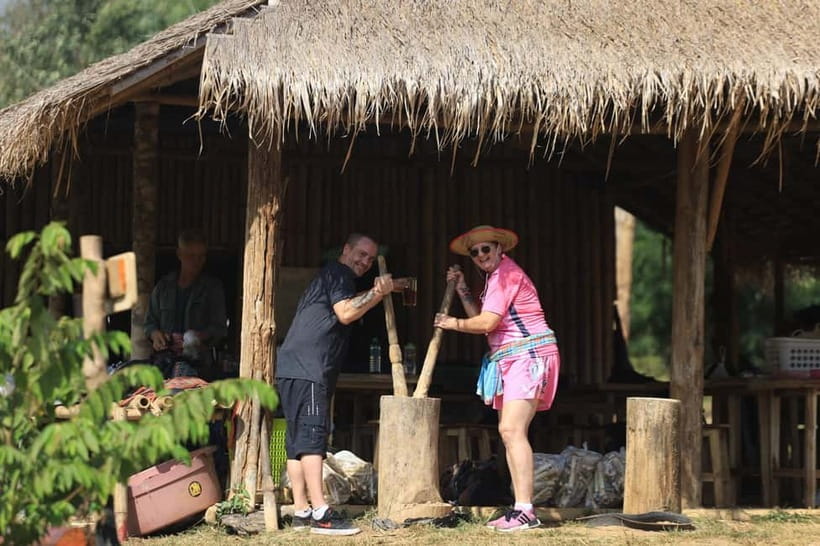
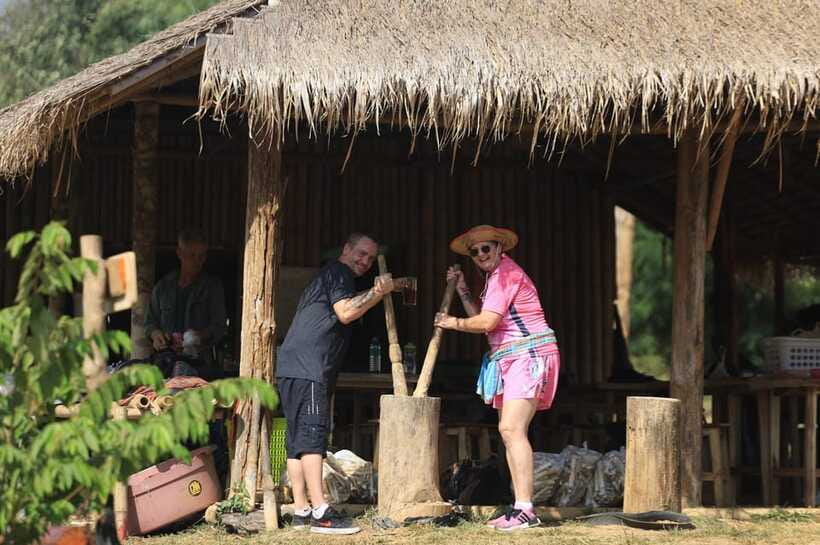
Around noon, you move to the cooking workshop. The meal is vegetarian Pad Thai, prepared with local ingredients, followed by fresh fruit. You cook and then eat what you make, so lunch feels like part of the day rather than a pause between activities.
The workshop is a nice fit for first-time visitors to Thailand because Pad Thai is familiar enough to enjoy, yet the preparation gives you a practical look at a common Thai dish. You do not need advanced cooking skills. The guides lead the process and help keep the group moving.
There is one important group-size issue. On a quieter day, you may get plenty of hands-on time. On a busy day, groups can reach more than 40 people, with around 10 sharing a pan. In that situation, the workshop becomes a shared demonstration and group activity rather than a personal cooking lesson.
I would still count the meal as good value, but if the cooking part is your main reason for booking, ask about expected group size before paying. The workshop began as part of the program on December 2, so check that it is operating for your date.
More Thai Cooking Classes in Chiang Mai:
- Half-Day Thai Cooking Class at Organic Farm in Chiang Mai
★ 5.0 · 19,087 reviews - Chiang Mai: Cooking Class, Market & Thai Herbs Garden Tour
★ 4.9 · 4,824 reviews - Chiang Mai: Authentic Cooking Class with Market & Farm Visit
★ 4.9 · 4,546 reviews - Thai and Akha Cooking Class in Chiang Mai
★ 5.0 · 4,358 reviews
Bamboo rafting on the Wang River
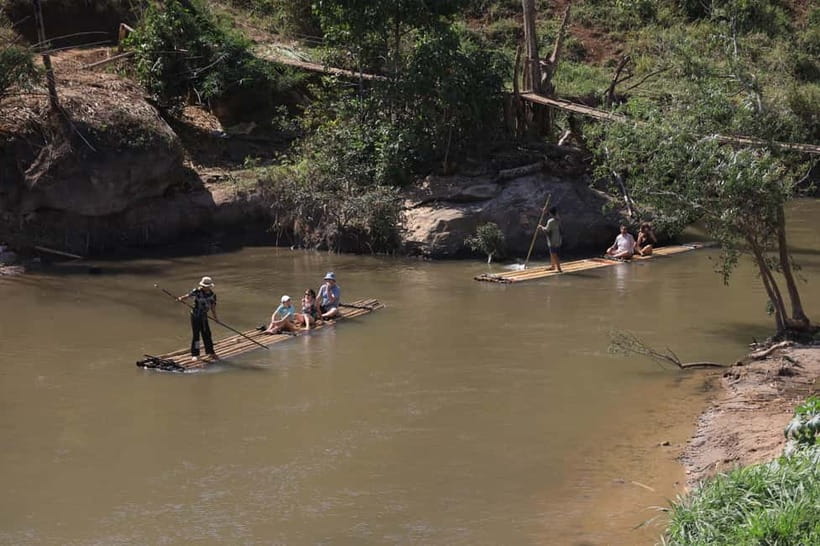
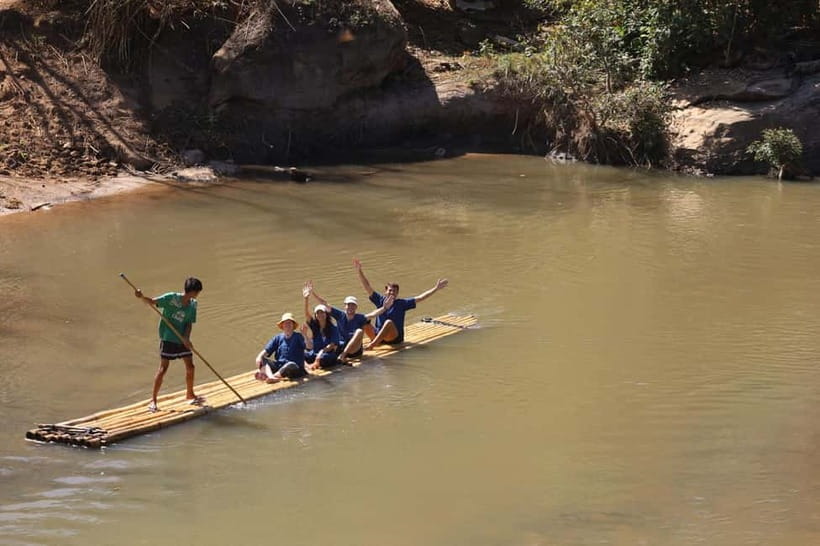
After lunch, a short drive of about 15 minutes takes you to the rafting point. The bamboo rafting section lasts about an hour and uses a local raft master to guide you along the peaceful Wang River.
This is not a whitewater expedition. The appeal is the slow pace, jungle scenery, and chance to cool off after time in the sun. The raft sits low, and water can splash over the bamboo. In practical terms, you should assume you will get wet, not merely that you might get a few drops.
Some raft masters encourage playful splashing and group interaction, while the river setting itself provides a calmer break from the elephant session. Several people have singled out this part as a favorite, partly because it adds a real outdoor activity to what could otherwise be a standard sanctuary visit.
Bring swimwear, sandals, a towel, and dry clothes. Put your phone in a waterproof case or sealed pouch. A waterproof phone case was a particularly useful tip for this outing because the raft is open and close to the water.
River conditions control the activity. If rain raises the water level too much, rafting is cancelled and the sanctuary provides an on-site refund of 200 Thai baht per person. You do not get a substitute raft trip under unsafe conditions, which is the sensible call.
A second elephant session by the river
After rafting, you return to the sanctuary for more time with the elephants. The planned walk to the river runs from about 2:30 to 3:00, with a chance to observe bathing if the weather is suitable.
This second visit is different from the morning session. You have already learned the basic rules and spent time watching the animals, so you can pay more attention to small details. You might see elephants entering the water, splashing, or simply standing near the river. You might also find that some choose not to bathe.
Do not treat the bathing section as guaranteed entertainment. Cold weather can keep the elephants out of the water, and staff will not force them in. That is one of the clearest examples of the welfare policy in practice.
Afterward, you change out of the Mo Hom clothing, say goodbye, and begin the return drive. The official day runs about 9 to 10 hours, with arrival back in Chiang Mai around 5:00, though traffic can shift the timing.
What the $54 price really covers
At $54 per person, this is a strong-value full-day outing if you want several activities in one booking. The price includes hotel pickup and drop-off, the English-speaking guide, traditional clothing, elephant activities, a local raft guide, vegetarian Pad Thai, fruit, drinking water, and insurance.
You are also paying for the drive to a rural sanctuary, not just an entry ticket. The transport takes roughly three hours round trip, which explains part of the cost and the long duration.
Personal expenses are not included, but there is no separate charge listed for the main activities. Compared with booking a private transfer, a cooking class, an elephant visit, and rafting on separate days, the bundled price is attractive.
The trade-off is focus. This is not a small private elephant encounter or a dedicated Thai cooking course. It is a busy day with several moving parts. If you prefer slow, private travel, the group format may feel hurried. If you want variety and a clear price, it makes sense.
Who will enjoy this day most
I would recommend this experience to you if you want meaningful elephant contact but do not want riding or performances. It suits active adults and older children who can manage a long day, forest walking, wet clothes, and a river raft.
The stated minimum age is 8. The program is not suitable for pregnant women, people with back problems, or people with mobility impairments. The walking, minibus transfers, changing clothes, and raft boarding all require a reasonable level of movement.
It is also a good choice for first-time visitors who want an easy introduction to several northern Thai experiences. You get rural scenery, a local meal, a short cultural clothing experience, elephant care, and river time without having to arrange each piece yourself.
You may want a different tour if you are mainly looking for a quiet, small-group cooking lesson, guaranteed elephant bathing, or a private vehicle. Ask about group size if the workshop matters greatly to you.
What to pack for the wet parts
Pack lightly, but bring the right items. You will be much more comfortable with:
- A hat and sunscreen
- Insect repellent
- Swimwear
- Sandals with a secure fit
- A towel
- A full change of clothes
- Comfortable clothing that can get dirty
- A waterproof phone case
- Drinking water
The sanctuary provides water, but carrying your own bottle is still useful during the drive and walking sections. Avoid alcohol, drugs, and smoking. Do not feed animals outside the staff-led activity.
The most important item is the change of clothes. Between elephant care, possible river bathing, and bamboo rafting, dry clothes turn the return trip into a comfortable ride instead of a long damp one.
Should you book this Living Green day trip?
I would book it if your priority is an ethical elephant encounter combined with a good-value outdoor day. The strongest parts are the clear no-riding policy, the time spent learning each elephant’s story, the warm guide service, and the rafting trip, which adds genuine fun rather than another short photo stop.
I would pause if you dislike long minibus rides or large groups. The cooking class may be less personal than its name suggests on a crowded day, and the river bathing section depends on elephant choice and weather.
For most people, the balance is right. You get close to rescued elephants without turning them into performers, eat a meal you help prepare, and spend an hour drifting along the Wang River. Book this one when you want a full day with variety, but arrive ready to accept that the elephants, not the clock, get the final say.
FAQ
How long does the Chiang Mai elephant and rafting experience last?
The full program takes about 9 to 10 hours, usually from around 8:00 in the morning until 5:00 in the afternoon. Traffic can affect the exact timing.
Is hotel pickup and drop-off included?
Yes. Pickup and return transportation from Chiang Mai hotels are included.
How far is the sanctuary from Chiang Mai?
The drive takes about 1.5 hours each way.
Can I ride the elephants?
No. The experience does not include elephant riding, forced performances, or chaining as part of the visitor activities.
Will I be able to feed the elephants?
Feeding the elephants is part of the guided program. Follow the staff’s instructions and do not feed animals outside the supervised activity.
Is elephant bathing guaranteed?
No. Bathing depends on weather and the elephants’ comfort. The elephants will not be forced into cold water.
What kind of food is included?
You make and eat your own vegetarian Pad Thai, with local ingredients. Fresh fruit is also provided.
Is the cooking workshop available on every date?
The Pad Thai Cooking Workshop is available starting December 2. Check that it is included for your selected date.
Will I get wet during bamboo rafting?
You should expect to get wet because the bamboo raft sits close to the water. Bring swimwear, sandals, a towel, dry clothes, and a waterproof phone case.
What happens if rafting is cancelled?
If high water levels make rafting unsafe, an on-site refund of 200 Thai baht per person is provided.
Is the tour suitable for children?
The experience is not suitable for children under 8 years old.
Is the tour suitable for people with mobility or back problems?
No. It is also not suitable for pregnant women, people with back problems, or people with mobility impairments.
More Bamboo Rafting Trips near Chiang Mai
- Chiang Mai Elephant Sanctuary, Bamboo Rafting and Waterfall Tour
★ 5.0 · 870 reviews - Chiang Mai Elephant Sanctuary Observation and Bamboo Rafting
★ 5.0 · 44 reviews - Secret Waterfall and Bamboo Rafting from Chiang Mai
★ 5.0 · 30 reviews - Elephant Sanctuary + Waterfall + Bamboo Rafting One Day Trip
★ 4.5 · 22 reviews
Newly reviewed around Chiang Mai
- Workshop Making Herbal ball & herbal inhaler★ 4.3 · 3 reviews
- Chiang Mai Zipline White Water Rafting and Elephant Sanctuary★ 4.0 · 11 reviews
- Walk With Monks Collecting Alms(meeting point maybe change)★ 4.9 · 8 reviews
- Trek to a Jungle Waterfall★ 5.0 · 14 reviews
- Zipline+Sticky waterfall+Long Neck Village Private Tour★ 5.0 · 22 reviews
- Meditation Retreat and Self-Care in Nature★ 5.0 · 4 reviews
- Full Day Yoga, Meditation, and Thai Cultural Immersion in Chiang Mai★ 5.0 · 3 reviews
- Long Neck Village, White & Blue Temple, Black House Day Tour From Chiang Mai★ 4.0 · 14 reviews
Chiang Mai Elephant Sanctuary Visits, compared.
Elephant Sanctuary, Waterfall & Bamboo Rafting
Read our review →

Elephant Sanctuary Feeding Program Half-Day Tour
Read our review →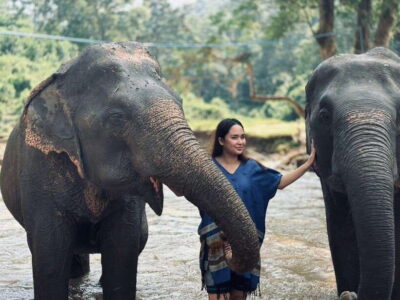
Elephant Sanctuary, Long Neck & Sticky Waterfall
Read our review →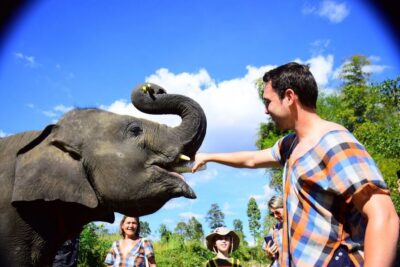
3-in-1: Doi Inthanon Tour, Elephant Sanctuary, and Trekking Trail
Read our review →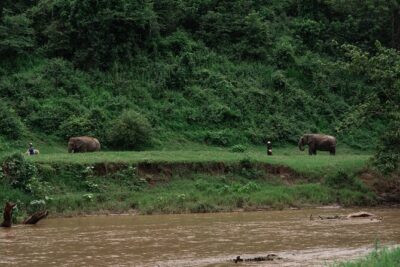
Chiang Mai Elephant Sanctuary, Bamboo Rafting and Waterfall Tour
Read our review →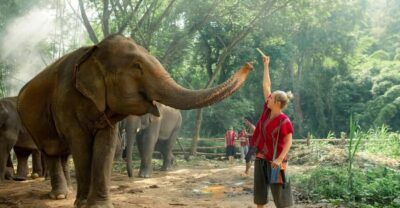
Browse the lists this tour appears in