
Reviewed · HISTORICAL TOURS
Chiang Mai: Historical and Culture Exploration Walking Tour
Chiang Mai’s old city makes the most sense on foot, where a short walk links royal monuments, working temples, ancient ruins, and the daily spiritual life of northern Thailand. This tour gives you that clear first look, beginning at the Three Kings Monument and ending at Wat Chedi Luang after about two and a half hours.
I like the small group of up to eight because it gives you room to ask questions. I also like that temple tickets, water, insurance, and an English or Thai-speaking guide are included. Guides such as Bim, Bin, Emmy, Farm, and Amy have been singled out for friendly, lively explanations. The main drawback is that the walk includes several stretches in the heat, and the advertised duration is confusingly shown as three minutes even though the planned tour lasts about two and a half hours.
Key points at a glance
- Start at the Three Kings Monument: Learn how King Mangrai founded Chiang Mai and established the Lanna Kingdom.
- See Wat Phra Singh’s northern Thai design: Visit the Lai Kam Assembly Hall, carved woodwork, murals, and a pagoda linked with the Year of the Dragon.
- Spend 45 minutes at Wat Chedi Luang: Examine the huge chedi ruins, temple grounds, and Buddha images.
- Hear about Lanna customs: The guide connects temple art and Buddhist practice with the everyday life of Chiang Mai residents.
- Choose a cooler time if available: A 5pm departure worked well for one participant, with softer light and less heat.
- Good value at $15: Entry fees, water, insurance, and guiding are included, though hotel transport is not.
Why this is a useful first look at Chiang Mai
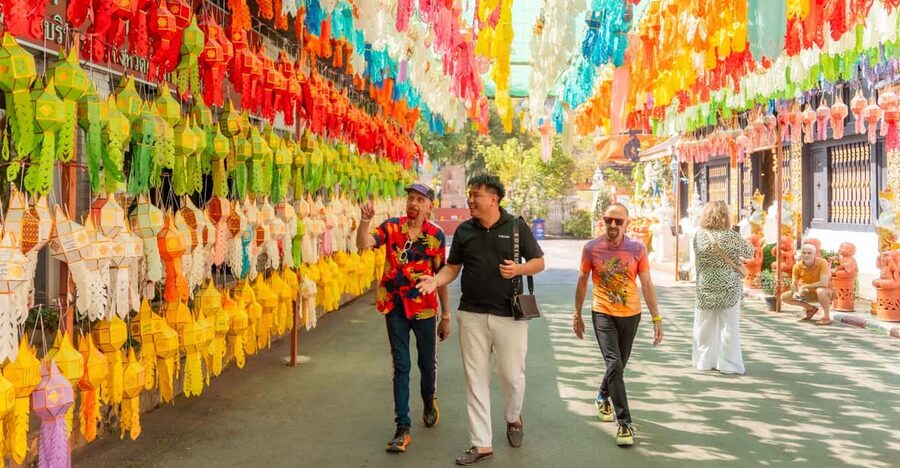
Chiang Mai is often introduced through cafés, night markets, cooking classes, and mountain trips. Those are all worthwhile, but the old city gives you the key to understanding the place. Its temples and monuments point back to the Lanna Kingdom, founded in the late 13th century by King Mangrai.
This walk keeps the focus on that beginning. You are not simply checking off two famous temples. You are learning why Buddhist buildings matter here, how Lanna design differs from central Thai styles, and how religious customs still shape local life.
The format suits a first or second day in Chiang Mai. You get enough history to put the rest of your visit into context, without spending an entire day in a museum or on a formal lecture. The route is also compact, with the guide leading you from one central site to another.
At $15 per person, the price is especially fair if you value explanation. You would pay more than that for some individual temple tours, while here the cost covers the guide, entrance tickets, water, and tour insurance. There is no hotel pickup, so you need to make your own way to the Three Kings Monument.
More Heritage Days in Chiang Mai:
- Chiang Mai: Historic Temples and City Guided Walking Tour
★ 4.7 · 650 reviews - Chiang Mai: Historic Old City Bike Tour – Morning or Night
★ 4.7 · 263 reviews - Chiang Mai: Historic Old City Bike Tour – Morning or Night
★ 5.0 · 202 reviews
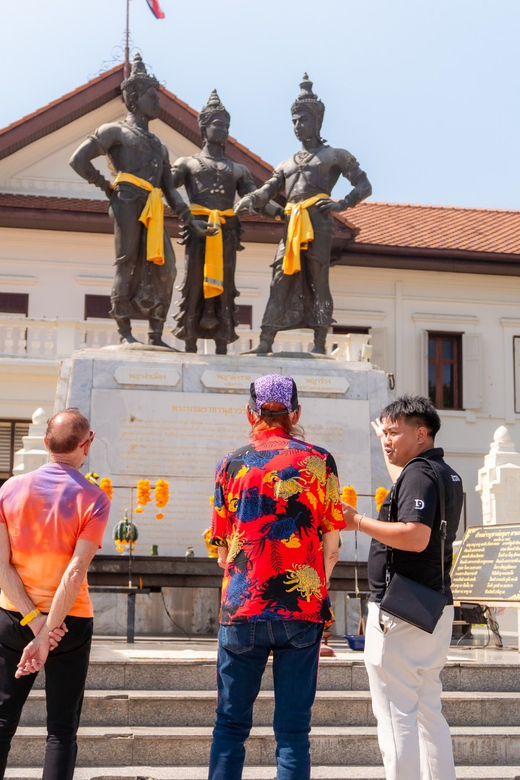
Starting with King Mangrai at the Three Kings Monument
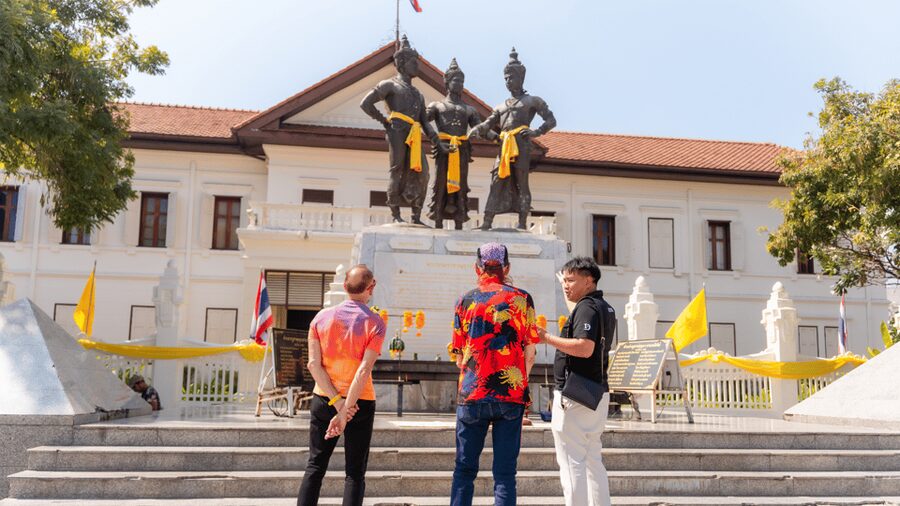
The tour begins at the Three Kings Monument, in the center of Chiang Mai’s old town. This is more than a convenient meeting point. It is the right place to begin because the monument connects Chiang Mai with the rulers who shaped the city and the Lanna Kingdom.
Your guide provides a safety briefing and introduces King Mangrai, the first king of Lanna and the founder of Chiang Mai. That short opening gives you a helpful timeline before you enter the temples.
I find this kind of start more useful than jumping straight into architecture. Without some political and religious background, a temple can look like a collection of gold, timber, and rooflines. With the story of Lanna in mind, those details begin to fit together.
The guide is also important here. Past guide names include Bim, Bin, Emmy, Farm, and Amy, with Bim receiving especially warm praise for her explanations, friendliness, and ability to make the walk personal. One person also appreciated learning from a guide with Lanna heritage. That can add a valuable local connection, although guide assignment may vary from date to date.
Walking to Wat Phra Singh
The route includes a walk of about 20 minutes to Wat Phra Singh. That distance is manageable for most people who are comfortable walking, but Chiang Mai’s heat can make even a short stretch feel longer. Wear proper walking shoes and bring sun protection.
The walk gives your guide time to point out the old city and continue the story beyond the main monuments. Since this is a small group, you can ask questions as they arise instead of waiting for a large group to catch up.
You should also expect normal city conditions rather than a silent heritage trail. The tour takes place in the active old town, so the appeal comes from seeing important religious places as part of the living city, not as isolated ruins.
Wat Phra Singh and the details worth seeing
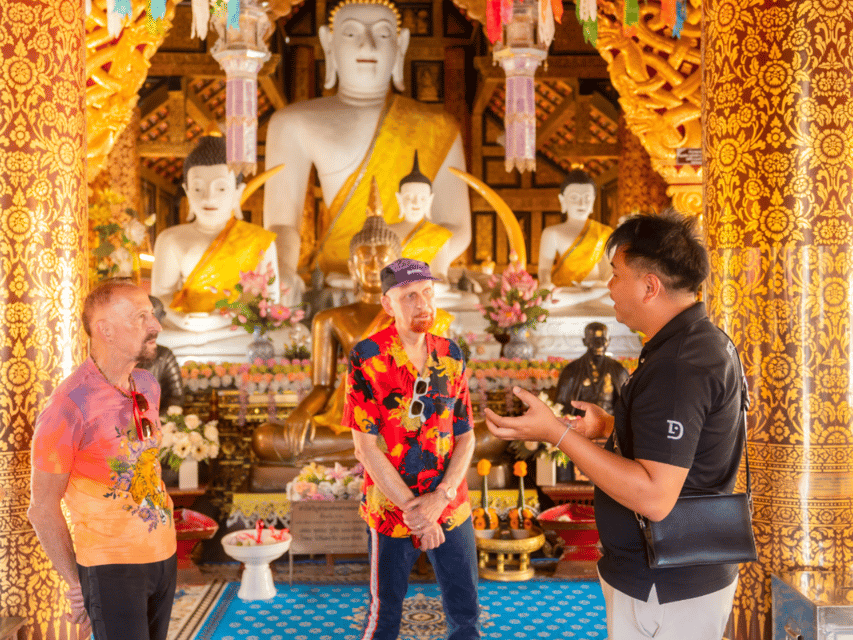
Wat Phra Singh is described as the second most revered temple in Chiang Mai. The visit lasts about 40 minutes, enough time for a guided look rather than a quick photograph outside.
The temple is known for northern Thai architecture, intricate woodcarving, and murals. Your guide explains what you are seeing and places those details within Lanna culture and Buddhist practice. If you have visited temples in Bangkok, you will find the northern style here a useful contrast.
The Lai Kam Assembly Hall is one of the main stops. Its carved timber features and northern Thai character show how much visual beauty can be packed into a relatively intimate building. Look closely rather than rushing through. The appeal is in the roof details, woodwork, and painted surfaces.
The pagoda is another point of interest. It is described as a Buddhist symbol for people born in the Year of the Dragon. That detail gives the building a personal meaning for some visitors and shows how religious sites can connect with astrology, family identity, and local custom.
Temple etiquette matters. The tour information asks you not to wear shorts or short skirts, so dress with covered knees and comfortable clothing. This is not just a packing issue. Proper clothing helps you enter religious spaces respectfully and avoids a last-minute problem at the gate.
More Walking Tours in Chiang Mai:
- Chiang Mai: 3 Hour Old City and Temples Guided Walking Tour
★ 4.6 · 1,568 reviews - Chiang Mai: Temple And City Walking Tour Part I
★ 4.7 · 244 reviews - Chiang Mai: Local Food and Markets Guided Walking Tour
★ 4.3 · 175 reviews - Chiang Mai Untouched Elephant: Nature Walk & Waterfall Trek
★ 4.7 · 77 reviews
The short walk to Wat Chedi Luang
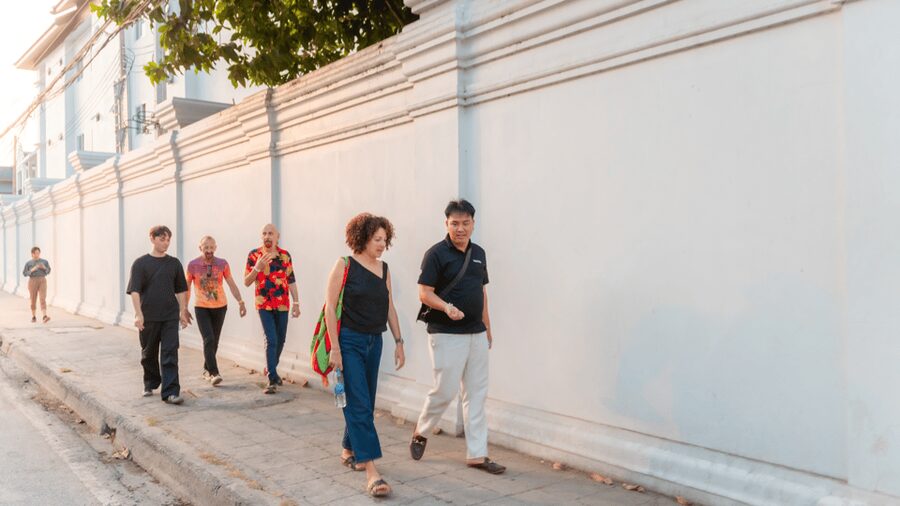
After Wat Phra Singh, the group walks about 15 minutes to Wat Chedi Luang. This second leg is shorter, but it comes after time spent standing and listening, so comfortable footwear matters.
The route ends at Wat Chedi Luang, which makes practical sense. You do not need to retrace your steps to the original meeting point, and you can continue exploring the old city from there on your own.
The tour does not include hotel transport, either at the beginning or end. Plan your route to the Three Kings Monument before departure, and remember that you will finish at Wat Chedi Luang rather than back at your hotel.
Wat Chedi Luang and its massive chedi
Wat Chedi Luang receives about 45 minutes, the longest stop on the tour. The site includes a 600-year-old temple complex and the remains of a large chedi originally built by King Mangrai.
The ruins give you a different view from Wat Phra Singh. There, the focus is on detailed northern design and painted interiors. At Wat Chedi Luang, the scale and damaged stonework make the passage of time easier to grasp. The chedi is impressive because of its size and age, even in its ruined form.
The guide also points out the Buddha inside and explains the site’s place in Chiang Mai’s spiritual life. You may have time to look around the temple grounds, take photographs, and listen without feeling pushed through every corner.
A particularly worthwhile part is the chance to hear talks by monks. The information does not specify the exact format or availability of every talk, so treat this as part of the planned opportunity rather than a guaranteed private discussion. Still, the possibility adds a human side to the visit. You are not only looking at old architecture. You are hearing how Buddhist practice continues in the present.
This is where the tour’s central idea comes together. The Lanna Kingdom is not presented as a finished chapter. The buildings, rituals, and spiritual customs still influence life in Chiang Mai.
What the guides add
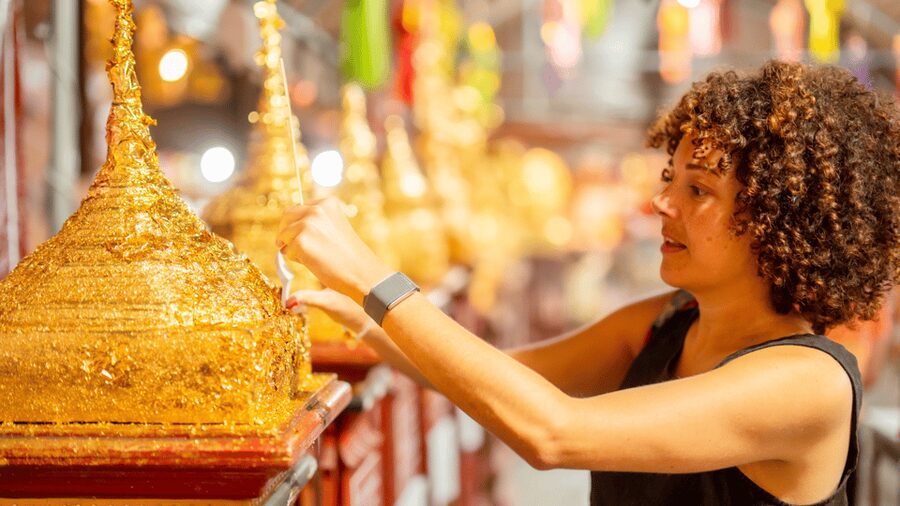
The strongest part of this tour is the guide-led interpretation. The temples are easy to visit independently, but it is harder to understand the symbols, murals, architectural choices, and rituals without help.
The guide languages are English and Thai. The English explanations have been praised for covering history, art, culture, tradition, and Buddhist rituals. That range matters because a temple visit can otherwise become a quick lesson in dates and names.
The small group also changes the pace. With no more than eight people, you can ask about a mural, a ritual, or a detail in the woodwork. One particularly small departure had only two people, allowing the guide to answer questions as they came up. Group size depends on bookings, of course, but the limit keeps the experience more personal than a large coach tour.
Some guides may also help with photographs. Bim was praised for taking good pictures, and that can be a nice extra for solo visitors or couples who want a few images together. It should not be treated as the main service, but it is useful when it happens.
The guide names listed by past participants include Bim, Bin, Emmy, Farm, and Amy. Several were described as friendly, courteous, enthusiastic, and fun. That repeated pattern suggests the human side of the tour is a major reason to book, though the exact guide is not guaranteed.
Timing, heat, clothing, and walking comfort
The planned visit lasts about 2.5 hours, including two walks and guided time at three main locations. The booking information also displays a three-minute duration, which is clearly inconsistent with the detailed schedule. Check the available start time and confirmation carefully before you book.
If a 5pm departure is available, it may be the most comfortable choice. One person found that timing ideal for avoiding the strongest heat and seeing the temples in golden-hour light. The tour does not promise that every departure will have the same conditions, but late afternoon is worth considering.
Bring comfortable shoes, a camera, and comfortable clothes. The route is not designed for wheelchair users, and the walking time plus temple surfaces may be difficult for anyone with limited mobility.
Dress for temple entry. Shorts and short skirts are not allowed, so choose longer trousers, a long skirt, or another outfit that covers the knees. Modest clothing also makes it easier to move from one temple to the next without needing to adjust your clothes.
Who gets the most from this $15 tour?
I would recommend this walk to a first-time visitor who wants a clear introduction to Chiang Mai’s old city. It works especially well if you want history and culture explained in plain language rather than simply taking photographs.
It is also a good match for solo visitors, couples, and small groups who like to ask questions. The group cap of eight gives you a better chance of speaking with the guide than a large city tour.
Families with older children may find the route useful if everyone can manage the walking and temple etiquette. The visit has enough variety to hold attention: a monument, a detailed temple, ancient ruins, Buddhist images, and discussion of local traditions.
I would think twice if you dislike walking in warm weather, need step-free access, or want hotel pickup. This is a central walking tour, not a private car excursion. It also focuses on the old city, so it will not take you to mountain temples or attractions outside the central area.
Booking details and overall value
Discova Thailand operates the experience. The $15 price includes an English or Thai-speaking guide, temple entrance tickets, water, and tour insurance. That makes it a low-cost way to get structured context at two major temples.
Cancellation is free up to 24 hours before the start for a full refund, and you can reserve now and pay later. Those terms are useful if your Chiang Mai plans may shift, though you should still confirm the start time because the duration information is not presented consistently.
The tour finishes at Wat Chedi Luang. That gives you a natural point from which to continue your own old-city visit, but you must arrange your onward transport yourself.
Should you book it?
Book this tour if you want an affordable, compact introduction to Chiang Mai’s royal past, Lanna culture, and Buddhist traditions. The best reasons are the small group, included temple tickets, and guides who explain more than dates and building names.
Choose a late afternoon start if available, wear temple-appropriate clothing, and arrive at the Three Kings Monument on time. Skip it if you need hotel transport, wheelchair access, or a ride between sites.
For $15, the tour offers solid value, especially at the start of a Chiang Mai visit. It helps you understand what you are seeing, and that makes later temple visits, markets, and old-city walks more rewarding.
FAQ
How long does the Chiang Mai walking tour last?
The detailed schedule describes a tour lasting about 2.5 hours. The booking information also shows a three-minute duration, so check the confirmed start details before booking.
Where does the tour begin?
The tour begins at the Three Kings Monument in Chiang Mai’s old city. The guide waits there, and you should arrive on time.
Where does the tour finish?
The tour finishes at Wat Chedi Luang. Hotel pickup and drop-off are not included.
Which temples are included?
The tour visits Wat Phra Singh and Wat Chedi Luang. It also begins with a guided visit to the Three Kings Monument.
What is included in the price?
The price includes an English or Thai-speaking guide, entrance tickets, water, and tour insurance. The listed price is $15 per person.
What should I wear and bring?
Wear comfortable clothes and shoes, and bring a camera. Shorts and short skirts are not allowed, so choose clothing that is suitable for temple visits.
Newly reviewed around Chiang Mai
- Workshop Making Herbal ball & herbal inhaler★ 4.3 · 3 reviews
- Chiang Mai Zipline White Water Rafting and Elephant Sanctuary★ 4.0 · 11 reviews
- Walk With Monks Collecting Alms(meeting point maybe change)★ 4.9 · 8 reviews
- Trek to a Jungle Waterfall★ 5.0 · 14 reviews
- Zipline+Sticky waterfall+Long Neck Village Private Tour★ 5.0 · 22 reviews
- Meditation Retreat and Self-Care in Nature★ 5.0 · 4 reviews
- Full Day Yoga, Meditation, and Thai Cultural Immersion in Chiang Mai★ 5.0 · 3 reviews
- Long Neck Village, White & Blue Temple, Black House Day Tour From Chiang Mai★ 4.0 · 14 reviews
Historical Tours, compared.
1 Day Sukhothai Historical Park from Chiang Mai Private Tour
Read our review →
Old Town History and Culture Walking Tour at Chiang Mai
Read our review →
Browse the lists this tour appears in