
Reviewed · CHIANG MAI MONK CHAT AND ALMS WALKS
Chiang Mai Temples Visit Walking Tour with Ex-Monk Guide Part 2
Chiang Mai’s best temple lessons often come from a person, not a plaque. On this 3.5-hour walk, ex-monk guide Katoon leads you from the city’s founding monument to four temples, explaining Buddhist practice, Lanna design, and his own years as a monk. The personal angle gives the visit more depth than a quick photo stop.
I like two things here: the small-group feel, with no more than 20 people, and the route’s variety. You see one of Chiang Mai’s oldest temples, a Tai Yai temple, an important Lanna site, and a wooden chanting hall. The main consideration is that this is a walking tour with no bottled water included, so bring your own and dress for warm weather.
Key points at a glance
- Katoon’s ex-monk background: Ask direct questions about Buddhist customs, temple life, and the difference between prayer and Buddhist practice.
- Four very different temples: Wat Chiang Man, Wat Pa Pao, Wat Chiang Yuen, and Wat Lok Molee each offer a distinct story and style.
- A useful starting point: The tour begins at Three Kings Monument, an easy landmark in central Chiang Mai.
- Good value for a focused afternoon: The price is $25.92 per person for about three and a half hours with a licensed English- or Chinese-speaking guide.
- Family-friendly pace: Katoon has been especially patient with families, including children as young as two and seven.
- Plan for the basics: Water is not included, all fees and taxes are listed separately, and the tour returns to its starting point.
Why an ex-monk changes the temple visit
Many temple walks give you architecture and dates, then move on. This one puts Buddhist practice at the center. Katoon can explain how people behave in a temple, how to show respect, and how Buddhist practice differs from the idea of prayer familiar to many Western visitors.
That distinction matters. You may see people bowing, making offerings, or sitting quietly and assume you already understand what is happening. A guide who has lived in a monastery can add the missing context without turning the visit into a lecture. Katoon is also described as patient with questions, which is useful when children or first-time visitors want to pause over basic points.
The guide is licensed by Thailand’s Tourism Authority, and tours are offered in English or Chinese. The maximum group size is 20, so this is not a private walk, but it should be more personal than a large coach excursion. The strongest reason to book is the chance to ask about monastic life directly, rather than simply hear a memorized account of temple history.
More Monk Chats and Alms Walks in Chiang Mai:
- Wat Phra That Doi Suthep spiritual Sunrise Tour with an Ex-monk
★ 5.0 · 798 reviews - Spiritual Sunrise Wat Doi Suthep, Pha Lat, Alms & Meditation
★ 4.9 · 674 reviews - Chiang Mai: Evening Chanting & Meditation
★ 4.5 · 69 reviews
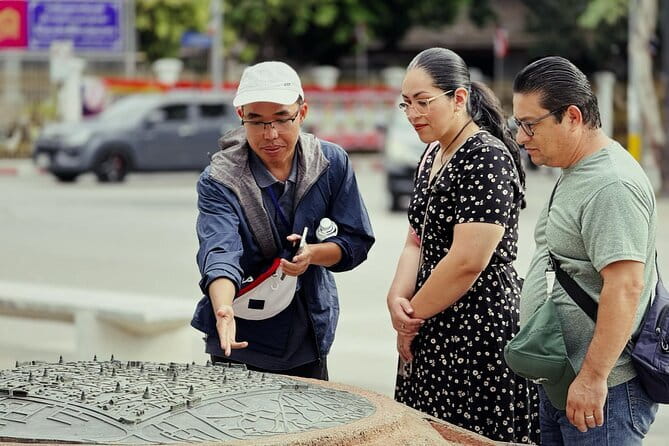
Meeting the group at Three Kings Monument
The walk begins at Three Kings Monument at 1:00 pm. The monument is on Prapokklao Road in the Si Phum area of Chiang Mai’s old city, and it serves as the introduction point for the tour.
Expect a short orientation of about 10 minutes before setting off. This is a sensible place to begin because you can get your bearings before entering the older temple quarter. The meeting point is near public transportation, and the tour finishes at the same location, so you do not need to arrange a separate pickup at the end.
The schedule is worth noting. A 1:00 pm start means you will be walking through the warm part of the afternoon. Wear light clothing that covers shoulders and knees for temple visits, use sun protection, and carry water. The operator does not provide bottled water, and all fees and taxes are not included in the listed price.
Wat Chiang Man, Chiang Mai’s first temple
The first major stop is Wat Chiang Man, visited for about 45 minutes. Built in 1296, it is regarded as the first temple constructed in Chiang Mai, giving the visit a direct link to the city’s beginnings.
This is a good place for Katoon to set out the basic story of Chiang Mai and the role temples played in the early city. You can expect time to look at the temple grounds and ask questions rather than simply walk in, take a picture, and leave. The longer stop also gives families a chance to settle into the pace.
Wat Chiang Man is likely to be the most important historical stop on the route, but that does not mean it will be the only memorable one. Its value comes from combining the city’s founding story with an explanation of how a working Buddhist temple functions today. Listen for the links between the building, local kings, monks, and ordinary worshippers.
Forty-five minutes is enough for a useful introduction, though it is not a full study of every building on the grounds. If you prefer a long, unhurried visit at each temple, the overall route may feel brisk. If you want a clear overview of several sites, the timing works well.
Wat Pa Pao and the Tai Yai story
The next stop, Wat Pa Pao, lasts about 30 minutes. It is identified as the first temple of the Ngiaw, or Tai Yai, community in Chiang Mai and was constructed in 1883 during the reign of Prachao Intawichayont. Lady Bua Lhai, described as a Tai Yai concubine of the king, was responsible for its construction.
This stop broadens the tour beyond the usual royal and city-founder narrative. Chiang Mai is not defined by one community or one form of Buddhist art. Wat Pa Pao gives Katoon a chance to explain Tai Yai connections and the way regional communities shaped the city’s religious life.
Thirty minutes is a short visit, but the site’s importance comes from its cultural identity. Pay attention to the details Katoon points out rather than trying to compare it only with the larger temples. The story here is about community, migration, and local religious life, not just age.
For families, this may be one of the easier stops because the explanation is compact. For architecture fans, the time may pass quickly. The tour is designed to show a range of places, not to provide a detailed architectural survey of each one.
More Temple Tours in Chiang Mai:
- Chiang Mai: Doi Suthep and Wat Umong Enchanting Evening Tour
★ 4.6 · 1,811 reviews - Chiang Mai: 3 Hour Old City and Temples Guided Walking Tour
★ 4.6 · 1,568 reviews - Chiang Mai: Doi Suthep, Wat Umong, and Pha Lat Sunrise Tour
★ 4.7 · 1,425 reviews - Chiang Mai: Wat Pha Lat & Wat Phra That Doi Suthep Tour
★ 4.8 · 1,207 reviews
Wat Chiang Yuen and an old Burmese-style gate
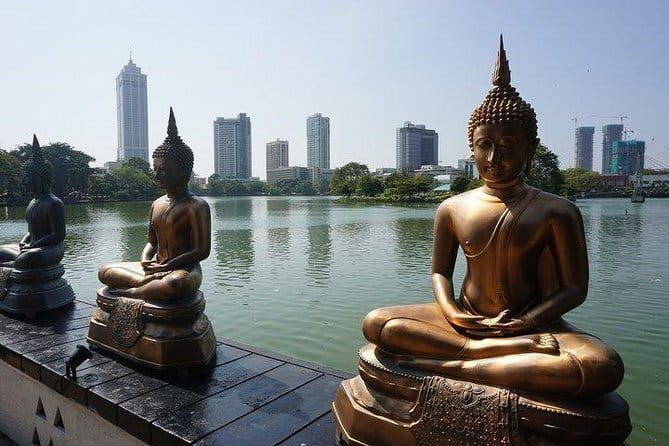
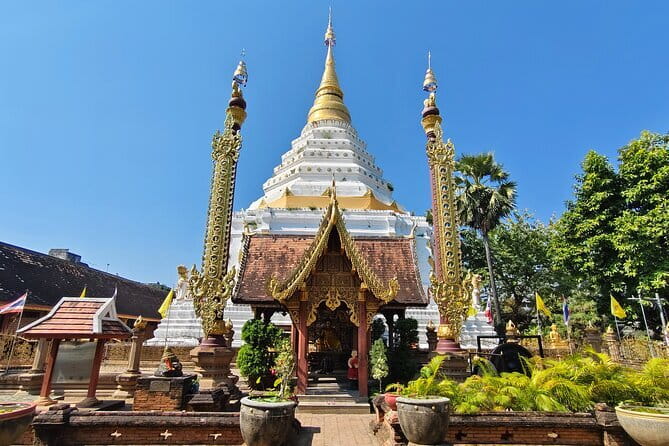
Wat Chiang Yuen receives another 30-minute visit. The temple is known for its ancient Burmese colonial gate and attractive pavilion, as well as its role in the Lanna kingdom.
This is a useful change of visual tone after Wat Chiang Man and Wat Pa Pao. The gate and pavilion give you details to look at while Katoon explains the temple’s place in Chiang Mai’s past. The site also helps show how Burmese influence and Lanna traditions appear together in northern Thai religious buildings.
The word Lanna refers to the old northern Thai kingdom and cultural region. You do not need prior knowledge to enjoy this stop, since the guide’s job is to connect the name with the buildings and local history in front of you. Ask about the Burmese influence if that subject interests you, as the ex-monk perspective adds a human side to what can otherwise seem like a list of styles.
Again, the half-hour allocation keeps the walk moving. You will have time to understand the main points, but not necessarily to inspect every corner at leisure. That tradeoff is fair for a tour that includes four temples in one afternoon.
Wat Lok Molee and traditional Lanna design
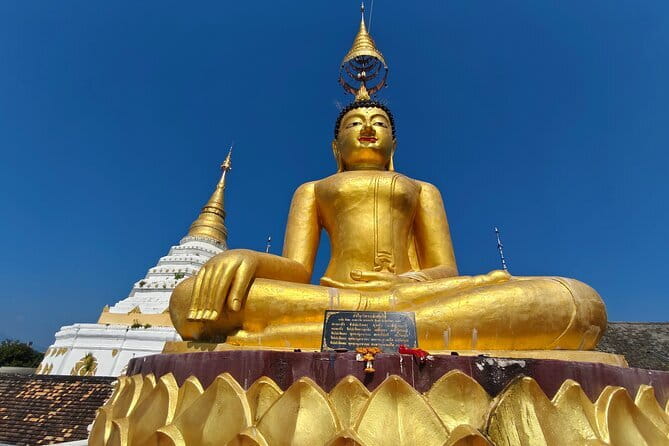
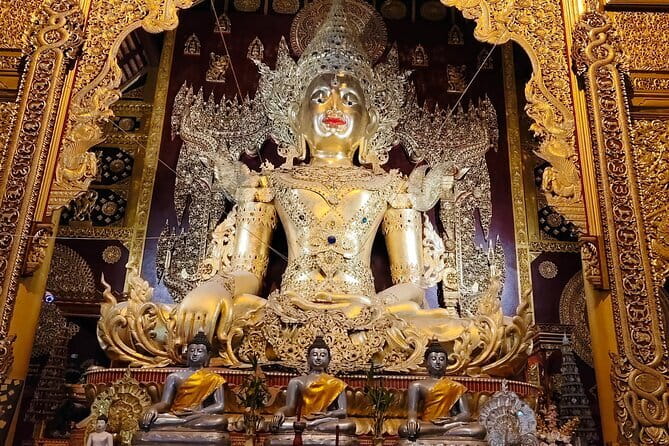
The final temple is Wat Lok Molee, where the tour spends about 45 minutes. Its wooden chanting hall is noted for traditional Lanna architecture, making this the best stop for visitors who want to focus on form, materials, and the atmosphere of a religious building.
The longer visit gives you time to slow down near the end of the route. A wooden chanting hall can tell you plenty about the practical side of temple life: where monks gather, how sound and ceremony shape the space, and why northern Thai design feels different from the grander stone or stucco structures you may see elsewhere.
This is also a good point to return to questions about Buddhism. By now, you have seen several types of temple settings, so explanations about chanting, respect, and daily practice have a physical context. You are not only hearing abstract ideas. You can connect them to the halls, gates, pavilions, and grounds visited during the afternoon.
The final stop also gives the route a pleasing variety. Wat Chiang Man provides the city’s early story, Wat Pa Pao brings in Tai Yai culture, Wat Chiang Yuen points toward Burmese and Lanna connections, and Wat Lok Molee finishes with woodwork and temple use.
The value of questions, especially with children
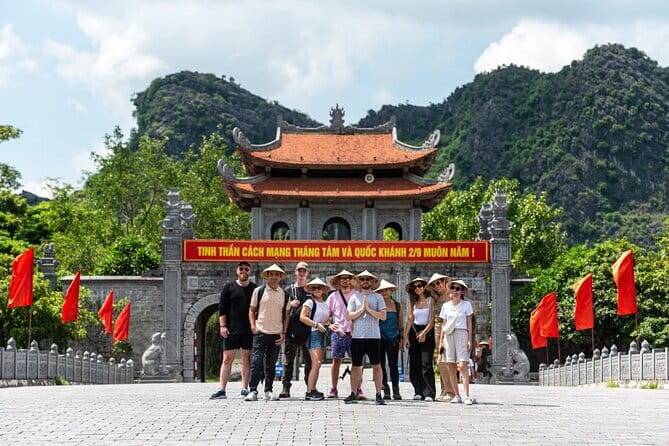
The most praised part of this experience is Katoon’s approach to questions. He is described as friendly, caring, and patient, and that matters more than a polished speech on a temple walk. You can ask about Buddhism, temple customs, or his former monastic life without feeling that you are interrupting the program.
One family included two adults and three children, while another included children aged seven and two. The important point is not that every child will love a three-and-a-half-hour walk. It is that the guide has handled family groups patiently and has encouraged questions instead of expecting children to remain silent observers.
If you are traveling with children, set expectations before you start. This is a cultural tour, not a playground visit, and some explanations will be aimed at adults. Still, the chance to ask simple questions can help younger visitors connect with what they see. Katoon’s explanation of how people pray, and why that word is not quite right for Buddhist practice, is the kind of detail that can hold a child’s attention.
Adults also benefit from the open format. You can ask about the guide’s former life as a monk, but remember that the value of the conversation depends on what you want to know. If personal stories and religious practice interest you, this is a strong match. If you want only a fast list of dates and photo locations, a self-guided route may be enough.
What the $25.92 price gives you
At $25.92 per person, the cost is reasonable for a licensed guide and roughly three and a half hours of focused walking. You are paying primarily for interpretation: someone who can explain the four sites, answer questions, and connect Buddhist ideas with local buildings and customs.
The value is strongest if you would otherwise enter the temples with little context. Admission is listed as free at each stop, so the tour fee is not covering costly entrance tickets. It is buying structure, language help, local explanation, and the opportunity to ask an ex-monk about matters that are difficult to understand from signs alone.
There are a few extra costs and practical points. All fees and taxes are listed as not included, and bottled water is not provided. The tour also requires you to make your own way to Three Kings Monument and back if you are staying elsewhere. Since the tour is near public transportation and returns to the start, this is manageable, but include it in your day’s plan.
A group of up to 20 people keeps the price below many private tours, though it means you may not have constant one-to-one time with Katoon. If you want the most personal discussion possible, ask questions when the group gathers between stops.
Pace, clothing, weather, and group size
The tour lasts about 3 hours and 30 minutes and takes place on foot. There is no listed hotel pickup, so arrive at Three Kings Monument before the 1:00 pm start. A mobile ticket is accepted, and booking confirmation is sent at the time of booking.
Temple etiquette is part of the experience, not an optional extra. Wear clothing that allows you to enter religious sites respectfully, and expect to remove shoes where required by temple practice. The supplied details do not specify a dress code or shoe policy for each stop, so follow Katoon’s instructions on the day.
The experience requires good weather. If poor weather cancels the tour, you are offered another date or a full refund. You can cancel for a full refund up to 24 hours before the start time. Changes or cancellations made inside that 24-hour window are not accepted for a refund.
Most people can take part, but the route is still a walking activity lasting several hours. If you have mobility concerns, ask the operator before booking, since the available information does not describe the walking surface, seating, or step-free access at each temple.
Who should book this Chiang Mai temple walk?
I would choose this tour if you want Buddhist ideas explained in plain language and prefer a human guide to a list of monuments. It is especially suited to first-time visitors, families willing to walk, and anyone curious about monastic life. The four-stop route also works well for people who want variety instead of spending an entire afternoon at one large temple.
It is less suited to someone seeking a private tour, extensive time for photography, or a relaxed morning schedule. The afternoon start is fixed at 1:00 pm, and the route has a clear timetable. You should also look elsewhere if you need hotel pickup, included drinks, or a fully specified accessibility plan.
Should you book it?
Book this walking tour if the idea of asking an ex-monk direct questions appeals to you. Katoon’s patient style, the family-friendly approach, and the range of temples give the afternoon a clear purpose: you learn how Buddhism connects to Chiang Mai’s buildings, communities, and daily customs.
Skip it if you want only famous photo stops or dislike walking in afternoon heat. For the price, though, it offers a practical introduction to Chiang Mai’s temples and a more personal look at Buddhism than a standard sightseeing circuit.
FAQ
Where does the tour begin?
The tour begins at Three Kings Monument on Prapokklao Road in Chiang Mai’s Si Phum area.
What time does the tour start?
The scheduled start time is 1:00 pm.
How long does the tour last?
The experience lasts approximately 3 hours and 30 minutes.
Where does the tour finish?
The tour ends back at Three Kings Monument, the starting point.
Which temples are included?
The route includes Wat Chiang Man, Wat Pa Pao, Wat Chiang Yuen, and Wat Lok Molee.
Who leads the tour?
The tour is led by an English- or Chinese-speaking guide with a Thailand Tourism Authority license. The guide featured in the experience is Katoon, an ex-monk.
Is bottled water included?
No. Bottled water is not included, so bring your own.
Can I cancel for a full refund?
Yes. You can cancel up to 24 hours before the experience start time for a full refund. Poor weather cancellations offer a different date or a full refund.
More Walking Tours in Chiang Mai
- Chiang Mai: Historic Temples and City Guided Walking Tour
★ 4.7 · 650 reviews - Chiang Mai: Temple And City Walking Tour Part I
★ 4.7 · 244 reviews - Chiang Mai: Local Food and Markets Guided Walking Tour
★ 4.3 · 175 reviews - Chiang Mai Untouched Elephant: Nature Walk & Waterfall Trek
★ 4.7 · 77 reviews
Newly reviewed around Chiang Mai
- Workshop Making Herbal ball & herbal inhaler★ 4.3 · 3 reviews
- Chiang Mai Zipline White Water Rafting and Elephant Sanctuary★ 4.0 · 11 reviews
- Walk With Monks Collecting Alms(meeting point maybe change)★ 4.9 · 8 reviews
- Trek to a Jungle Waterfall★ 5.0 · 14 reviews
- Zipline+Sticky waterfall+Long Neck Village Private Tour★ 5.0 · 22 reviews
- Meditation Retreat and Self-Care in Nature★ 5.0 · 4 reviews
- Full Day Yoga, Meditation, and Thai Cultural Immersion in Chiang Mai★ 5.0 · 3 reviews
- Long Neck Village, White & Blue Temple, Black House Day Tour From Chiang Mai★ 4.0 · 14 reviews
Chiang Mai Monk Chat and Alms Walks, compared.
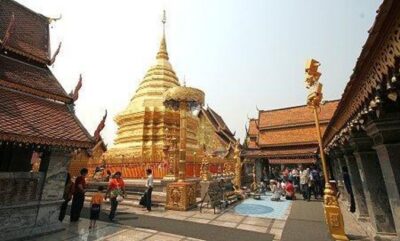
Wat Phra That Doi Suthep spiritual Sunrise Tour with an Ex-monk
Read our review →
Spiritual Sunrise Wat Doi Suthep, Pha Lat, Alms & Meditation
Read our review →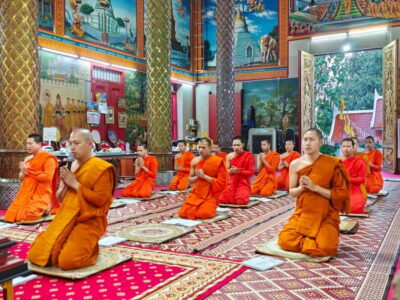
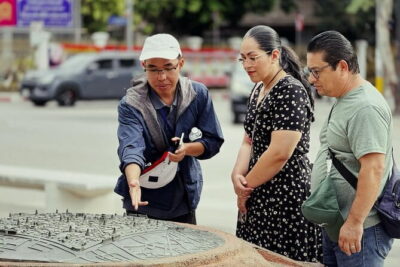
Chiang Mai Temples Visit Walking Tour with Ex-Monk Guide Part 1
Read our review →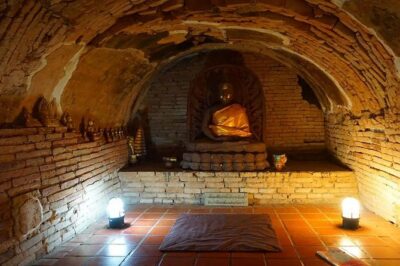
Half Day Umong Temple and Monk Chanting at Doi Suthep Temple ( Private tour)
Read our review →
Half Day, Monk Chat Meditation Retreat on Waterfall Temple, Chiang Mai, Thailand
Read our review →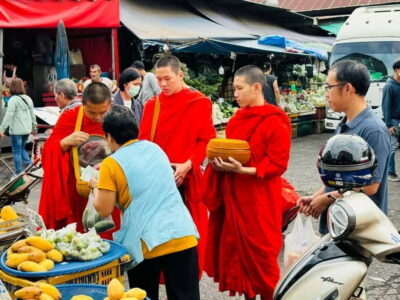
Walk With Monks Collecting Alms(meeting point maybe change)
Read our review →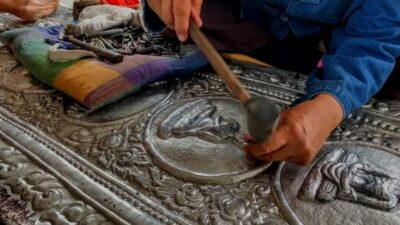
Browse the lists this tour appears in