
Reviewed · CHIANG MAI TEMPLE TOURS
Chiang Mai: Temple And City Walking Tour Part I
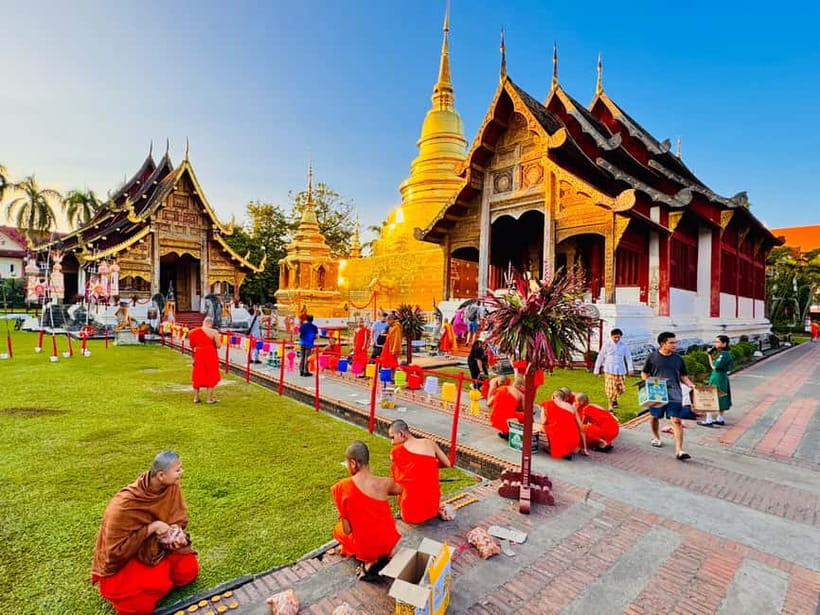
The best part of this Chiang Mai walking tour is not simply seeing three famous temples. It is getting the symbols, rituals, and stories explained as you go. Guides such as Son, Katoon, Eddie, and Big have shared personal insight into Buddhism, and some have former-monastic experience.
I like the early 8:20 am start, which helps you avoid the worst heat, and I like the compact route through the old city. At $15, the tour gives you a useful cultural footing before you explore more temples on your own. The main drawback is that you pay temple entry fees separately, and four hours can mean a lot of standing.
Key points at a glance
- Former-monastic insight: Some guides, including Son and Katoon, have direct experience of monastic life and can explain Buddhist practice beyond the usual sightseeing script.
- Three major old-city temples: Visit Wat Chedi Luang, Wat Phan Tao, and Wat Phra Singh on foot, with no hotel transport included.
- Early morning timing: The 8:20 am departure is a smart choice in Chiang Mai, especially during hotter months.
- A question-friendly format: Guides are praised for patient answers about Buddha images, prayer, meditation, temple customs, and Chiang Mai’s past.
- Low headline price: The tour costs $15, with 90 THB in additional entrance fees for Wat Chedi Luang and Wat Phra Singh.
- Dress for temple rules: Avoid shorts, short skirts, sleeveless shirts, and other clothing that may not meet temple standards.
Why this four-hour temple walk works
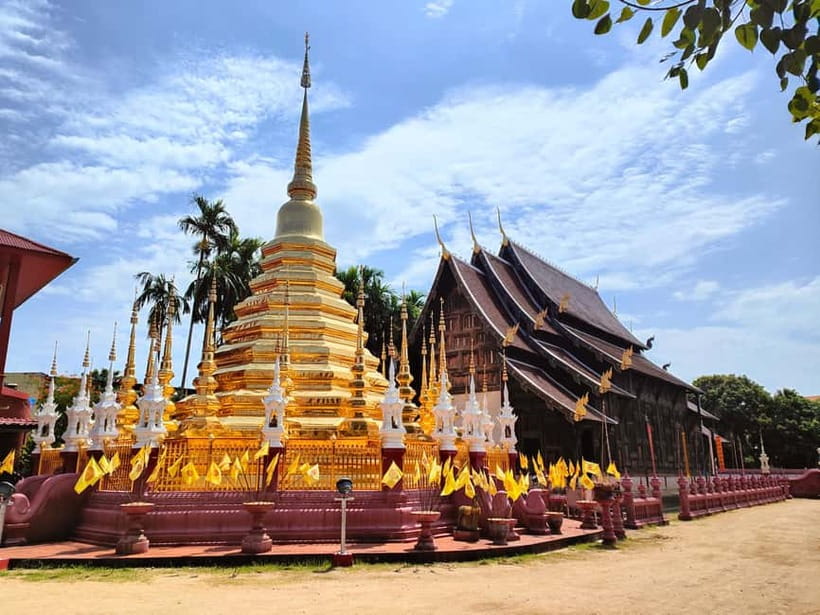
Chiang Mai has no shortage of temples. That is both its charm and its trap. After your third or fourth golden roof, details can blur together unless someone explains why a building is shaped a certain way, what a Buddha’s hand position means, or how a temple fits into northern Thai history.
This tour gives you that structure. You visit three of the old city’s best-known temples in a logical walking route, beginning at Wat Chedi Luang and ending at Wat Phra Singh. The route is easy to understand, but the cultural explanations give it more weight than a simple photo stop.
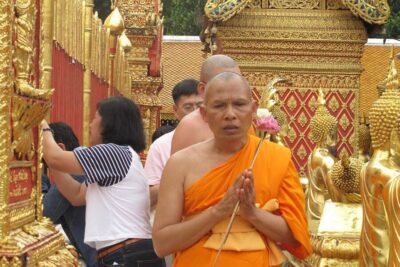
The guides appear to vary by date. Son is praised for his clear explanations and personal Buddhist background. Katoon has been described as a former monk who patiently discusses meditation and monastic life. Eddie and Big have also received strong praise for their history knowledge, friendly manner, and ability to take photographs.
That variation matters. You are booking the route and the guiding service, not one guaranteed individual guide. Still, the repeated pattern is clear: the strongest part of the experience is the human explanation, especially for visitors who want to understand Thai Buddhism rather than simply enter attractive buildings.
The pace is generally relaxed. You should have time to look, ask questions, and take photographs rather than being pushed from one stop to the next. It is not a strenuous hike, but you will spend much of the morning on your feet, sometimes standing while the guide talks.
More Temple Tours in Chiang Mai:
- Chiang Mai: Doi Suthep and Wat Umong Enchanting Evening Tour
★ 4.6 · 1,811 reviews - Chiang Mai: 3 Hour Old City and Temples Guided Walking Tour
★ 4.6 · 1,568 reviews - Chiang Mai: Doi Suthep, Wat Umong, and Pha Lat Sunrise Tour
★ 4.7 · 1,425 reviews
Starting at Wat Chedi Luang
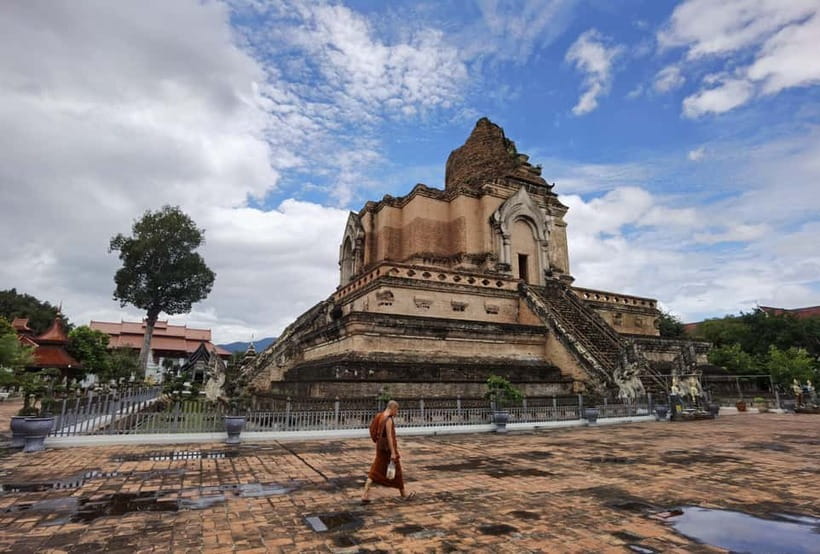
Wat Chedi Luang is the powerful opening stop. Its great brick chedi was built in the 14th century and was badly damaged by an earthquake in 1545. Even in ruined form, it gives you a strong sense of the scale and importance of old Chiang Mai.
The chedi is the reason to come here. Its weathered structure has a weight that polished modern buildings cannot match. Look closely at the surviving forms and the temple’s setting, then listen as your guide connects the monument to the city’s earlier kingdoms and Buddhist traditions.
This is where a guide can make the biggest difference. Without context, you see an impressive ruin. With explanation, you begin to understand why stupas matter, how sacred sites function, and why elephants and other decorative details appear in temple design.
Expect a mix of walking, listening, photography, and entering religious buildings. You may need to remove your shoes before going inside. That is normal in Thai temples, but it can become tiresome if you are wearing difficult footwear. One visitor specifically appreciated a guide’s patience while dealing with boots, so choose comfortable shoes that are easy to remove and put back on.
Entrance to Wat Chedi Luang costs 50 THB and is not included in the $15 tour price. That is a small extra charge, but it is worth knowing before you arrive. Bring modest clothing and keep shoulders and knees covered.
The quiet details of Wat Phan Tao
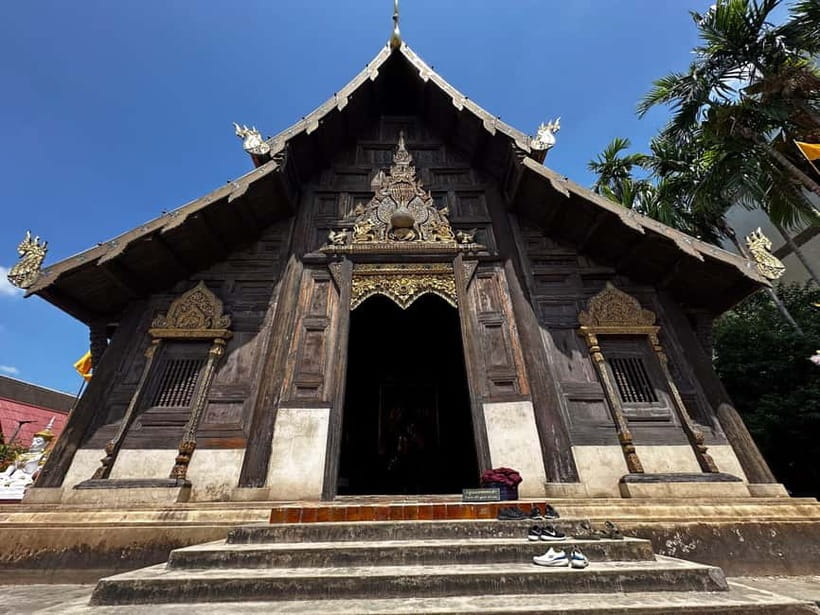
Wat Phan Tao is a short walk from Wat Chedi Luang and offers a different mood. It is smaller, and its appeal comes from its Lanna-style architecture and decorative details rather than the sheer size of a ruined stupa.
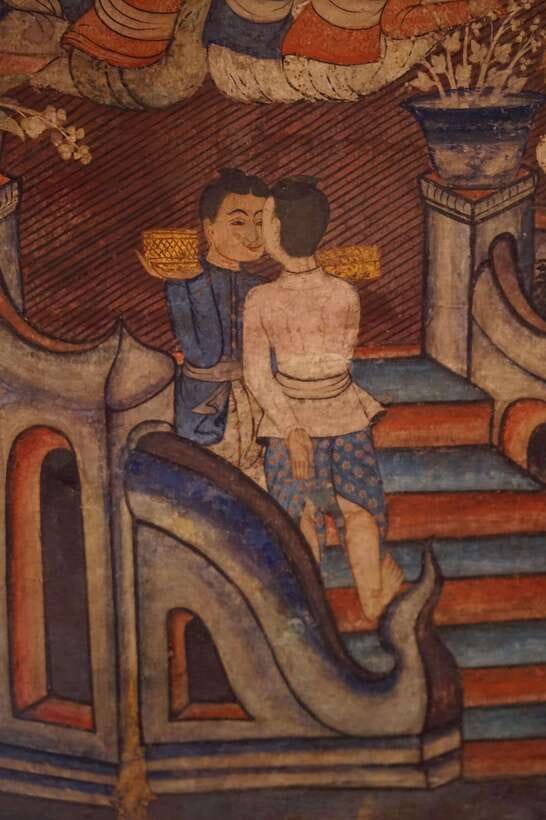
The temple is known for murals showing scenes from the Buddha’s life. This is a good place to slow down and look at the storytelling in the artwork. Your guide can help you read the scenes and connect them with Buddhist teachings, instead of leaving you to guess at the meaning.
The stop also helps keep the tour balanced. Wat Chedi Luang gives you scale and history. Wat Phan Tao gives you atmosphere, craftsmanship, and a closer look at northern Thai design.
This is one of the places where questions are especially useful. Ask about the difference between a temple building and an ordination hall, or about how Buddhist images and stories are used in daily practice. The tour’s guides have been praised for handling detailed questions, including the meaning of Buddha poses and the way people pray.
You might also find that the exact experience varies with the group and guide. Smaller groups have sometimes allowed extra discussion or an additional temple-related stop. Those additions should be treated as a bonus, not a guaranteed part of the published route.
Wat Phra Singh and the Lion Buddha
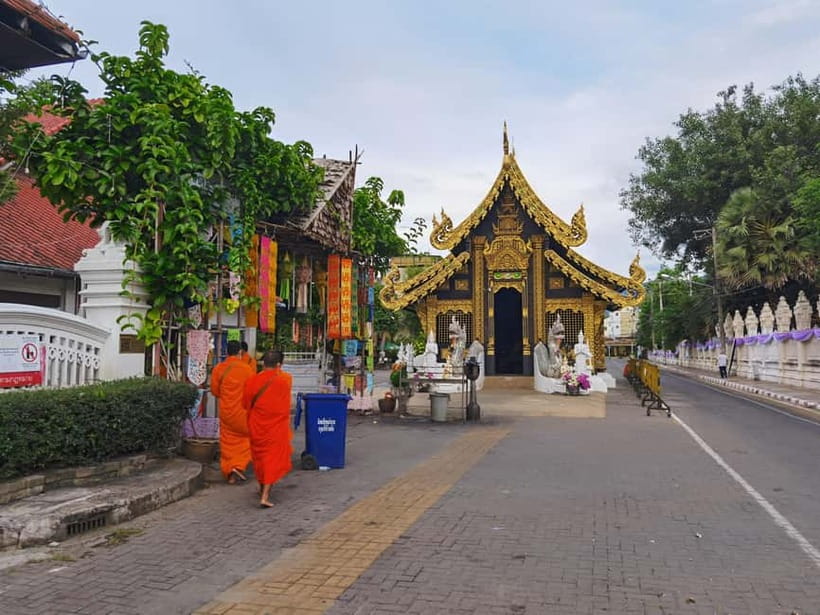
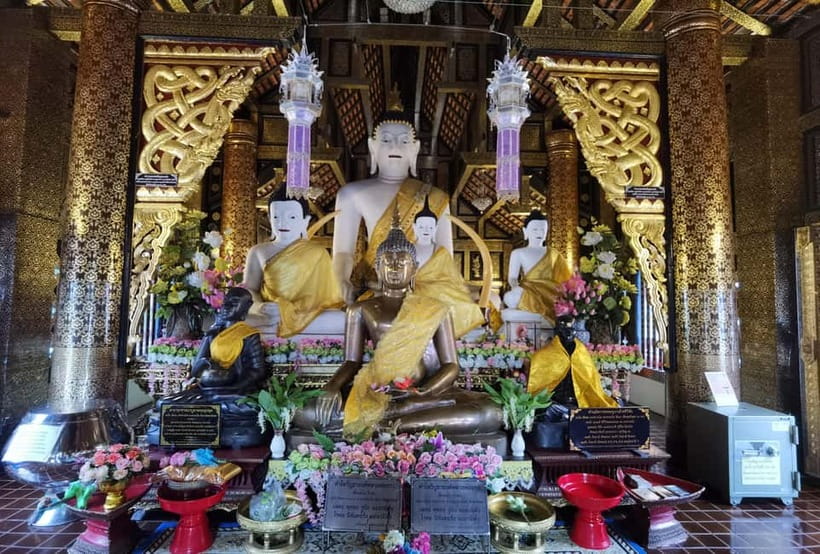
Wat Phra Singh is the final major stop and one of Chiang Mai’s most important temples. It is home to the Phra Singh Buddha, a highly respected image, and the complex is known for its architecture and grounds.
This is a fitting end because the temple brings together many themes from the morning: royal and religious history, Lanna design, Buddhist devotion, and the continuing role of temples in local life. Your guide can point out details that are easy to miss if you are only looking for the main statue.
Wat Phra Singh requires a separate 40 THB entrance fee. Add that to the 50 THB for Wat Chedi Luang and your total additional temple cost is 90 THB. At the current tour price of $15, the experience remains inexpensive for a four-hour guided visit, but the advertised price is not the complete out-of-pocket cost.
As at the other temples, dress and behavior matter. Shorts, short skirts, sleeveless shirts, smoking, alcohol, drugs, climbing, drones, and nudity are not allowed. You should treat the grounds as active religious places, not just historic attractions.
More Walking Tours in Chiang Mai:
- Chiang Mai: Historic Temples and City Guided Walking Tour
★ 4.7 · 650 reviews - Chiang Mai: Local Food and Markets Guided Walking Tour
★ 4.3 · 175 reviews - Chiang Mai Untouched Elephant: Nature Walk & Waterfall Trek
★ 4.7 · 77 reviews - Chiang Mai: Historical and Culture Exploration Walking Tour
★ 4.6 · 40 reviews
What the Buddhist teaching adds
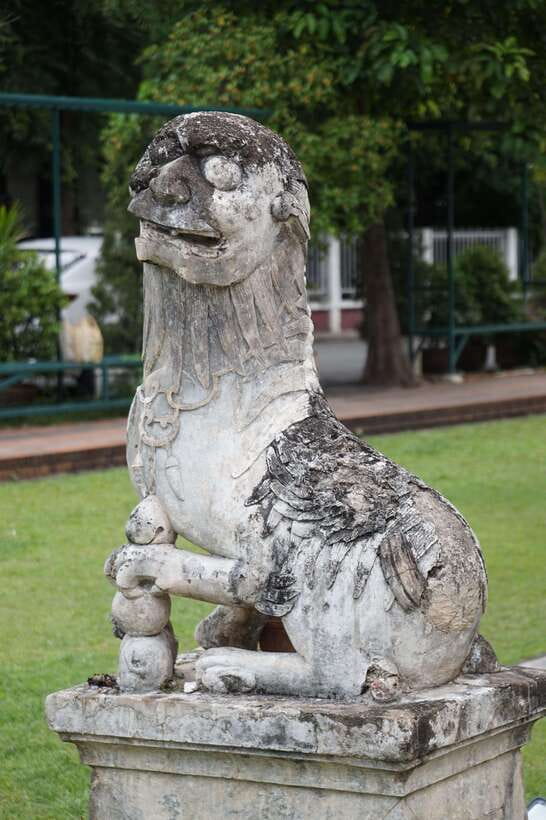
The most praised feature of this tour is the Buddhist instruction. Several guides have explained their own experience as former monks, which gives conversations about meditation, prayer, and monastic life a personal angle.
That does not mean the tour is a formal religious lesson. It is a walking tour with time for questions. You may learn how to pray, what different Buddha positions represent, or why particular objects appear in temple buildings. Some small groups have also included a short meditation, a monk’s blessing, or a ritual involving a sacred object, but these extras are not listed as guaranteed parts of every departure.
The meditation element can be especially useful because it changes the rhythm of the morning. Instead of treating the temples as a series of photo backgrounds, you get a brief chance to notice how a Buddhist practice feels. Keep your expectations modest, since the exact format depends on the guide and group.
I also like that the tour makes room for basic questions. You do not need to arrive with prior knowledge of Buddhism. If you are curious about why people bow, how someone becomes a monk, or what happens inside an ordination hall, this is the kind of setting where asking is encouraged.
One practical warning: a few people found that a guide spoke too quietly. This was manageable in a small group, but it could matter in a larger one or in a noisy temple courtyard. Stay close enough to hear, and politely ask the guide to speak up if needed.
Walking, heat, and the four-hour pace
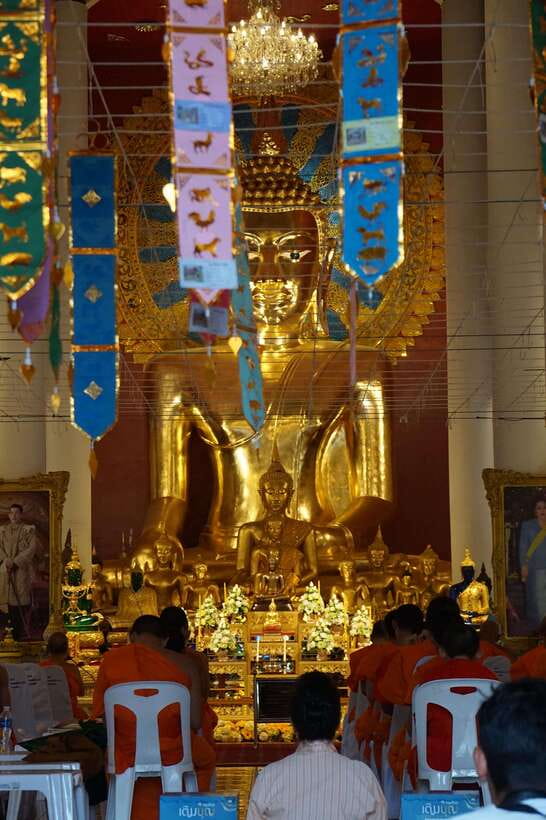
The walking itself is manageable, with the main temples close together in Chiang Mai’s old city. The bigger challenge is not distance but heat, sun, and standing. The early start is one of the tour’s smartest features, particularly from late morning onward when Chiang Mai can feel much hotter.
You should wear light, respectful clothing, bring water, and use sun protection. The tour does not list refreshments, so do not count on an included drink or snack. Some guides have offered chances for coffee or a restroom stop, but those should be understood as helpful judgment calls rather than fixed inclusions.
April heat may be hard for visitors who are not used to hot climates. If that describes you, the early departure matters even more. A relaxed pace helps, but no walking tour can remove the heat entirely.
The tour is not suited to everyone. It is specifically listed as unsuitable for pregnant women, babies under one year, and people over 95. More generally, you should be comfortable walking between sites and standing during explanations. The tour is not described as wheelchair accessible, so anyone needing specific access arrangements should confirm before booking.
Is $15 good value?
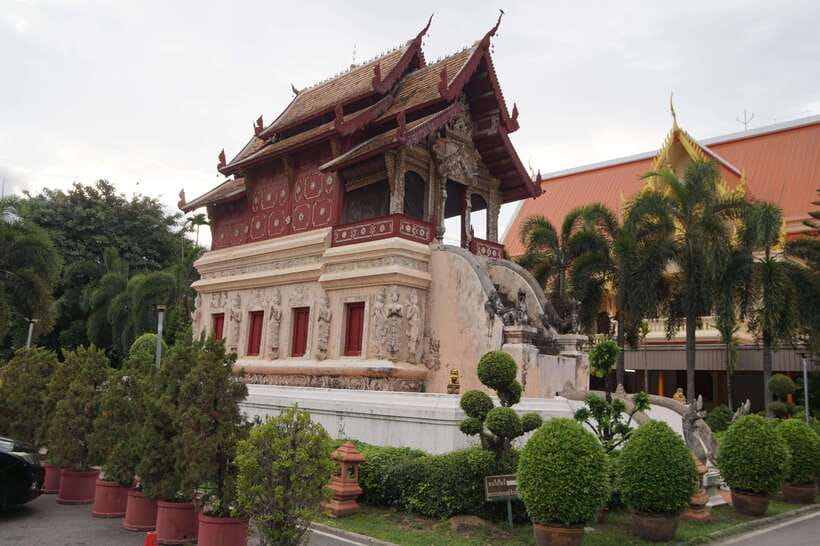
Yes, if you want explanation rather than just entry. The $15 price includes a live guide and the walking tour, but not hotel pickup, hotel drop-off, or the two listed temple entry fees. With 90 THB in additional entrance costs, you still receive four hours of guided sightseeing for a modest total.
The value is strongest when you ask questions. If you simply want to photograph the temples and move on, you can visit these sites independently. The point of paying is to understand what you are seeing.
The guide’s background can also add unusual value. Someone such as Son or Katoon, with personal experience of monastic life, can offer insight that a standard architectural tour may not provide. Eddie and Big have also been praised for making the history easy to follow and for helping with photographs.
The route is also efficient for a first morning in Chiang Mai. You cover three important old-city temples without arranging transport between them. Afterward, you are better prepared to explore other temples on your own because you will have learned the basic visual and religious vocabulary.
Free cancellation up to 24 hours before the start and the option to reserve now and pay later make the booking less rigid. Still, check the available start time when you book, since the stated departure is 8:20 am and availability can vary.
Who should book this experience?
I would choose this tour if you are visiting Chiang Mai for the first time, care about culture, or find temple visits more rewarding when someone explains the details. It is also a good fit if you want a short morning activity rather than a full-day excursion outside the city.
It suits curious adults who are happy to walk, listen, and ask questions. A small group can be especially valuable because the tour has a discussion-based feel. Solo visitors may also appreciate the built-in company and the chance to have someone take photographs.
I would think twice if you dislike guided commentary, have difficulty standing for long periods, or want a completely private experience with a guaranteed named guide. The route is focused on major city temples, not remote mountain sites or a broad tour of Chiang Mai Province.
Also remember that the temple stops are religious sites. You need to dress respectfully and follow the rules. This is not a casual sightseeing stroll where you can wear beach clothes and wander anywhere.
Should you book the Chiang Mai Temple and City Walking Tour Part I?
Book it if you want the meaning behind the buildings. The three temples are worthwhile on their own, but the tour becomes much better when a guide explains the chedi at Wat Chedi Luang, the Lanna details at Wat Phan Tao, and the Phra Singh Buddha at Wat Phra Singh.
The strongest reason to go is the chance to learn from guides with real Buddhist and local experience. The main cautions are the extra entrance fees, the amount of standing, the heat, and the fact that the named guide may vary.
For $15, this is a practical, high-value introduction to Chiang Mai’s old city and Buddhist culture. Wear suitable clothing, start with water, stay near the guide, and bring questions. You will get far more from the morning if you treat it as a cultural lesson with temples attached, not simply a three-stop photo walk.
FAQ
What temples are included in the tour?
The tour visits Wat Chedi Luang, Wat Phan Tao, and Wat Phra Singh in Chiang Mai’s old city.
What time does the tour start?
The stated start time is 8:20 am. You should check availability for the exact departure when booking.
How long does the tour last?
The walking tour lasts four hours.
Is hotel pickup included?
No. Hotel pickup and drop-off are not included.
Are temple entrance fees included?
No. Wat Chedi Luang costs 50 THB and Wat Phra Singh costs 40 THB. Wat Phan Tao does not have a listed entrance fee in the provided information.
What languages does the guide speak?
Live guides are available in Thai and English.
What should I wear?
Do not wear shorts, short skirts, or sleeveless shirts. Modest clothing is required at the temples.
Is the tour suitable for children and older adults?
It is listed as unsuitable for babies under one year and people over 95. The tour also involves walking and standing for much of four hours.
Can I cancel the booking?
Yes. You can cancel up to 24 hours in advance for a full refund. A reserve-now-and-pay-later option is also available.
Newly reviewed around Chiang Mai
- Workshop Making Herbal ball & herbal inhaler★ 4.3 · 3 reviews
- Chiang Mai Zipline White Water Rafting and Elephant Sanctuary★ 4.0 · 11 reviews
- Walk With Monks Collecting Alms(meeting point maybe change)★ 4.9 · 8 reviews
- Trek to a Jungle Waterfall★ 5.0 · 14 reviews
- Zipline+Sticky waterfall+Long Neck Village Private Tour★ 5.0 · 22 reviews
- Meditation Retreat and Self-Care in Nature★ 5.0 · 4 reviews
- Full Day Yoga, Meditation, and Thai Cultural Immersion in Chiang Mai★ 5.0 · 3 reviews
- Long Neck Village, White & Blue Temple, Black House Day Tour From Chiang Mai★ 4.0 · 14 reviews
Chiang Mai Temple Tours, compared.
Doi Suthep and Wat Umong Enchanting Evening Tour
Read our review →
3 Hour Old City and Temples Guided Walking Tour
Read our review →
Doi Suthep, Wat Umong, and Pha Lat Sunrise Tour
Read our review →
Wat Phra That Doi Suthep spiritual Sunrise Tour with an Ex-monk
Read our review →
4-Hour Doi Suthep & Hmong Hill Tribe Village from Chiang Mai
Read our review →
Spiritual Sunrise Wat Doi Suthep, Pha Lat, Alms & Meditation
Read our review →Browse the lists this tour appears in