
Reviewed · CHIANG MAI OLD CITY WALKING TOURS
Lanna Heritage Walking Tour: A Journey Through History
Chiang Mai’s past is easiest to grasp on foot, and this tour gives you a clear route through the city’s Lanna story. You’ll hear about the kingdom’s rise, its years under Burmese control, the period when Chiang Mai was abandoned, and its later return to power, all while walking between temples, markets, monuments, and old civic sites. Richard’s personal guiding is a major draw, especially if you enjoy asking questions.
I like the mix of major temples and ordinary local life, from Wat Chiang Man and Wat Chedi Luang to Sompet Market and a neighborhood café. I also like that the private format allows the pace and discussion to feel more personal. The main consideration is the amount of walking in four hours, plus the need for respectful temple clothing and sturdy shoes.
Key points at a glance
- A full Lanna history lesson: Follow Chiang Mai from its founding and royal era through Burmese rule, revival, union with Siam, and the modern city.
- Several important temples: Visit Wat Chiang Man, Wat Phra Singh, Wat Phan Tao, and Wat Chedi Luang with entry fees covered.
- A real local market stop: Taste fresh fruit and local snacks at Sompet Market rather than spending the entire morning at monuments.
- An unusual renovation site: See evidence of an early Lanna royal palace at a former women’s prison being prepared as a historical park.
- Private guiding with Richard: The format gives you room to ask detailed questions about architecture, politics, and daily life.
- Good practical inclusions: Hotel pickup and return, drinking water, entry fees, and a café drink are part of the $45 price.
Why this walk gives Chiang Mai a human story
Many city tours treat Chiang Mai as a string of attractive temples. This one tries to connect the stones to the people and political events behind them. You’ll learn how the Lanna Kingdom began, why it prospered, how Burmese control changed the region, and why Chiang Mai spent roughly 20 years abandoned.
That abandoned period is especially useful context. It explains why Chiang Mai’s story is not a smooth sequence of royal buildings and religious monuments. The city experienced decline, a fight for independence, and a revival about 250 years ago. Later, Lanna became part of Siam, the kingdom that developed into modern Thailand.
The tour also covers why Lanna and Siam avoided colonization by major European powers. That gives you a wider frame for the local story, rather than treating northern Thailand as an isolated corner of the country. You’ll also hear about the teak boom, Chiang Mai during World War II, and the city’s present-day character.
I would choose this walk early in a Chiang Mai stay. The historical outline can help you make sense of later temple visits, museum displays, and old-town streets. If you already know a great deal about northern Thai history, the value will depend heavily on how much you enjoy conversation with your guide.
More Old City Walking Tours in Chiang Mai:
- Chiang Mai: 3 Hour Old City and Temples Guided Walking Tour
★ 4.6 · 1,568 reviews - Chiang Mai: Historic Old City Bike Tour – Morning or Night
★ 4.7 · 263 reviews - Chiang Mai: Historic Old City Bike Tour – Morning or Night
★ 5.0 · 202 reviews
Tha Phae Gate: starting at Chiang Mai’s old threshold
Tha Phae Gate is a practical opening point because it introduces the shape of the old city. Your guide begins with the Lanna Kingdom and explains how this entrance related to Chiang Mai’s defenses and growth.
The walk from here takes about 15 minutes. That short distance is enough to get your bearings without burning too much energy at the start. It also gives you time to ask Richard what interests you most, such as royal power, Buddhist architecture, local customs, or Chiang Mai’s more recent past.
Hotel pickup and return are available, or you can meet at Tha Phae Gate. If you choose pickup, confirm the arrangements when booking. If you meet at the gate, wear comfortable shoes from the start, since this is a walking tour rather than a vehicle-based sightseeing outing.
Wat Chiang Man and the city moat
Wat Chiang Man is Chiang Mai’s oldest temple, and it gives the tour an early anchor. Your guide points out ancient stone carvings connected with the first days of the Lanna Kingdom and explains why this temple matters to the city’s beginnings.
The visit is paired with a walk along the old moat. This is a smart combination because the moat is not just scenery. It shows how the city was planned and protected, while the temple reveals the religious and royal foundations of that plan.
The schedule allows about 20 minutes here, including a market stop and food tasting. That is enough for an introduction, though not enough for a slow, solitary study of every carving. If you like photography, you may want to be ready before arriving because the pace remains purposeful.
Sompet Local Market adds a useful change of scale. Instead of discussing only kings and temples, you’ll see the everyday food trade and sample fresh fruit or local snacks. This is one of the better features of the route because it links old Chiang Mai with ordinary life now.
Three Kings Monument and the civic center
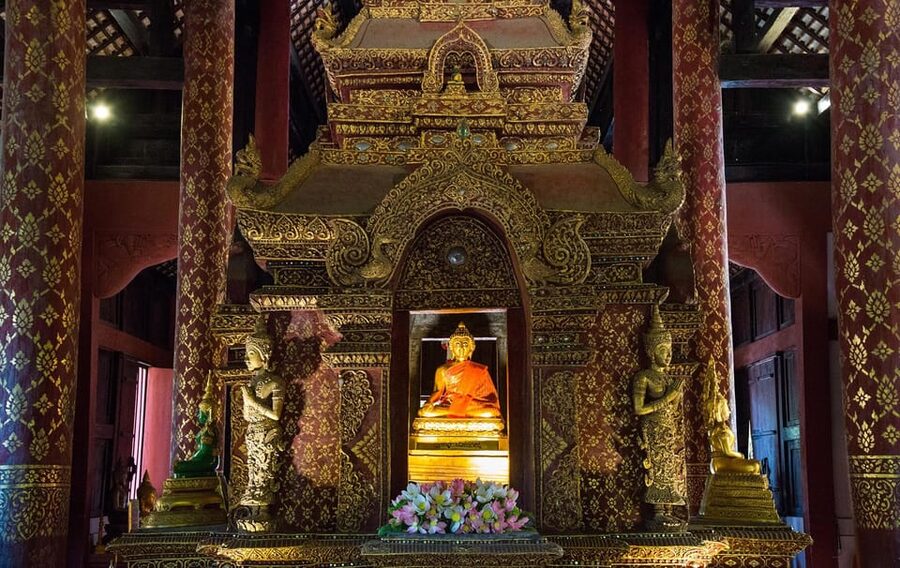
The Three Kings Monument honors the monarchs associated with Chiang Mai’s founding. Your guide uses the monument to explain the city’s royal identity and the political figures remembered in public space.
You’ll also pass Chiang Mai’s first government school, established in 1900 during the reign of King Rama VI. That detail helps show the shift from a royal and religious center toward a more modern administrative city.
Nearby, the museum was once a royal palace and later served as an administrative center. The tour passes by it rather than listing it as a full museum visit, so you should not expect an extended indoor museum session. Still, its changing role helps connect monarchy, government, and public education in one compact area.
This section is useful if architecture alone does not hold your attention. The guide’s job here is to explain what the buildings once did, not simply point out their age.
More Heritage Days in Chiang Mai:
- Chiang Mai: Historic Temples and City Guided Walking Tour
★ 4.7 · 650 reviews - Chiang Mai: Private Historic Old City Bike Tour – Night
★ 4.7 · 143 reviews - Chiang Mai: Historical and Culture Exploration Walking Tour
★ 4.6 · 40 reviews - 1 Day Sukhothai Historical Park from Chiang Mai Private Tour
★ 5.0 · 29 reviews
The former women’s prison and a royal palace beneath it
One of the most unusual stops is a renovation site formerly used as a women’s prison. Work there has revealed evidence of an early Lanna royal palace, and the site is intended to become a historical park.
The appeal is that the story is still developing. You are not looking at a perfectly finished monument with every question settled. You are seeing how Chiang Mai decides what to preserve and how later buildings can cover earlier layers of the city.
Because renovation work can change the appearance or access conditions, the experience may feel less polished than a regular temple visit. That is part of its value, but you should come prepared for a site where the historical meaning matters more than a grand display.
For me, this is the stop that keeps the tour from becoming a standard temple circuit. It asks you to think about forgotten places, changing governments, and the work required to recover the city’s earlier story.
Wat Phra Singh and a well-placed coffee break
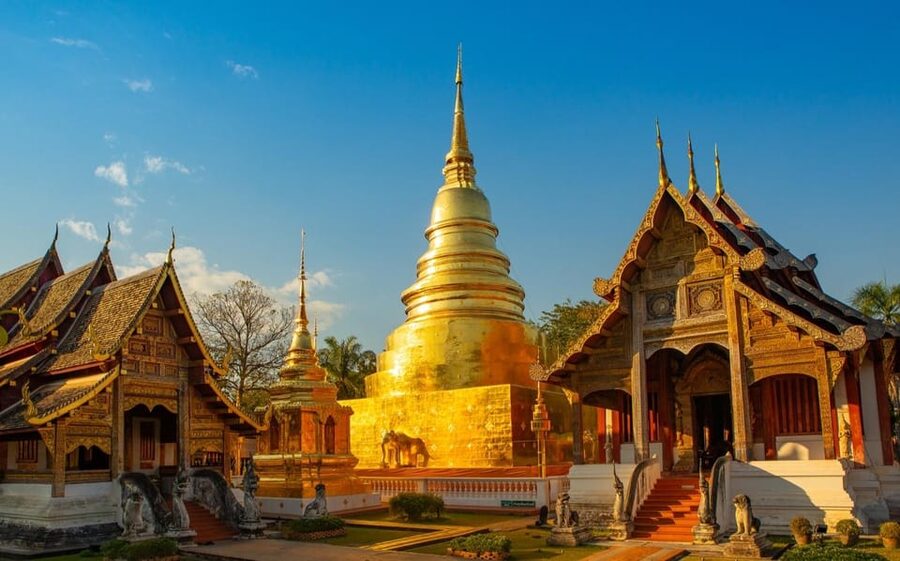
Wat Phra Singh is one of Chiang Mai’s major old temples. The guide explains its importance across different periods, helping you see how a religious site can remain important as political power and city life change around it.
The planned visit lasts about 30 minutes, followed by a 15-minute break. That pause matters. Four hours of walking between stone courtyards and city streets can feel tiring, particularly in warm weather, and a stop at a local café gives you time to sit down.
A coffee or another drink is included. Chiang Mai is well known for its café culture, but this tour keeps the stop simple and local rather than turning it into a separate food activity. You also receive a bottle of drinking water, though I would still arrive hydrated and carry extra water if you need it.
The coffee break is also a good point to ask questions. If Richard has introduced several centuries of changes by then, you can use the pause to sort out names, dates, and the difference between Lanna and Siam.
Wat Phan Tao and the old royal palace
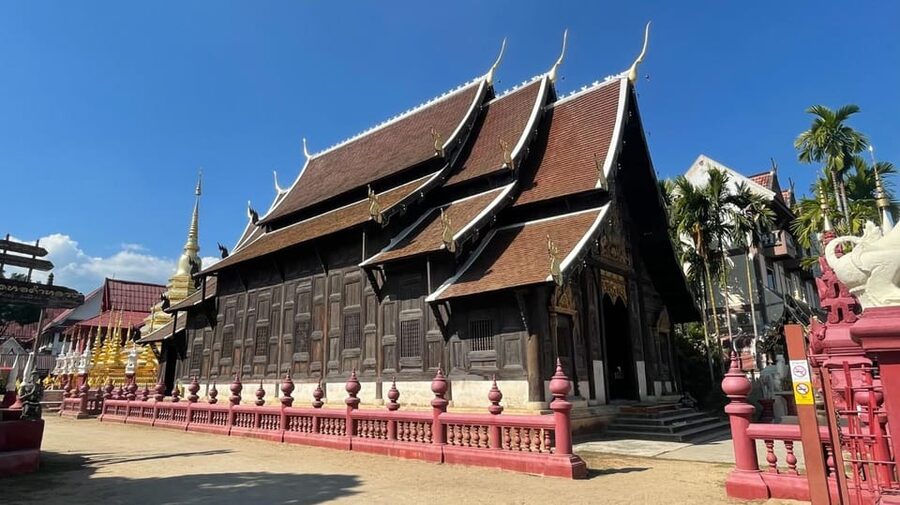
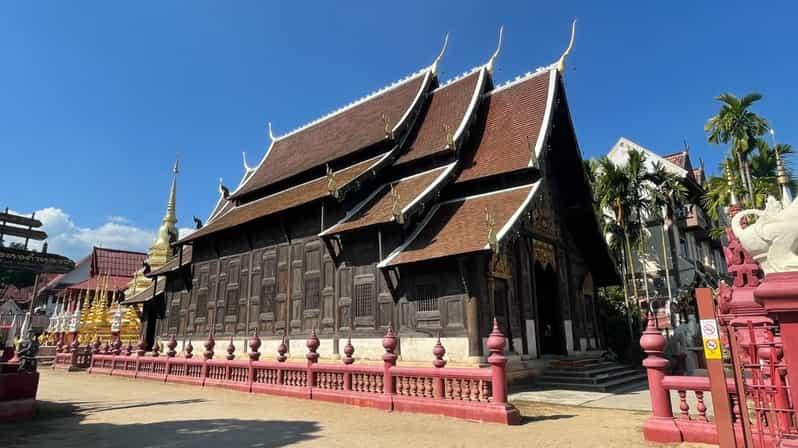
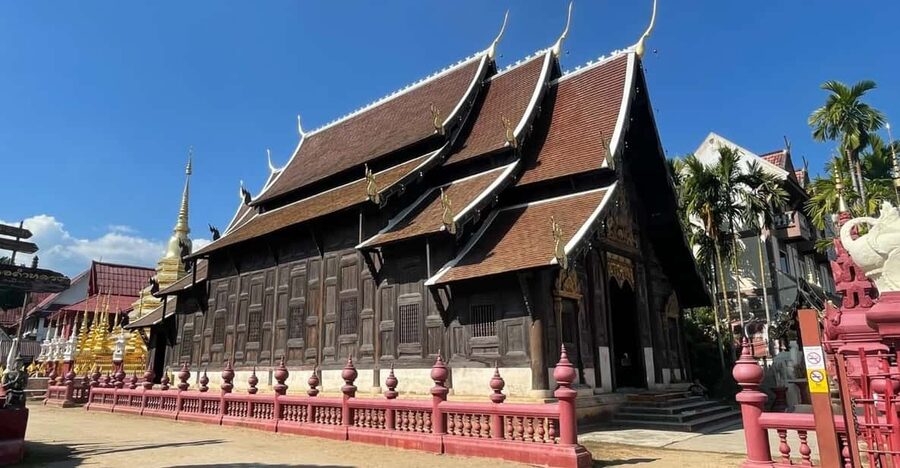
Wat Phan Tao is a fine place to look at traditional Lanna design. The temple was originally part of the old royal palace, which gives its architecture added meaning.
The stop lasts about 15 minutes, so expect a focused visit rather than a long period of quiet observation. Your guide can explain how the temple’s form relates to the former palace complex and to northern Thai building traditions.
This is a good point in the route for travelers who enjoy details in woodwork and structure. It also prepares you for Wat Chedi Luang, where the scale and political importance shift again.
Wat Chedi Luang: finishing with Chiang Mai’s great landmark
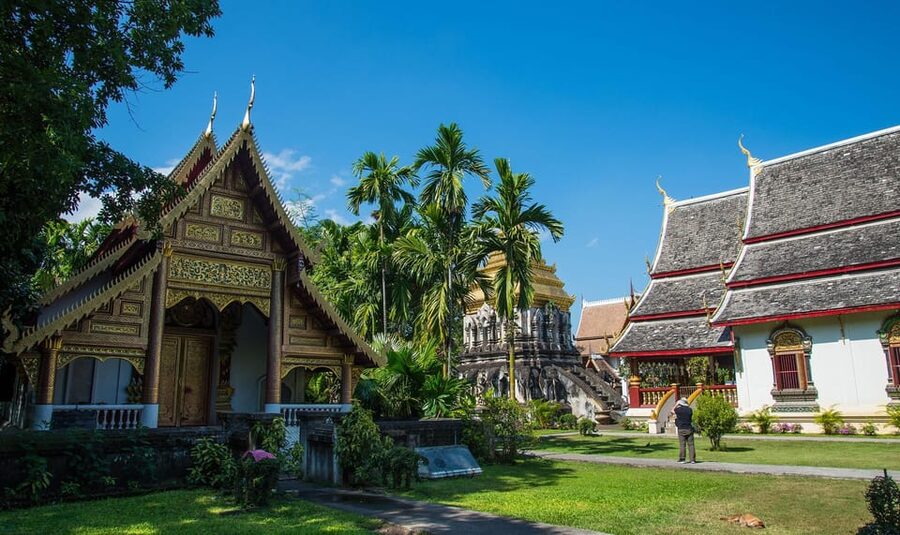
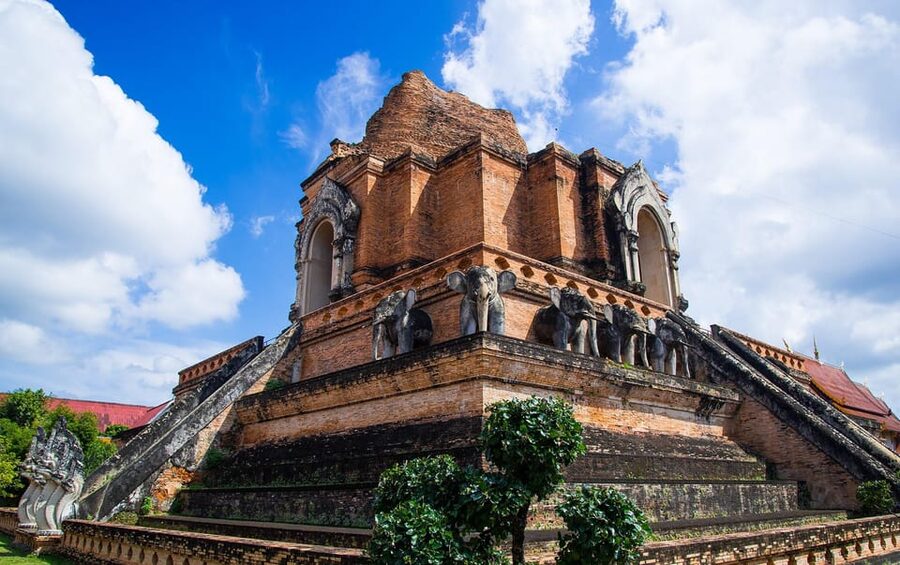
Wat Chedi Luang is the final major stop and receives about 30 minutes. Its large chedi is one of Chiang Mai’s best-known symbols, and your guide explains the events that shaped the temple and its place in city life.
Ending here works well. By this point, you have heard about the Lanna kingdom, its decline, its return, its links with Siam, and the city’s changing role. Wat Chedi Luang then feels less like a single impressive monument and more like a final marker in a long sequence of political and religious change.
You will need to follow temple etiquette throughout the route. Avoid short skirts, dress respectfully, and remove anything that could be considered inappropriate for Buddhist sites. The tour asks you to bring sports shoes, and that advice is worth taking seriously.
What the $45 price really covers
At $45 per person, the price is reasonable if you want a private, guide-led introduction rather than a self-guided walk. The fee includes entry charges at the historical and cultural sites, a bottle of water, local snacks, a café drink, and two-way hotel transfer.
Those inclusions remove several small costs that can quickly add up. You are also paying for a four-hour English-language guide who can explain the connections between stops. The private group format is particularly useful if you prefer to ask questions or spend a little longer on a subject that catches your interest.
Lunch is not included. That is not a serious problem because the route already includes market snacks and a café break, but you should plan a separate meal before or after the tour. Personal purchases, souvenirs, extra snacks, travel insurance, and special requests also cost extra.
The strongest value comes if you use the tour as an orientation to Chiang Mai. If you only want quick photographs at famous temples, you may find a less expensive sightseeing option. If you want context and conversation, the price is easier to justify.
Who should book this walk
I would recommend it to first-time visitors, history fans, architecture enthusiasts, and anyone who wants to understand Chiang Mai beyond its food and nightlife. The private format also suits couples, families with older children, or small groups who prefer not to follow a large crowd.
The tour is not suitable for children under eight or people over 80. It is also a poor match if walking for four hours sounds uncomfortable or if you prefer a slow temple visit with lots of unplanned free time.
The guide is Richard, and one guest specifically praised the chance to have him all to themselves on a private booking. The strongest pattern in the available feedback is clear: people value the amount of information, Richard’s friendly manner, and the opportunity to ask questions. One rating was three out of five, so this is not a perfect fit for every style of visitor, but the overall score is 4.5 from seven ratings.
Book it if you want Chiang Mai explained by a local guide who can connect royal history, architecture, markets, and daily life. Skip it if you mainly want independent exploration, a food tour, or a relaxed ride between sights.
Practical details before you go
The experience lasts four hours and is offered with a live English-speaking guide. Start times depend on availability, so check the schedule before paying.
You may cancel up to 24 hours ahead for a full refund, and you can reserve now and pay later. That is useful if your Chiang Mai plans are still shifting.
Wear sports shoes and clothing that covers you appropriately for Buddhist temples. Bring curiosity, but also allow time for a meal outside the tour since lunch is not part of the price.
FAQ
How long does the Lanna Heritage Walking Tour last?
The tour lasts four hours.
What language is the tour offered in?
The live tour guide speaks English.
Is the tour private?
Yes. It is organized as a private group experience.
Who is the guide?
The guide is Richard, from Chiang Mai Private Guided Tour by Richard.
Where does the tour begin?
You can be picked up at your hotel or meet at Tha Phae Gate.
Which temples are visited?
The route includes Wat Chiang Man, Wat Phra Singh, Wat Phan Tao, and Wat Chedi Luang.
Is hotel transportation included?
Yes. Two-way hotel transfer is included.
Are entry fees included?
Yes. Entry fees for the historical and cultural sites visited are included.
Is food included?
Local snacks, fresh fruit tasting, and a coffee or another drink at a local café are included. Lunch and other meals are not included.
What should I wear and bring?
Bring sports shoes and dress appropriately for Buddhist temples. Short skirts, alcohol, and drugs are not allowed.
Is the tour suitable for young children?
No. It is not suitable for children under eight years old.
Can I cancel for a refund?
Yes. You can cancel up to 24 hours in advance for a full refund.
More Walking Tours in Chiang Mai
- Chiang Mai: Temple And City Walking Tour Part I
★ 4.7 · 244 reviews - Chiang Mai: Local Food and Markets Guided Walking Tour
★ 4.3 · 175 reviews - Chiang Mai Untouched Elephant: Nature Walk & Waterfall Trek
★ 4.7 · 77 reviews - Chiang Mai Old City & Temples Guided Walking Tour – 3 Hrs
★ 4.5 · 34 reviews
Newly reviewed around Chiang Mai
- Workshop Making Herbal ball & herbal inhaler★ 4.3 · 3 reviews
- Chiang Mai Zipline White Water Rafting and Elephant Sanctuary★ 4.0 · 11 reviews
- Walk With Monks Collecting Alms(meeting point maybe change)★ 4.9 · 8 reviews
- Zipline+Sticky waterfall+Long Neck Village Private Tour★ 5.0 · 22 reviews
- Trek to a Jungle Waterfall★ 5.0 · 14 reviews
- Meditation Retreat and Self-Care in Nature★ 5.0 · 4 reviews
- Full Day Yoga, Meditation, and Thai Cultural Immersion in Chiang Mai★ 5.0 · 3 reviews
- Long Neck Village, White & Blue Temple, Black House Day Tour From Chiang Mai★ 4.0 · 14 reviews
Chiang Mai Old City Walking Tours, compared.
3 Hour Old City and Temples Guided Walking Tour
Read our review →



Chiang Mai Old City & Temples Guided Walking Tour – 3 Hrs
Read our review →Browse the lists this tour appears in